What is the approximate market price of a dairy cow?
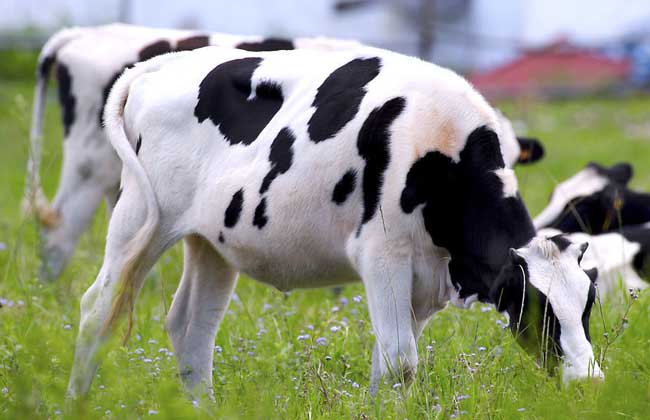
Dairy cattle are yellow cattle of dairy-type breeds. In China, the Chinese Holstein is the main breed, developed through long-term selective breeding from high-generation crosses between purebred Dutch cattle and local cows. On the market, prices vary greatly depending on breed, age, milk yield and other factors, so you must pay close attention when buying. Let's take a look below at how much a dairy cow costs!
How much does a dairy cow cost
The market price of dairy cattle is determined by the animal's size, age, body condition, coat color, milk yield and months of pregnancy. Generally, calves aged 3-8 months cost around 2600-4300 yuan, heifers aged 10-16 months cost around 3600-5200 yuan, cows in their first pregnancy of more than 3 months cost around 7500-8500 yuan, cows in their second to fourth pregnancy of more than 3 months with a milk yield of over 30 kg cost around 8000-9500 yuan, and special high-yield dairy cows are priced according to quality.
How to select dairy cattle
1. Breed: It is best to choose Holstein dairy cattle, and avoid buying yellow-improved cattle (crossbred cattle produced by inseminating local yellow cattle with frozen semen from Holstein dairy cattle, as well as fake Holstein dairy cattle).
2. Body type and appearance: Choose dairy cattle with moderate body condition, well-proportioned structure, thin skin and fine hair, a clean and elegant head and neck, large and spirited eyes, a relatively wide chest, a straight back and loin, sturdy legs, well-attached udders and evenly distributed teats.
3. Production performance: In addition to estimating production performance from the body type, appearance and udder development of the dairy cow, also check the pedigree records for the cow's own milk yield and butterfat percentage in previous parities, as well as those of its dam, granddam and maternal granddam.
4. Reproductive ability: For adult dairy cows, find out the age at first calving, calving interval and parity interval in previous parities, the calving date of the current parity, the date of the first mating after calving, and the most recent mating date. For young dairy cattle, find out the age at first mating, mating date, conception date, number of matings, and so on.
5. Health status: ① Judge whether the dairy cow is healthy by observing its mental state, body condition, appetite and the moistness of its muzzle. ② Check the pedigree records for the cow's disease history and past quarantine for tuberculosis, brucellosis, etc., as well as vaccination (anthrax, foot-and-mouth disease, etc.). ③ Find out whether there is an epidemic of cattle infectious diseases in the local area, with emphasis on tuberculosis, brucellosis, foot-and-mouth disease, infectious tracheitis, etc. ④ Check whether there is a recent quarantine certificate issued by the local veterinary authority.
Excellent dairy cattle breeds
1. Holstein: The Holstein originated in the Netherlands and has extremely strong acclimatization ability, so it can be raised in most countries around the world. Through long-term domestication and systematic selective breeding in various countries, Holsteins with distinctive characteristics have been developed and named after the respective country, such as American Holstein, Canadian Holstein, Japanese Holstein and Chinese Holstein. Its milk yield ranks first among all dairy cattle breeds.
2. Jersey: The Jersey is an imported dairy cow originating from the island of Jersey in the English Channel. In bloodline, the breed is related to the Brown Swiss, Devon and Kerry cattle, but not to the Holstein. It is a precious cattle breed protected by a decree issued by the British government. Its greatest advantage is its rich milk, with butterfat and milk protein content significantly higher than ordinary dairy cows, and high-quality milk protein content reaching more than 3.5%.
3. Guernsey: The Guernsey is a medium-sized dairy breed originating from the island of Guernsey in the United Kingdom, famous for its high butterfat, high milk protein and relatively high carotene content in the milk. It also has the characteristics of relatively high feed conversion efficiency per unit of milk, a shorter calving interval, an earlier age at first calving, tolerance to roughage, ease of grazing and good adaptability to warm climates.
4. Ayrshire: The Ayrshire is a medium-sized dairy breed originating from Ayrshire in the United Kingdom and is one of the famous dairy cattle breeds. It is characterized by early maturity, tolerance to roughage and strong adaptability, and has been exported to more than 30 countries including Japan, the United States, Finland, Australia, Canada and New Zealand. It was once introduced in many provinces and cities in China such as Guangxi and Hunan, but because this breed is highly nervous and difficult to manage, purebred cattle are now very rare.
5. Chinese Holstein: The Chinese Holstein was called the Chinese Black-and-White dairy cow before 1997. It was gradually formed from crosses between Chinese yellow cattle and Holstein cattle introduced to China at the end of the 19th century, followed by continuous selective breeding from 1970 to 1980. It is the dairy cattle breed with the highest milk yield, the largest population and the widest distribution in China. Under normal feeding conditions, the milk yield of most cows can reach a certain level.