What is the market price for one Limousin cow?
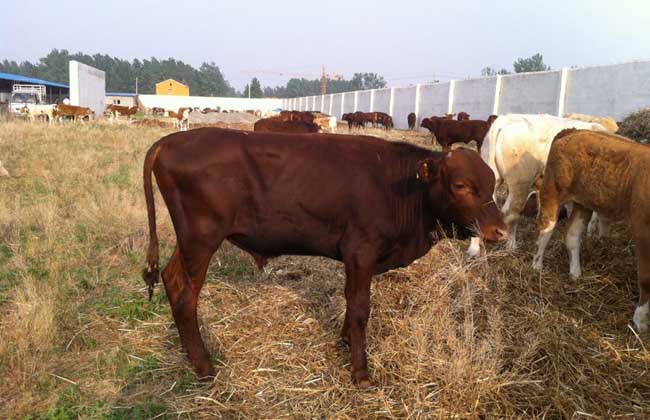
The Limousin cattle originated from the Limousin plateau in central France and has characteristics such as a large build, fast growth, plenty of muscle and little fat, with a fast early growth rate, and is famous for its high meat production performance and lean carcass, making it an excellent sire for crossbreeding or improving local breeds, and it has long been favored by breeders. Let's take a look below at how much one Limousin cow costs!
How much does one Limousin cow cost
Limousin calves have been extremely popular on the market in recent years. Ordinary breeds cost around 3000 yuan per head, while superior breeds cost around 4000 yuan per head.
Production performance of Limousin cattle
Limousin cattle have high meat production performance, good carcass quality, a large ribeye area, full muscles in the front and rear limbs, and a high dressing percentage, making them very competitive in the beef cattle market. Under intensive feeding conditions, calves grow very quickly after weaning, reaching a body weight of 408 kg at 10 months of age and about 480 kg at 12 months of age, with an average daily gain of 0.86 to 1.3 kg during the suckling period, and 8-month-old calves can already produce marbled beef.
Breeding experience with Limousin cattle
1. Cattle buying experience: When buying cattle at a market, you should first choose cattle with a large mouth, large nostrils, bright eyes, a relatively long body, thick legs and a strong tail. Such cattle eat well and are healthy and disease-free. In addition, you should also consider the hide and rump, requiring the skin to be light and elastic, and the hair on the rump to be abundant and soft, so that a handful can be grabbed. Such cattle put on more meat, fatten quickly and bring high economic returns.
2. Feeding experience: First, have a dedicated person feed them, so as to grasp the cattle's feed intake and observe whether any abnormal phenomena occur, which helps to take measures early. Second, set feeding times, generally 5 a.m., 10 a.m. and 5 p.m., feeding at the trough 3 times, and it is best to give one supplementary feeding at night. Before each trough feeding, first feed a small amount of hay, then mix in the concentrate, and provide water 2 hours later. In summer, a little salt can be added to prevent dehydration. Third, set the amount of feed, which must not vary greatly. The three observations are: observe the eating condition, observe the feces to grasp whether digestion is good, and observe rumination.
3. Management experience: First, after feeding the cattle in summer, tie them under a ventilated tree shade, or in a shaded area or under a cool shed, to prevent heatstroke. In winter, tie them in a windproof, sunny place, and take warming measures in the cattle shed. Second, frequently brush the cattle's body, which can promote blood circulation and increase fattening. Third, the tying rope should be short to reduce the amount of exercise; it is best to tie one cow to one post to help weight gain and fattening.
4. Feed combination: In areas with abundant corn production, the main forage for Limousin cattle can be corn stalks; in non-corn-producing areas, adapt to local conditions. When chopping grass, the requirement is to chop each inch of grass into four cuts; the principle is the finer the better, as fine grass is liked by cattle, easy to digest and saves feed. The amount of concentrate fed and the proportion of varieties should be properly controlled according to the time. Newly purchased Limousin cattle generally have been fed little or no concentrate for a long time. If too much concentrate is suddenly fed, the cattle are prone to indigestion and instead fatten slowly. Therefore, for newly bought cattle, a daily intake of generally 1.5 to 2 kg of concentrate is appropriate. The proportions of various feeds are: 30% cornmeal, 60% wheat bran, 10% soybean cake meal, and 1 to 2 qian of salt, dissolved in water and mixed into the feed. After 10 days, gradually increase the concentrate. Half a month before marketing, increase the concentrate amount to 5 to 7 kg per head of cattle per day. The feed ratio in winter and spring can be adjusted appropriately.