How much does a sago palm cost? A market price overview
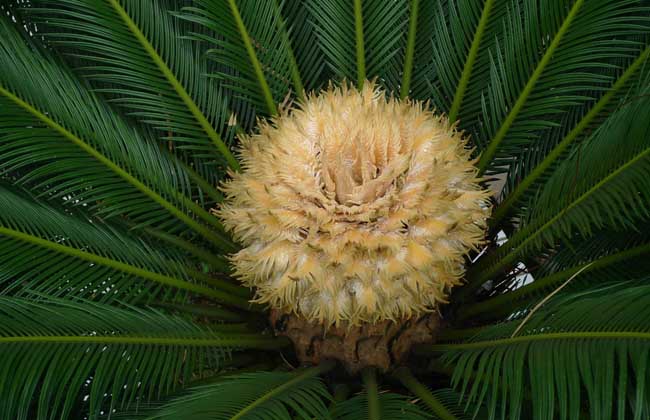
The sago palm, whose scientific name is Cycas revoluta, gets its Chinese name "tie shu" (iron tree) because its trunk is as hard as wrought iron and it likes iron-containing fertilizer. The plant has a graceful form, a rugged and simple air, and large, beautiful leaves that stay deep green year-round and grow in a rosette at the top, giving it a unique ornamental effect. It is suitable for planting as a single specimen in lawns, such as in parks, and carries a touch of tropical flavor. Let us take a look below at how much a sago palm costs!
How much does a sago palm cost?
The price of a sago palm ranges from 30 to 800 yuan depending on the size of the potted plant. Sago palm stems are all fairly thick and sturdy, and the plant can reach a height of 8 m, with a flowering period in July to August. It is dioecious, with male flowers on the inner side of the leaves and female flowers at the top of the stem. It likes strong sunlight and a warm, humid environment, and requires fertile, sandy, slightly acidic soil with good permeability. It has poor cold tolerance and is mostly planted in the south.
The cultivation value of the sago palm
1. Ornamental value: The sago palm has an ancient and elegant tree form, a thick trunk as hard as iron, and feathery leaves that are smooth and glossy, staying evergreen all year round. It is a precious ornamental tree species with fairly high ornamental value.
2. Home accent: In the south, sago palms are mostly planted in front of courtyards, beside steps and in lawns, while in the north they are kept as large potted plants to decorate courtyards, corridors and halls. The sago palm has a graceful plant form, and using it to decorate and accent the home gives people a feeling of being close to nature and gives the home a sense of comfort.
3. Air purification: The sago palm is also fairly beneficial for purifying and improving air, and has the effect of absorbing toxic and harmful gases such as sulfur dioxide, nitrogen peroxide, benzene, fluorine, mercury vapor and lead vapor.
How to grow a sago palm
1. Growing environment: The sago palm should be planted in a place with plenty of sunlight, that is humid and warm, and has good ventilation. If the winter is relatively cold, the plant should be wrapped with plastic bags or straw bundles; for potted plants, most of the branches and leaves can be cut off and the plant placed in a sunny, wind-sheltered spot.
2. Watering at the right time: The sago palm likes moist soil, so loose, fertile, slightly acidic sandy soil is best for its growth. When watering, the principle of “water after the soil dries, dry-wet alternating” should be followed, that is, water after the soil dries and do not let the surrounding soil become waterlogged, otherwise it easily causes the sago palm's roots to rot.
3. Reasonable fertilizing: During the vigorous stage of growth and reproduction, the sago palm needs regular fertilizing to ensure its nutritional needs. Fertilizing is mainly with nitrogen fertilizer and potassium fertilizer, and it is best to apply thin fertilizer frequently. To make the sago palm's leaves deep green and glossy, an appropriate amount of ferrous sulfate solution can be added during fertilizing.
4. Shaping and pruning: To keep the sago palm's shape beautiful and symmetrical, the old yellow leaves from the previous year can be pruned off each year when new leaves grow.
5. Pest and disease control: The sago palm's branches and trunk are fairly hard, so pests rarely occur. If scale insect damage is found, in mild cases the insects can be removed by manual washing, and in severe cases a 1% concentration of ferrous sulfate can be sprayed on its leaves.