What is the latest market price of rosin?
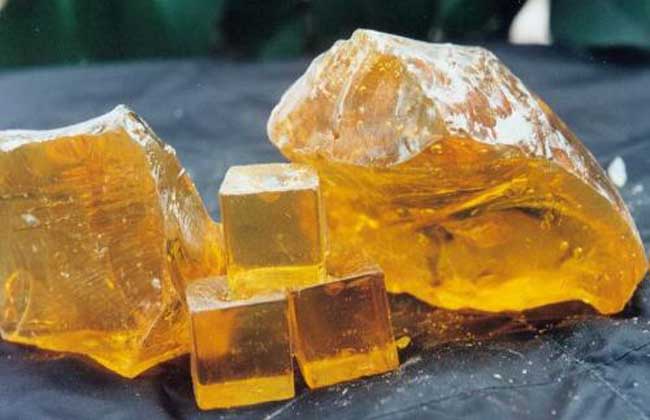
Rosin, also known as pine gum, pine fat, pine glue, tar rosin, raw rosin, etc., refers to the non-volatile natural resin obtained from pine resin through different processing methods. It is very sensitive to light, heat and oxygen, and especially in powder form it oxidizes extremely easily, so it is best stored in solid blocks to prevent oxidation from darkening the color and changing its properties. Let us take a look below at how much rosin costs!
How much does rosin cost?
The price of rosin is generally 11-20 yuan/kg, and varies according to type, price, manufacturer, etc. Zhengzhou Mingxin Chemical Products Co., Ltd. rosin price is 24 yuan/kg, Zhengzhou Chaoqun Chemical Co., Ltd. rosin price is 22 yuan/kg, Henan Mingrui Food Additives Co., Ltd. rosin price is 12 yuan/kg, Zhengzhou Ruiheng Chemical Products Co., Ltd. rosin price is 22 yuan/kg, Zhengzhou Chenyang Chemical Co., Ltd. rosin price is 16 yuan/kg, Jiangxi Mingrui Chemical Company rosin price is 21 yuan/kg.
Classification of rosin by source
1. Gum rosin: rosin made by collecting pine resin through tapping and then processing and refining it is called gum rosin. Its feature is that pine trees can be tapped continuously, which is conducive to the full use of resources. China is rich in pine resin resources and is the country with the largest output of gum rosin, and gum rosin output will remain above 350,000 tons for quite a long time.
2. Wood rosin: wood rosin is rosin obtained by chopping pine roots or trunks, extracting the resin with a solvent, and then processing and refining it. It is mainly produced in the United States, and the raw material depends on the primitive pine forests in the southeast of that country. Now, due to the reduction of forest resources, raw materials for wood rosin are in short supply, and output has dropped from 316,000 tons in 1950 to 20,000 tons at present.
3. Tall oil rosin: tall oil rosin comes from the wood pulping and papermaking industry, obtained by processing the black liquor recovered from sulfate pulping. It was originally inferior to gum rosin in performance, but later, as quality continued to improve, its performance is now close to that of gum rosin.
What are the uses of rosin?
1. Soap: rosin is boiled together with soda ash or caustic soda to form rosin soap. Rosin soap has strong detergency, dissolves easily in water, can dissolve grease, lathers easily, and is sticky, which can keep soap from cracking and from turning rancid and deteriorating.
2. Papermaking: in the papermaking industry, rosin is used as a paper sizing material, made into rosin sodium soap with caustic soda, namely the sizing material. The sizing material is mixed with pulp and alum is added, making the rosin become water-insoluble free resin acid particles that adhere to the small fibers. When the pulp is rolled and heated on a drying cylinder, the rosin softens and fills the spaces between the fibers; this action is called "sizing" or "gluing". After paper is "sized", its water resistance can be enhanced, ink penetration prevented, strength and smoothness improved, and expansion and contraction reduced.
3. Paint: rosin dissolves easily in various organic solvents, and forms a film easily with luster. It is one of the basic raw materials for paints and coatings. Its role in paint is to make the paint bright in color, fast to dry, and the paint film smooth and not easy to peel off.
4. Printing ink: in printing ink, rosin is mainly used as a vehicle and enhances the adhesion of the ink to paper. If rosin is not used in ink, the printed marks will have dull tones and be blurred.
5. Adhesives: adhesives based on rosin esters and hydrogenated rosin esters are often used as hot-melt adhesives, pressure-sensitive adhesives and rubber tackifiers.
6. Rubber: in the rubber industry, rosin is used as a softener and can increase elasticity. Disproportionated rosin potassium soap can be used for synthetic rubber.
7. Food: hydrogenated rosin glycerol ester is heated and melted together with natural chicle, wax, vinyl acetate, etc., then flavoring, granulated sugar and coloring are added and mixed evenly to make chewing gum. In slaughterhouses, when slaughtering pigs, cattle and sheep, after the dehairing machine is used, the hair remaining on the animal body and head can be removed with a depilatory agent composed of 88-94% molten rosin and 6-12% cottonseed oil.
8. Electrical: insulating oil made from 35% rosin and 65% bright oil is used on cables as a protective film, providing insulation and heat resistance. Rosin mixed with bakelite and other artificial resins is used as insulating varnish.
9. Construction: in the building materials industry, rosin is mainly used as a concrete foaming agent and a floor tile binder. Rosin is also used as a binder for vinyl chloride asbestos tiles. Rosin mixed with linseed oil, calcium carbonate, charcoal, pigments, etc. can make carpet tiles.
10. Fixative: because of rosin's solubility, volatility, and the principle that after volatilizing it can quickly condense into a "firm and transparent film", painters generally make their own "fixative" liquid to protect the picture and prevent "sketches" from being rubbed off.
11. Violin: because violin strings are made of steel wire, slipping is very likely during performance. Rubbing rosin on the bow 3-4 times can increase friction and reduce the chance of slipping.
12. Medicinal use: rosin is bitter and sweet in taste and warm in nature, entering the liver and spleen meridians. It has the effects of dispelling wind and drying dampness, expelling pus and drawing out toxins, promoting tissue regeneration and relieving pain. It is mainly used for carbuncles, malignant sores, scrofula, fistula, scabies, white ringworm, leprosy, arthralgia, incised wounds, sprains, women's leukorrhea, and thromboangiitis obliterans. It is suitable for carbuncles, boils and sores, eczema, traumatic bleeding, burns and scalds, etc.