What is the general price of a yew root carving?
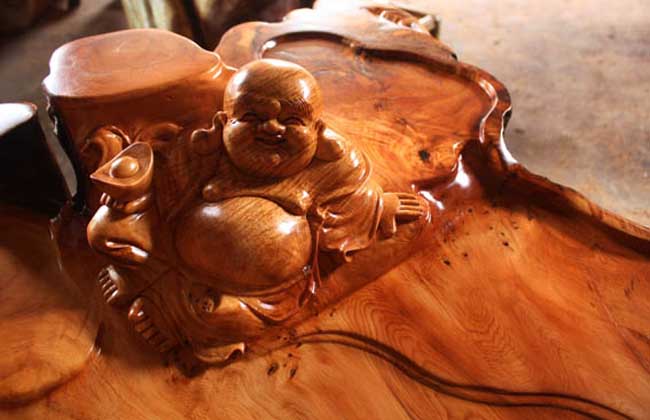
Yew is also known as zi shan, juan bai, bian bai, hong dou shu, guan yin shan, etc. It is a tree of the genus Taxus in the family Taxaceae, a national first-class rare and protected tree species in China, and is recognized worldwide as an endangered natural rare anti-cancer plant. At present, no large-scale yew raw material forest base has been established anywhere in the world. Now let us take a look at how much a yew root carving costs!
How much does a yew root carving cost?
Yew is a key protected plant in China, and its sale and export are not permitted, so there are not many good-quality items on the market, and it can even be hard to tell genuine from fake. The price of yew root carvings also varies according to the carving work, but because the tree species itself is highly valuable, yew root carvings are also relatively expensive, ranging from several thousand to tens of thousands, and of course a top-quality yew root carving may reach an astronomical price. On the market, one with ordinary carving work, 40 cm tall and 30 cm wide, generally costs about 1000 to 2000 yuan.
Placement position of a yew root carving
The indoor placement position of a yew root carving should be far from doorways, windows, air vents and other places with strong air movement, and it should especially not be exposed to strong direct sunlight. It should not be placed near open flames, fire walls, heated kang, or fire stoves. In winter, do not place it near heating. Above all, avoid excessively high indoor temperatures. It is not suitable to place it in an extremely humid or extremely dry room——in a very humid environment, some wooden carving crafts will grow “mold”, while in a too dry environment some may partially crack.
Maintenance methods for a yew root carving
1. Light: Many people mistakenly put a yew root carving in the sunlight, but this is actually fatal to a yew root carving, because there is still moisture inside the root carving, and direct sunlight will disrupt the moisture balance inside the root carving, causing it to crack. The surface of a yew root carving generally has a protective wax layer or oil layer, and direct sunlight will also damage its structure and cause it to lose its protective effect. Therefore, direct sunlight reduces the ornamental value of the root carving while also shortening its lifespan.
2. Temperature: The effect of temperature on a yew root carving is mainly seen in two situations: high temperature and drastic temperature changes. The effect of high temperature is similar to that of direct sunlight, damaging the protective layer on the surface of the root carving and the internal moisture balance, while drastic temperature changes will cause the structure of the root carving to expand and contract within a short time, thereby causing structural damage and also affecting the lifespan of the root carving.
3. Humidity: The effect of humidity on a yew root carving is also divided into two types. One is excessively low humidity, such as in a room where the air conditioner is always on. A too dry environment will cause the root carving to lose its moisture balance and appear very fragile. In this case, it is best to place a plate of water beside the root carving to increase humidity. The other situation is excessively high humidity, such as in a position close to a washroom. Too high humidity will breed bacteria and other organisms, causing the root carving to become moldy and corroded, so it is necessary to ensure that indoor humidity is not too high, and to regularly oil the root carving.
4. Cleaning: A root carving placed at home will be covered by indoor dust, so it needs to be cleaned frequently, but the cleaning method matters. The wiping tool cannot be a wet cloth or a rough cloth. Use a soft, clean pure cotton cloth to gently clean the dust on its surface, and after cleaning, it also needs to be oiled and waxed on its surface. This is because after the carving process of a yew root carving is completed, a layer of walnut oil and wax is generally applied to its surface, which to a certain extent protects the root carving from external damage.