How much does a miracle fruit sapling cost per plant?
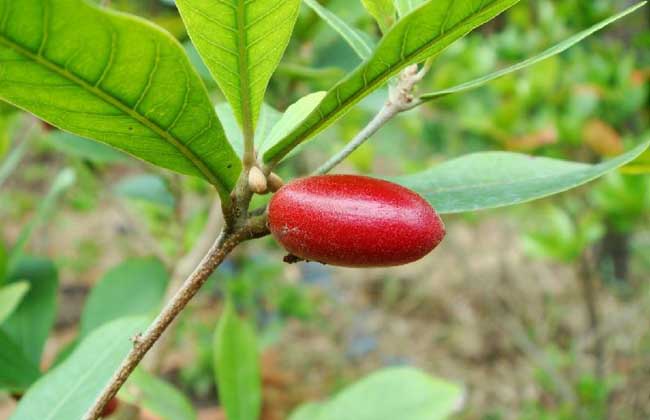
Miracle fruit is a precious plant of national treasure status, also known as the flavor-changing berry. It is an evergreen shrub of the genus Synsepalum in the family Sapotaceae. In the 1960s, when Premier Zhou Enlai visited West Africa, the Republic of Ghana presented miracle fruit to Premier Zhou as a state gift, and it has been cultivated in our country since then, with extremely high cultivation value. Let us take a look below at how much miracle fruit saplings cost!
How much do miracle fruit saplings cost?
The price of miracle fruit saplings is determined by diameter and tree age, ranging from a few dozen to several hundred. The price of miracle fruit is closely related to that year's quality and the market supply-demand relationship. The usual market price is around 30 to 40 yuan per jin, and in years with a poor harvest it may soar. Online quotations are roughly between 30 and 40 yuan, and if the quality is better than other miracle fruit, it should sell for upwards of 50 yuan.
Miracle fruit tree planting environment
Miracle fruit prefers slightly acidic or neutral soil, and grows best in well-drained sandy loam. It is suitable for cultivation in tropical and southern subtropical low-altitude areas of our country. The plant prefers a high-temperature, high-humidity climate environment and has a certain tolerance to drought and cold. In winter, at 3 to 5 degrees Celsius, young branches and leaves suffer cold damage but do not die, and at 8 to 10 degrees Celsius it can overwinter safely. It prefers light; during the seedling stage it can receive direct sunlight, but it can also flower and bear fruit normally under slightly shaded conditions.
Miracle fruit tree propagation methods
1. Seed propagation: Harvest seeds from fresh, ripe fruit. Before sowing, rub off the pulp with sand, peel, wash, and disinfect. They should not be stored for long. About 300 seeds per sq m, covered with 2 cm of fine sand, keeping the sand bed moist. They germinate in about 15 days, and the germination rate can reach over 100%. After the seedlings emerge, spray once a week with 0.2% urea or potassium dihydrogen phosphate. When the seedlings are 6 to 8 cm tall and have grown 4 to 5 true leaves, transplant them to the nursery for continued management. Before sowing, prepare the seedbed, using clean, loose potting soil as the substrate.
2. Cutting propagation: For miracle fruit cutting propagation, in April to June, cut current-year semi-lignified or fully lignified branches as cuttings, about 15 to 20 cm long, keeping the leaves on the upper 1/3 of the cutting and cutting 1/2 off each leaf. Cut the lower end of the cutting into an axe-shaped 45-degree slant, soak the slanted surface of the cutting in a suitable hormone solution (NAA 1000 mg per liter, i.e. 5000 times dilution) for 3 to 5 minutes, and insert it into clean sandy loam.
3. Air layering propagation: For miracle fruit air layering propagation, in April to July, select robust 1- to 2-year-old mature branches for layering treatment, and they can root in 60 to 70 days. The length of the air-layering girdling cut is 3 to 4 cm; the upper and lower cuts of the girdle must be neat and reach deep to the xylem, remove the bark, and scrape the cambium clean. When the new roots grow to a yellowish-brown color, cut off the layered branch and temporarily plant it in a nutrient bag or flower pot, maintaining a certain degree of shade and humidity. Before final planting, gradually reduce the shade level for the temporarily planted seedlings.