How much does a Taiwan podocarpus cost per plant?
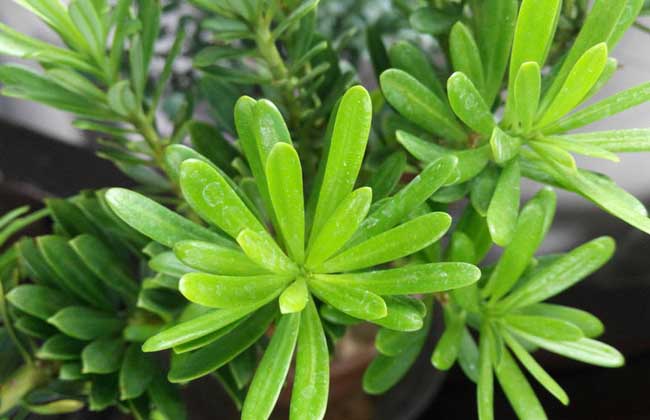
Taiwan podocarpus is a tree species unique to Taiwan, China, distributed in the central and northern regions, growing scattered in broad-leaved forests. It closely resembles Podocarpus macrophyllus and is a semi-sun evergreen tree that grows well in semi-shaded environments. It prefers warm, humid and fertile sandy loam and can also grow on coastal plains, giving it high cultivation value. Let us take a look below at how much Taiwan podocarpus costs!
How much does Taiwan podocarpus cost?
Taiwan podocarpus is a slow-growing variety, growing very slowly, and bonsai prices are relatively expensive. However, there is no specific price regulation on the market for Taiwan podocarpus bonsai, and the price of seedlings ranges from several dozen to several hundred, mainly varying due to different places of origin. The specific price of its bonsai varies according to the specific condition of the bonsai and also differs with individual preferences. Commercial bonsai prices are relatively stable at around several hundred, while artistic bonsai prices are high and uneven, ranging from several thousand to tens of thousands.
Cultivation value of Taiwan podocarpus
1. Landscaping value: After large-scale planting, Taiwan podocarpus can greatly reduce costs, and the wholesale price is not much different from ordinary landscaping tree species, but the grade is greatly improved, and it can also enhance the ornamental quality of road landscaping.
2. Ornamental value: Taiwan podocarpus can serve as hedges around villas and large landscaping and ornamental trees in gardens, with high ornamental value. Planted around villas, it is a combination of high ornamental value and high grade. Paired with some lighter-colored landscaping flowers and plants, it easily becomes a beautiful scenic line.
3. Commercial bonsai: As people's living standards have improved, the decoration of commercial housing is becoming increasingly luxurious, and bonsai are also needed to adorn homes. Thus, residents of commercial housing have become the main consumer group for small commercial bonsai. The cost of a relatively high-level Taiwan podocarpus bonsai is about 100 yuan, but it can sell for 800-1000 yuan.
4. Artistic bonsai: Podocarpus bonsai is a precious tree species in the bonsai industry. Currently, bonsai from mature trees are relatively few, and there are many admirers. If a relatively good tree stock is found, it may as well be made into a high-level artistic bonsai. The price of artistic bonsai is easily several thousand, tens of thousands, or even hundreds of thousands.
Cultivation methods for Taiwan podocarpus
1. Propagation: Taiwan podocarpus can be propagated by sowing and cuttings. Generally, drilling sowing is mostly carried out in spring and autumn, and the seed germination rate is as high as 80-90%, but seedlings grow slowly. Cutting propagation is suitable in the rainy season, and after cutting, shade should be provided, as it roots very easily. In addition, it can also be propagated by cleft grafting.
2. Potting: Taiwan podocarpus prefers warm, humid and fertile sandy loam. The potting soil can be mixed with 2 parts garden soil, 2 parts leaf mold and 2 parts coarse sand, and the soil should be changed once every 2 years in spring, at the same time as repotting. When potting, decomposed oil cake powder and dried pig manure can also be mixed with a small amount of culture soil as base fertilizer. When repotting, take it out with a soil ball, remove the attached old soil, and properly prune overly long roots and decayed fibrous roots.
3. Pruning: Cut off dead branches, residual branches and diseased leaves of Taiwan podocarpus to keep the plant shape neat and well-proportioned. Apply fertilizer 3-4 times a month during the peak growing season. No additional fertilization is needed in summer and autumn to prevent excessive growth of branches and leaves and reduce cold resistance. When changing pots, pay attention to cutting off excessive roots and rotten fibrous roots, and also cut off overly dense branches and excessive growth branches.
4. Humidity: Taiwan podocarpus should not be watered too much. In summer, spray water on the leaves once every morning and evening to increase air humidity, and also provide appropriate shade to prevent strong light exposure. In winter, it can be moved indoors, and the temperature should be kept between 1-10°C. It should not be too high, otherwise it is unfavorable for growth the following year.
5. Pests and diseases: Taiwan podocarpus commonly suffers from leaf spot disease and sooty mold. For leaf spot disease, 50% carbendazim or thiophanate-methyl wettable powder at 600-800 times dilution can be sprayed for control. For sooty mold, soapy water or clean water can be used to wash it. Common pests include bagworms, scale insects and white wax insects, which can be killed by spraying 40% omethoate emulsion at 1000 times dilution or 80% dichlorvos emulsion at 1000 times dilution.