How much does amethyst cost? Latest market price analysis
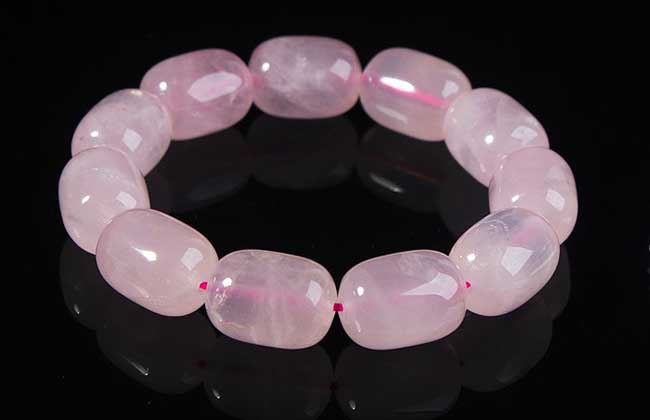
Amethyst is also known as purple quartz, purple crystal, purple beryl, and so on. The price of natural amethyst has always troubled consumers, because the market often passes off synthetic amethyst as real amethyst and sells it to consumers, and the price is not low either, so when choosing you should also pay attention to identifying it. Below let us take a look at how much amethyst costs!
How much does amethyst cost?
Amethyst is widely distributed in nature, with main producing areas including Brazil, Russia, South Africa, Madagascar, and other places. Natural amethyst usually has natural ice cracks or white cloudy impurities. Amethyst with gemstone value is all produced in volcanic rock, pegmatite, or the crystal cavities of limestone and shale. The market price mainly depends on the color and internal transparency of the amethyst as well as the size of the beads. Generally, the more purple the color, the better the luster, the fewer the cotton-like inclusions, and the fewer the cracks, the higher the price; at the same time, the larger the beads, the higher the price. Prices range from a few yuan to several dozen yuan or even higher.
Factors affecting the price of amethyst
1. Crystal: The more transparent the crystal of amethyst, the more expensive its price. Of course, completely transparent amethyst is almost impossible to find now. The interior of natural amethyst crystals will more or less contain some impurities. Amethyst without impurities is generally synthetic crystal.
2. Color: The more vivid the color of amethyst, the relatively more expensive the price. The color of natural crystal will not be very uniform. On the same amethyst bracelet, different beads, or even a single bead, may have uneven color, especially when placed in water, which can be clearly seen, while synthetic ones have relatively uniform color.
3. Inclusions: Inclusions in natural crystal are unavoidable, such as cotton-like inclusions and ice cracks. These are formed during the natural formation process; it is only a matter of how many there are. If there are relatively few impurities inside the crystal and the crystal is relatively transparent, then generally the price of such amethyst is relatively more expensive. Of course, there are also some amethysts on the market with no impurities at all. Such crystals are mostly synthetic crystal or cultured crystal, so you must look carefully when choosing.
4. Size: For amethyst of the same quality and same color, the larger the crystal size, the more expensive the price. Of course, there is also a situation where, when the quality is different, size is also a factor determining price.
Distribution of amethyst producing areas
1. South Korea: Amethyst from South Korea has an extremely charming blue-purple color, very beautiful. Many people are very fond of this color with an exotic flair, which gives people a deep and noble temperament. Unfortunately, in recent years production has been decreasing day by day, and there are also restrictions on the export of amethyst, causing South Korean amethyst to become relatively rare and its price to soar all the way.
2. Brazil: As one of the main producing areas of natural crystal, Brazil of course also produces large amounts of amethyst. Although Brazil produces amethyst in various colors from dark to light, its output of dark purple amethyst is still relatively small, and it mostly produces light purple or medium purple amethyst. Amethyst produced in Brazil is largely made into amethyst bracelets, amethyst necklaces, and other products distributed all over the world. The prices of these amethysts are in the medium range, which is relatively easy for buyers to accept.
3. Zambia: The amethyst produced in Zambia has very small particles, but its color is very good, with a bright red color. Even when viewed from a distance, you will not feel that the crystal of the amethyst looks black, and the price is also relatively expensive.
4. Uruguay: Amethyst produced in Uruguay is reputed to have one of the best tones among amethysts. This kind of purple is very deep and full of charm, and also carries a slight, intoxicating wine-red fire. In recent years, its output has also been extremely small and it is close to discontinuation of production, so it has become extremely rare. Therefore, Uruguayan amethyst is the signature treasure of some high-end jewelry stores.
5. Madagascar: Madagascar is actually not mainly known for producing amethyst, because the amethyst it produces has more impurities and its luster is not good enough. Among amethysts, it is considered relatively low-grade and is not very favored.
Methods for identifying amethyst
1. Amethyst will show different shades of purple according to its producing area and quality, so natural amethyst may show different shades of color on the same bead, while synthetic amethyst has a very uniform color. But in nature, amethyst with uniform color is relatively rare.
2. Natural amethyst has color bands, while synthetic amethyst does not have color bands. Although natural amethyst has few cracks and is crystal clear, color bands can still be clearly seen, while synthetic amethyst has a single color and no color bands.
3. Placing natural amethyst in the palm of your hand will give a cool feeling. If worn on the body, its temperature will slowly rise with the human body temperature, and eventually remain the same as the human body temperature, while synthetic amethyst, after being worn on the body for a period of time, will have a temperature higher than the human body temperature.
4. Amethyst has cracks or other minerals inside, while synthetic amethyst will have many bubbles inside. Synthetic amethyst materials are mostly glass, such as a glass cup. If you observe carefully, you will find that bubbles appear in the glass cup.