What is the current market price of rose quartz?
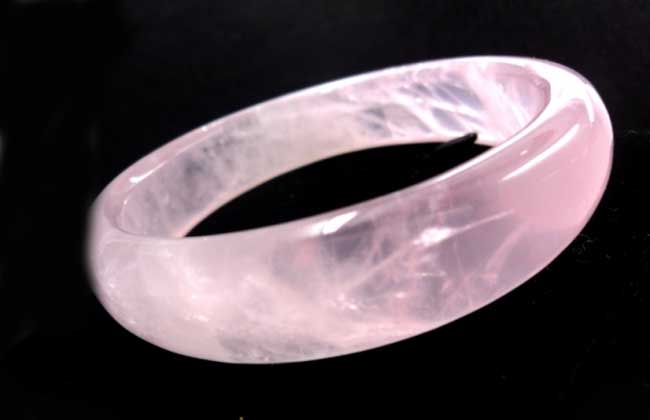
Rose quartz is one of the crystal gemstones most loved and worn by women, also known as rose crystal, hibiscus crystal, hibiscus stone or rose quartz. Pink quartz clusters are produced in Minas Gerais, Brazil, but compared with white quartz clusters or smoky quartz clusters, the output is rather scarce, so the price is relatively expensive. In China it is actually not commonly seen and is very scarce. Let us take a look below at how much rose quartz costs!
How much does rose quartz cost?
Even good-quality ordinary rose quartz is not particularly expensive, generally around a few dozen yuan, and a better bracelet can be bought for two hundred yuan. Star rose quartz is quite beautiful, able to emit six dazzling rays of light, as brilliant as the stars in the night sky, and its price is much higher. Ice-type rose quartz looks similar to ordinary rose quartz in form, only it is extremely transparent, and basically no included minerals can be seen, just like white quartz set off by a pink light, very endearing, generally ranging from a few dozen to several hundred yuan per gram.
How to choose rose quartz
1. Look at the material selection: In a crystal product made from well-selected material, no star-like, cloud-like or flocculent gas-liquid inclusions should be visible. A pure, smooth and sparkling texture is good; if cracks of varying depth or spots are found, it is a defective product.
2. Look at the workmanship: The processing of crystal products is divided into two types, namely grinding and carving. For example, crystal necklaces, bracelets and earrings belong to ground products, while Guanyin statues and inside-painted snuff bottles belong to carved products. A crystal product with good workmanship should be exquisite and fine, not only fully displaying the external beauty of the crystal product (shape, style, symmetry, etc.), but also maximally bringing out its inner beauty (sparkle, clever use of color).
3. Look at the polishing: The quality of the polishing directly affects the value of a crystal product. During processing, crystal must be ground with emery, and rough workmanship will leave friction marks on the surface of the crystal. Good crystal products naturally have better transparency and luster, what the trade calls "plenty of fire."
4. Look at dyeing: Some merchants on the market often dye rose quartz to make the color look better (but dyeing will disrupt the magnetic field of rose quartz). If the color of rose quartz appears lighter under natural white light, then it is not dyed crystal.
Main types of rose quartz
1. Traditional rose quartz: Traditional rose quartz has a large output, and its interior commonly contains white stone lines, natural cloudiness or natural ice cracks, is semi-transparent or opaque, and its price is relatively cheap. However, if there are very few ice cracks and cotton-like floccules and the color is tender pink, the price is also very high; these are usually used to make high-end ring faces.
2. Hibiscus rose quartz: Hibiscus crystal is rose quartz that is slightly transparent, with value judged by its rounded crystal texture and delicate color. Good hibiscus crystal has no white stone lines at all, its color is delicate, bright and lively, and its crystal surface, when glossy, shows a texture as full as water or even as smooth and lustrous as grease.
3. Ice-type rose quartz: Ice-type rose quartz has a high degree of transparency, named for its ice-like clarity and cool refreshing feel. Ice-type rose quartz of good quality also carries the delicate pink texture of rose quartz, while its interior has relatively few natural cloudiness or natural ice cracks.
4. Star rose quartz: Star rose quartz refers to rose quartz with no stone lines and no cracks, most often seen with a pinkish-white texture, but if this is too obvious it detracts from the visual effect. So a star rose quartz with a non-muddy texture, obvious star rays and a clearly discernible pink, warm and lustrous glow is the quality more worth buying.
How to tell real rose quartz from fake
1. Look at inclusions: The inclusion identification method is to tell real from fake by observing the substances inside the rose quartz. Since natural crystal is formed naturally by geological processes, its interior generally has inclusions, natural ice cracks, cloudiness and color variations, while artificial crystal, because it is condensed and synthesized by a factory or laboratory, is almost "flawless."
2. Identify by feel: Identification by feel is to tell real from fake by touching the crystal and judging by its texture. Pure natural crystal feels cool to the touch and has weight in the hand, while artificial crystal feels mild and is also light in weight.
3. Expert appraisal: Send it to a specialized national-level gem and jade appraisal institution for appraisal. There are many artificially re-synthesized crystals on the market; when buying, pay attention to whether a national-level appraisal certificate is included, to guard against counterfeit goods.
4. Observe carefully: Observe the color and luster of the rose quartz. A tender pink color, sparkling when held to the light, slightly transparent with a small amount of flocculent matter, and no cracks, is top grade. Take star rose quartz: when the bead body is illuminated by strong light from a single light source, six unique rays of light appear at the bottom, but most star rose quartz commonly seen on the market has star effects produced by artificial processing.
5. Test the hardness: The hardness of rose quartz is seven, while the hardness of glass is six. If you gently scratch the surface of rose quartz with something like jade, no scratch can be seen on the rose quartz, while glass will clearly show a scratch.