How much is citrine per jin? An introduction to market prices
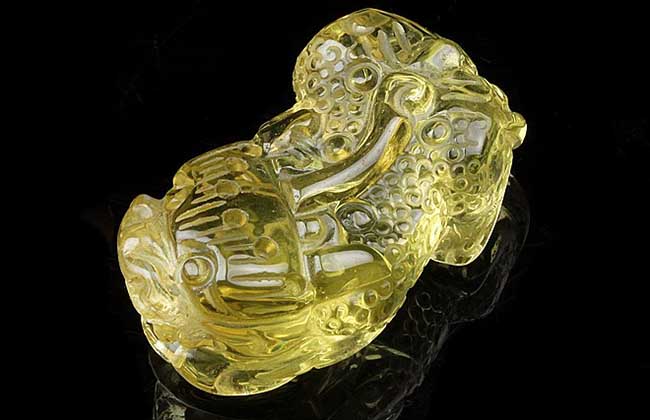
Citrine is a type of precious gemstone, and gem-grade citrine is extremely rare. Its main component is silicon dioxide, and in addition it is associated with some chromium, manganese, copper, iron and other ions that cause refraction and produce a variety of colors. It is often used to process crystal ornamental stones, crystal carvings, crystal jewelry, crystal balls, etc. Let's take a look below at how much citrine costs!
How much does citrine cost?
Citrine is a relatively high-grade variety among all crystals, and there are many places where it is produced. Among them, the orange-yellow citrine produced in Brazil has vivid, rich color and good crystal quality, and is deeply sought after by citrine lovers around the world. Most of the citrine currently on the market is formed by heating white crystal at high temperature. The price of citrine is divided into different grades. Lower-quality citrine costs around several tens of yuan, citrine with many cotton-like inclusions and cracks and a lighter color is generally 10 yuan per gram, slightly better citrine costs around 20 yuan per gram, and citrine with rich color, transparent crystal and few cotton-like inclusions and cracks costs several hundred yuan per gram.
Factors affecting the price of citrine
1. Color: Orange-yellow citrine is regarded as the finest grade and is considered the most valuable. Because its color is rich and mellow, it gives people a noble, royal feeling. As long as it is transparent and smooth, it is called top grade.
2. Clarity: Citrine with a clear crystal and fewer ice cracks or cotton-like inclusions can be considered high-quality citrine. If the clarity is not high or the color has a gray or tea tone, the price will decrease.
3. Luster: Citrine made by heating and fading amethyst has a lighter color and lacks a gorgeous feel, and its tone seems somewhat thin. Although both are quartz, this type of citrine is not as valuable as natural citrine.
4. Carving: Natural citrine is hard, smooth and dense, so carving it takes considerable effort. Generally speaking, citrine finely carved by skilled craftsmen has relatively high collectible value. The thinner the citrine, the more difficult it is to carve.
5. Workmanship: The processing of citrine products is divided into two types: grinding and carving. For example, crystal necklaces, bracelets and earrings belong to ground products, while Guanyin statues and inside-painted snuff bottles belong to carved products. A well-made crystal product should be refined and delicate, not only fully showing the external beauty of the crystal product, but also uncovering its inner beauty to the greatest extent.
How to tell real citrine from fake
1. Look at the fracture: The fracture pattern of glass is smooth and curved, like a shell-shaped depression, while the fracture of crystal shows a stone-like texture, and the broken surface will not show traces like glass.
2. Thermal conductivity: Adjust the thermal conductivity tester to green 4 bars to test the gemstone. Natural crystal can rise to yellow 2 bars, and when the area is large it rises to yellow 1 bar, while fake crystal does not rise.
3. Test the temperature: Crystal is crystalline and conducts heat quickly, while glass is amorphous and conducts heat slowly. So holding crystal in your hand feels icy to the core, and after wearing it for a short while it syncs with body temperature, while glass feels warm.
4. Test hardness: The hardness of natural crystal is 7, while glass is only 5, so when testing, any object with hardness greater than 5 can scratch glass.
5. Compare prices: You get what you pay for. Even natural crystal is divided into many grades, so prices differ enormously. Naturally good-quality citrine was never plentiful to begin with, so do not expect to spend little money and buy 3A-grade citrine. The better the crystal, the more expensive it is.
6. Birefringence: Place the crystal on a single hair and gently rotate the crystal. When it turns to a certain direction, a double image appears, that is, one hair becomes two, with a clear and obvious effect. This is the birefringence phenomenon produced by the crystal arrangement of natural crystal, and fake crystal cannot do it. The more obvious the double image effect, the better the crystal quality. Some natural crystals with too many impurities may not show obvious birefringence, or may show phenomena such as twisted hair or a straight line becoming a broken line. Such crystal is of poorer quality.
7. Optical properties: Glass is a non-crystalline homogeneous body, while crystal is a crystalline heterogeneous body. Under a polariscope, rotating 360 degrees, one that shows alternating light and dark changes is natural crystal, while one with no change is fake crystal. In addition, some natural crystals such as amethyst have dichroism, while fake crystal does not.
8. Inclusions: Most synthetic crystal is pure inside, in a large piece, and looks absolutely flawless. Natural crystal, however, generally always carries some “cotton”, fissures and other “flaws” to a greater or lesser extent. It is not that extremely pure natural pieces do not exist, but they are very rare. Things are precious when rare, and reflected in price, for citrine of the same size, color and clarity, natural pieces are far more expensive than synthetic crystal.