How much does natural crystal generally cost?
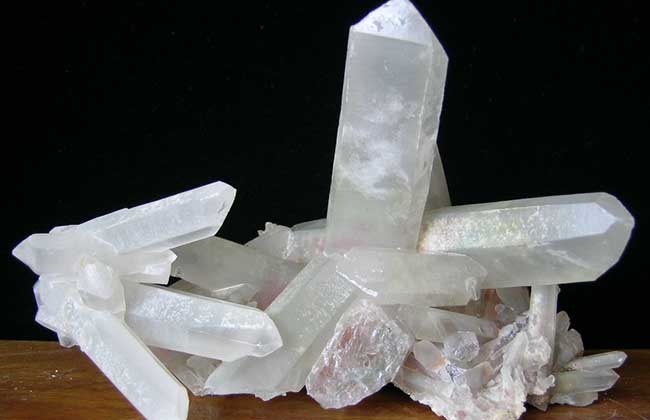
Natural crystal forms under natural conditions, growing deep in the earth's crust, and usually only forms after undergoing violent crustal movements such as volcanic eruptions and earthquakes. It is a mineral resource and one of the very rare and precious gemstones. Its value lies mainly in the functional effect of its mineral magnetic field on the human body. Let's take a look below at how much natural crystal costs!
How much does natural crystal cost?
The market price of ordinary natural crystal is not very high. Usually just over a hundred yuan is enough to buy some. White crystal, rose quartz, smoky quartz, amethyst and citrine can all be bought for just over a hundred yuan. For top-grade white crystal round beads and ordinary fancy styles, those below 10 mm cost no more than 20 yuan per strand, and those above 12 mm cost no more than 30 to 40 yuan per strand. Of course, the finest crystal varieties, green phantom quartz and rutilated quartz, are very expensive, with good-quality pieces costing over a thousand, or even tens of thousands.
How to choose natural crystal
1. Look at the raw material: crystal products made from carefully selected material should show no glue seams or cotton-like inclusions, and a pure, smooth, sparkling texture is best.
2. Look at the craftsmanship: the processing of crystal products is divided into grinding and carving. Crystal necklaces, bracelets and earrings are ground products, while Guanyin statues and inside-painted snuff bottles are carved products.
3. Look at the polishing: the quality of the polishing directly affects the value of crystal products, and it is divided into soft polishing and hard polishing.
4. Look at the holes: for strung crystal products (such as necklaces, bracelets and prayer beads), check whether the holes are straight, whether the hole thickness is even, and whether there are small cracks. The hole walls must be clear and transparent with no “white marks”.
5. Look at the color: within the same type of crystal, the texture and color of different parts each have their own merits. Single-color pieces should have even color, while pieces with light and dark areas in the same crystal should have beautiful and elegant tones and patterns.
6. Look at the culture: if the figural inclusions inside the crystal can be linked to culture, religion or history, the price is often several times, or even several hundred times, higher than the value of the crystal itself.
How to tell real natural crystal from fake
1. Visual inspection: during formation, natural crystal is often affected by its environment and always contains some impurities. When observed against the sun, faint, even, fine horizontal lines or willow-catkin-like substances can be seen. Fake crystal is mostly made by melting defective crystal scraps and glass scraps, then grinding, processing and dyeing to imitate the real thing, and it has no even stripes or willow-catkin-like substances.
2. Licking: even in the dog days of a hot summer, licking the surface of natural crystal with your tongue gives a cold, cool feeling, along with a faint fresh fragrance, while fake crystal gives no cool feeling.
3. Light: when natural crystal is stood upright in sunlight, it gives off a beautiful glow no matter which angle you look from, while fake crystal cannot.
4. Hardness: natural crystal is hard. Gently scratching the ornament with a piece of crushed stone will not leave a mark; if a mark is left, it is fake crystal.
5. Polariscope: under a polariscope, natural crystal shows four bright and four dark changes when rotated 360 degrees, while fake crystal shows no change.
6. Dichroism: natural amethyst has dichroism, while fake crystal has no dichroism.
7. Magnifying glass: when examined under a 10x magnifying glass in transmitted light, any that show bubbles can basically be identified as fake crystal.
8. Hair strand: place a crystal ball on a single strand of hair. If the human eye can see a double image of the hair through the crystal, then it is a crystal ball. This is mainly because crystal has birefringence, but this cannot distinguish natural crystal, cultured crystal and melted crystal, and can only distinguish it from glass and other substances.
9. Thermal conductivity meter: adjust the thermal conductivity meter to green, 4 bars, to test the gemstone. Natural crystal can rise to yellow, 2 bars, while fake crystal does not rise; when the area is large, it rises to yellow, 1 bar.