What is the market price of sardines per jin?
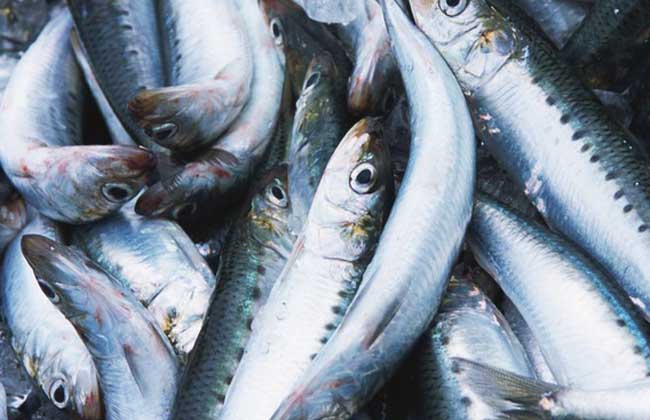
Sardines are called "shadian fish" in Hong Kong, China, and are also known as sardin fish, wen, and ruo, among other names. They are mainly used as food, but the fish meat can also be made into animal feed, and they are mostly used to make canned food. They were named after being first caught in Sardinia, Italy, and are distributed in isotemperate ocean regions between 6 and 20 degrees north and south latitude. Let us take a look below at how much sardines cost!
How much do sardines cost?
Sardines grow quickly and have strong reproductive capacity, so their price is relatively cheap, usually around 16 yuan per jin, and a can costs only about ten yuan, containing at least about five sardines. In the market, it is said that sardines sold by weight are very few; most are sold by the ton or by the box, 10 kg per box, 1 to 10 boxes starting at 129 yuan, 11 to 99 boxes starting at 119 yuan, and about 100 boxes starting at 108 yuan.
How to choose sardines
Sardines are lazy by nature, often crowded together and motionless, and have a high mortality rate. Usually those on the market are frozen. When choosing sardines, check whether the flesh is elastic. Buy those with gills that are light red or dark red, eyeballs slightly protruding with clear black and white, an intact appearance with no fallen scales, and no foul fishy smell. Those with black eyes and a silvery sheen on the skin are best.
How do you choose canned sardines?
1. Visual inspection: Check whether the canning seal is tight, whether the appearance is clean, and whether there is wear or rust, such as a dirty appearance, darkening, spots, or rust on the edges. If it is a glass jar canned product, you can place it in a bright place to directly observe its internal quality, and after gently shaking it, see whether the contents are neatly shaped, whether the broth is cloudy, and whether there are impurities or foreign matter.
2. Hand pressing: Check whether the can has a swollen-lid condition. You can press the bottom and lid of a tinplate can with your fingers, or press the lid of a glass jar canned product, and carefully observe whether there is can swelling.
3. Tapping and listening: This is used to check the quality of the contents of the can. You can use a small wooden stick or your finger to tap the center of the bottom or lid of the can and listen to the sound to judge the quality of the can. Good-quality cans have a crisp, solid sound; substandard and poor-quality cans, including those with insufficient contents and large empty spaces, have a muddy, hollow sound, that is, a hoarse "po po" sound.
4. Air leakage: Whether a can leaks air is very important for its preservation. When checking for air leakage, generally submerge the can in water and squeeze its bottom with your hand. If there is an air leak, small bubbles will appear. However, during the check, do not move the can while it is submerged in the water, so as not to make the small bubbles hard to see.