How much is beef per jin now?
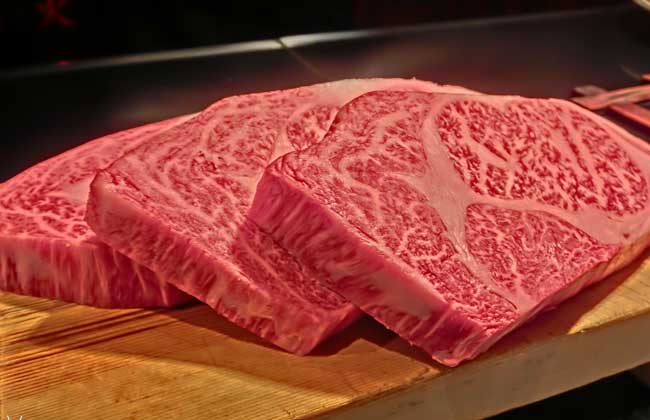
Beef is one of the meat foods, rich in protein, and its amino acid composition is closer to what the human body needs than pork. It can improve the body's resistance to disease, and is especially suitable for people who are growing and developing, or recovering after surgery or illness, in terms of replenishing blood loss and repairing tissues. Usually the market price of beef is 2 to 3 times higher than that of pork. Let's take a look below at how much beef costs per jin!
How much is beef?
The price of beef is affected by different cuts, fresh or frozen meat, ordinary or premium cattle, imported or domestic, grain-fed or grass-fed, fattened or working cattle, beef cattle or culled cattle, buffalo or yellow cattle, and so on. Domestic fattened chilled beef costs 40 to 50 yuan per jin, frozen beef is about 20 yuan cheaper than chilled beef, at 30 to 40 yuan per jin, frozen minced meat costs 20 to 30 yuan per jin, and modified-atmosphere packaged, boxed and marinated meat costs 50 to 75 yuan per jin. Imported frozen cuts of beef cost 25 to 35 yuan per jin, and minced or chunk meat costs 18 to 25 yuan per jin.
How to Tell Good Beef from Bad
1. Look at the color: Fresh meat is a uniform red with a luster, and the fat is pure white or creamy yellow. Slightly stale meat is a little darker in color, the cut surface still has some luster, but the fat has no luster. Spoiled meat is dark red with no luster, and the fat is dull and may even turn green.
2. Smell the odor: Fresh meat has the normal, distinctive smell of fresh beef. Slightly stale meat has a slight ammonia or sour smell. Spoiled meat has a putrid odor.
3. Touch the stickiness: The surface of fresh meat is slightly dry or has a air-dried film, and it does not stick to the hand when touched. Slightly stale meat has a dry or sticky surface, and a freshly cut surface is moist. Spoiled meat has an extremely dry or sticky surface, and a freshly cut surface is also sticky.
4. Test the elasticity: The dent left by pressing fresh meat springs back immediately. The dent left by pressing slightly stale meat recovers slowly and cannot fully recover. The dent left by pressing spoiled meat cannot recover and leaves a clear mark.
5. Check the broth: High-quality frozen beef (thawed meat) gives a clear, transparent broth, with fat gathering and floating on the surface, and a certain aroma. Slightly low-quality frozen beef (after thawing) gives a slightly cloudy broth, with fat floating on the surface in small droplets, and a poorer aroma and fresh taste. Spoiled frozen beef (after thawing) gives a cloudy broth with yellow or white flocculent matter, very little fat floating on the surface, and an off odor.
How to Tell Real Beef from Fake
1. Observe: Real beef has a relatively fine texture, a uniform red color, a glossy meat quality, and the muscle fibers are milky white between the fibers. Fake beef has coarse grain, uneven color, and dull, lusterless muscle fibers.
2. Smell: Fresh beef smells like normal meat, with no pungent odor. Fake beef smells somewhat strange, and stale meat has a putrid odor.
3. Ask: If you often buy meat from the same shop and are fairly familiar with the owner, you can ask for relevant information. Usually, when facing regular customers, the owner has a mindset of keeping customers and will answer your questions fairly honestly. This point is relatively ineffective with a sly old owner, but from his answers you can observe whether he is lying. A dishonest owner will find it hard to sell good food, so buy with caution.
4. Cut: After pressing real beef, it has good elasticity and can return to its original shape. The meat also feels relatively smooth and tender to the touch, and semi-dry beef does not stick to the hand and feels fairly good. After buying it and cutting it with a knife at home, the slices are large and elastic. After pressing fake beef, the rebound is obviously weak and it cannot return to its original shape. The meat is also coarser, feels unpleasantly sticky to the touch, cuts with poor elasticity, and easily falls apart.
5. Taste: The mouthfeel of real and fake beef is completely different. After cooking, real beef comes out in slices, looks very clean, and tastes fine and chewy. Fake beef easily falls apart into small pieces when cooked, tastes like bean dregs, and has a poor texture when chewed.