How much does a Pu'er tea cake cost? A look at the latest market prices
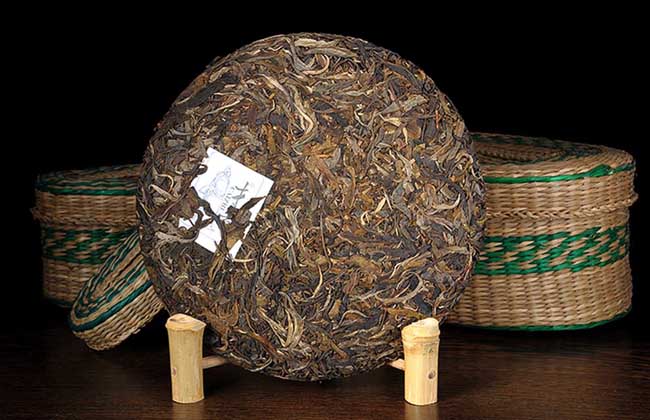
Pu'er tea is mainly produced in Xishuangbanna, Lincang, Pu'er and other areas of Yunnan Province. It is called Pu'er tea because its original shipping and distribution center was in Pu'er County. It is mostly stored and transported in compressed cake form. Historically, one cake weighed 357 grams, and seven cakes made one pick, which made calculation and mule transport convenient. Let's take a look below at how much a Pu'er tea cake costs!
How much does a Pu'er tea cake cost?
Pu'er tea cakes vary greatly in price depending on quality. First is the difference between raw and ripe tea. Compared with raw Pu'er tea, ripe tea is more expensive, and it is closely related to the age of the tea and the place of origin. If it is ripe tea, ancient-tree ripe tea leaves generally cost around 500 yuan per 50 grams, while for those Pu'er tea cakes of medium quality, about three jin costs around 200 yuan, which is still quite good value for money.
How do you choose a Pu'er tea cake?
1. Observe the shape: good Pu'er should have fat, tender, tightly twisted strips and complete leaf shapes. If it is broken, fine tea dust or contains many impurities, it is generally a defective product. Loose Pu'er tea is graded by tenderness, from below grade, grade one up to grade ten and special grade, with tenderness increasing progressively. Generally speaking, the higher the tenderness, the better the quality.
2. Smell the aroma: whether a piece of tea is new or old, it should not have other mixed odors. Ripe tea has a ripe-tea aroma after pile fermentation, new raw tea has a fresh fragrance and sweetness, and aged tea should have a special aged scent. Good aged Pu'er gives off natural fragrances such as camphor aroma and lotus aroma, rather than a “stinky bug odor”.
3. Try brewing: after brewing, look at the infused leaves (tea dregs), mainly checking softness, color and uniformity. Soft, plump, tender leaves with elasticity are good; hard, inelastic leaves are of poor quality. A brownish-red, even and consistent color is good; a mottled, uneven color, or leaves that are blackened, carbonized, or rotten like mud with unopened leaf surfaces indicate poor quality.
4. Try drinking: a good aged Pu'er tea cake should be smooth and mellow on entry, with a pure taste, refreshing and balanced, not strongly stimulating, and able to flow from the mouth to the throat and stomach without obstruction. If there is numbness in the mouth or abnormal bitterness and astringency, the place of origin should be questioned. Tea from the Menghai area tends to be somewhat more bitter, while tea from Simao tends to be somewhat more astringent.
How do you drink a Pu'er tea cake?
1. Pry the tea: a Pu'er tea cake is a relatively firm cake. Before drinking Pu'er tea, an appropriate amount of tea leaves needs to be pried off the cake. For this step, you must prepare tea needles, tea knives or other tea-prying tools, and also ensure safety during the tea-prying process.
2. Awaken the tea: the tea leaves pried off the tea cake generally need to be awakened first before the tea leaves can show their best side. Awakening the tea actually means placing the pried-off tea leaves in a clean, shaded place to air. During this process, the awakening environment must be kept clean.
3. Store the tea: this means placing the awakened tea leaves in a dedicated container. During tea storage, must avoid odors, moisture and light, so as not to affect the quality of the Pu'er tea leaves.
4. Brew the tea: this means putting an appropriate amount of tea leaves into a teapot or teacup. According to your own preference, choose the ripe-cake drinking method or the raw-cake drinking method. Note that the first infusion is for washing the tea, and it is best not to drink it.