How much is monk fruit per jin? A full analysis of the market prices
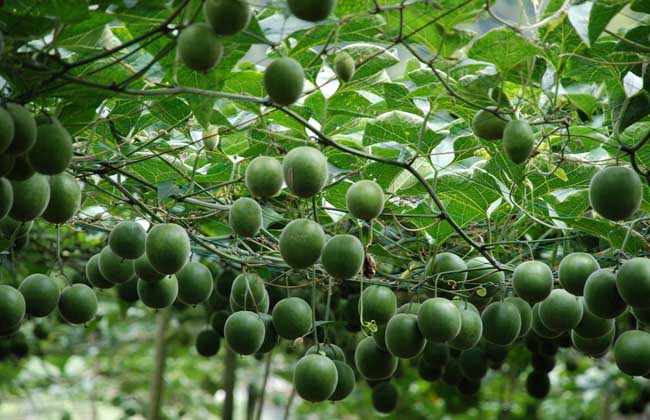
Monk fruit is also known as lahan guo, false bitter melon, smooth-fruited Momordica, jin bu huan, luo han biao, luo gui ba and so on, and is praised by people as the "immortal fruit". It is the fruit of the perennial climbing plant monk fruit of the Cucurbitaceae family, a precious local specialty of Guilin, and also one of the first batch of materials approved by the state for both medicinal and culinary use. Its main effect is to relieve cough and resolve phlegm. Let us take a look below at how much monk fruit costs!
How much does monk fruit cost?
The market price of monk fruit is relatively high, usually 25 to 30 yuan per jin, with a single fruit weighing about 20 to 30 grams. Fresh monk fruit is generally sold by the piece, with cheap ones at 1 yuan each and more expensive ones ranging from 1.5 to 2 yuan each. However, since monk fruit is a precious Chinese medicinal herb with excellent edible benefits, such a price is considered acceptable.
The production areas of monk fruit
Monk fruit is mainly produced in Longjiang Township, Longsheng and Baishou and other towns of Yongfu County, Guilin City, Guangxi Zhuang Autonomous Region. Yongfu County and Longsheng County are the hometowns of monk fruit, with a relatively long planting history. Among them, Yongfu has been planting monk fruit for more than 300 years, and Longsheng County has been planting monk fruit for more than 200 years. Ninety percent of China's monk fruit is produced in Yongfu County and Longsheng County, and it is now also distributed in Guangdong, Hunan and other provinces.
How to select monk fruit
1. Look: the surface of monk fruit is brown, yellowish-brown or greenish-brown, with dark patches and yellow downy hairs. The more downy hairs on the fruit surface, the fresher it is. Try to choose long-shaped fruit, and also check whether the monk fruit has scorched areas, whether the fruit center is whitish, and whether it appears damp.
2. Shake: pick up the monk fruit and shake it. It is best if it does not rattle. Rattling fruit is caused by insufficient growing days, so after drying the inner substance of the fruit fails to connect with the shell and becomes a free object. When the fruit is shaken, this free object hits the shell and makes a sound.
3. Tap: dry and elastic. When lightly tossed onto a tabletop, monk fruit that bounces like a ping-pong ball is better, and when two fruits are knocked together they give a crisp sound.
4. Brew: when monk fruit is brewed in boiling water, it has a clear, sweet fragrance and is not bitter.
The medicinal value of monk fruit
[Nature and flavor] Sweet in taste, cool in nature.
[Meridians entered] Lung and large intestine meridians.
[Effects] Moistens the lungs and relieves cough, promotes fluid production and quenches thirst, and also has the effect of moistening the intestines and relieving constipation. It is suitable for cough due to lung heat or lung dryness, whooping cough, and thirst due to summer-heat damaging fluids.
1. Clearing heat and moistening the lungs: monk fruit has the effects of clearing heat, moistening the lungs, resolving phlegm and relieving cough, and is currently the most important component of herbal tea.
2. Treating chronic pharyngitis: monk fruit has been proven to be the most effective among folk remedies for treating chronic pharyngitis. It tastes sweet, improves day by day, has no toxic side effects, and resolves the symptoms of chronic pharyngitis in 1-2 months.
3. Relieving cough, lubricating the intestines and relieving constipation, and strengthening the stomach for health: monk fruit has the effects of relieving cough, lubricating the intestines and relieving constipation, and strengthening the stomach for health.
4. Beauty care and anti-cancer: monk fruit has the effect of scavenging free radicals, has an excellent beauty effect for women, and effectively prevents the development of cancer.
5. Treating diabetic patients: monk fruit is absolutely good news for diabetics. Its rich glycosides are 300 times sweeter than sucrose, have a blood sugar-lowering effect, and can assist in treating diabetes and obesity.