What is the market price of Gentiana scabra per jin?
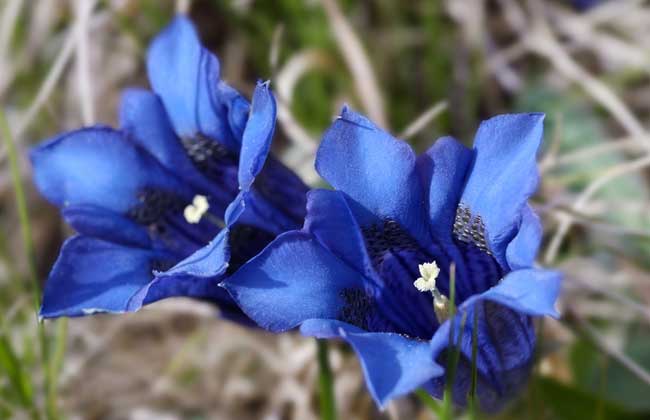
Gentiana scabra, also known as bile herb, grass gentian, mountain gentian, etc., is a perennial herbaceous plant of the genus Gentiana in the Asteraceae family. It is distributed in Northeast China and Inner Mongolia, Hebei, Shaanxi, **, Jiangsu, Anhui, Zhejiang and other places. It has the effects of clearing heat and drying dampness, and purging liver and gallbladder fire. It also has a very good effect on treating total hair loss. Let's take a look below at how much Gentiana scabra costs!
How much does Gentiana scabra cost?
The price of Gentiana scabra mainly depends on regional differences, but the price fluctuation range is still not large. At present, the price of high-quality Gentiana scabra on the market is mostly between 40 and 75 yuan. For example, the price of Gentiana scabra in the Yunnan region is 42 yuan or 57 yuan per kg, and the price of Gentiana scabra in the Northeast region is 73 yuan, 62 yuan, or 58 yuan per kg. Of course, the packaging specifications of Gentiana scabra differ by region, so its price naturally also varies.
Efficacy and effects of Gentiana scabra
[Nature and flavor] Bitter in taste, cold in nature.
[Meridian entry] Lung and liver meridians.
[Efficacy] Clearing heat and drying dampness, purging liver and gallbladder fire. Used for damp-heat jaundice, genital swelling and genital itching, vaginal discharge, eczema and itching, liver-fire red eyes, tinnitus and deafness, hypochondriac pain and bitter taste in the mouth, priapism, convulsions and twitching, etc.
1. Clearing heat and drying dampness: Gentiana scabra can treat damp-heat jaundice, genital swelling and genital itching, vaginal discharge, priapism, eczema and itching, etc.
2. Purging liver and gallbladder fire: Gentiana scabra can treat jaundice, bitter taste in the mouth, red eyes, deafness, hypochondriac pain and other symptoms caused by cholecystitis, gallstones, and viral hepatitis, etc.
3. Removing fire and calming wind: Gentiana scabra can treat convulsions and twitching caused by fever.
4. Promoting diuresis and eliminating dampness: Gentiana scabra mainly treats eye pain, neck pain, pain in both hypochondriac regions, upward attack of damp-heat, etc.
5. Expelling parasites and promoting digestion: Gentiana scabra can treat infantile malnutrition, hidden heat in the stomach, seasonal warm-heat disease, heat diarrhea and dysentery, remove intestinal worms, benefit liver and gallbladder qi, stop fright and restlessness, etc.
Related combinations of Gentiana scabra
1. With Coptis chinensis: Both medicines are bitter and cold in flavor. Coptis chinensis has a notable detoxifying effect and is good at clearing heart fire. Gentiana scabra is good at purging excess fire of the liver and gallbladder, and is wonderfully effective for heat pathogens in the liver meridian. When the two medicines are used together, their effect is powerful and remarkable. They are good at purging liver and gallbladder fire, and mainly treat red, swollen and painful eyes, deafness, and tinnitus.
2. With rhubarb: Both belong to the category of extreme yin, with a bitter and cold flavor. When used together, their power to purge fire and detoxify is strong and fierce. Gentiana scabra specifically enters the liver and gallbladder, clearing and draining excess fire of the liver and gallbladder. With the help of rhubarb, it sinks downward and moves in the yin aspect, dredging the binding of damp-heat in the lower jiao. This is the meaning of what is called “restraining its anger and bending it to make it descend.” In addition, rhubarb can also move liver stagnation and break blood stasis. When the two are used as mutual assistants, it can be applied to syndromes such as hypochondriac pain and deafness, bitter taste in the mouth and red eyes, jaundice and heat dysentery, damp swelling of the scrotum, constipation and dry bound stool, or even hematemesis, epistaxis, fright mania, etc., caused by liver depression with exuberant fire and internal blazing damp-heat.
3. With Haliotis diversicolor shell: Gentiana scabra is very bitter in taste and very cold in nature, a purely yin substance. It enters the liver and gallbladder meridians. Its flavor is thick and it sinks downward. It can guide heat to move downward and is an important medicine for descending and purging excess fire of the liver and gallbladder. Haliotis diversicolor shell is salty in taste and slightly cold, and enters the foot jueyin liver meridian. Its substance is heavy and sinks downward, so it can heavily settle and calm the liver, and settle and subdue floating yang. It is a medicine for cooling the liver and calming the liver. Both medicines are inherently descending in nature, calming liver yang and clearing liver fire. When used as mutual assistants, they are good at treating headache, red swollen and painful eyes, and other syndromes due to upward flaming of liver fire and upward hyperactivity of liver yang.
4. With Bupleurum chinense: Gentiana scabra is bitter, cold, and descending, and purges excess fire of the liver and gallbladder. Bupleurum chinense is aromatic, light, and clear, and rises and disperses, soothing the qi of the liver and gallbladder. When the two medicines are used together, one descends and one rises, one rises and one disperses, purging fire and clearing yang, and all stagnation is dispersed.
5. With Angelica sinensis: Gentiana scabra is bitter and cold, and purges excess fire of the liver and gallbladder. Angelica sinensis is sweet and warm, nourishing blood and enriching yin to harmonize the liver. When the two medicines are used together, the intention is to supplement within purging and also prevent damage to yin fluids caused by exuberant liver and gallbladder fire while dispersing, so as to remove pathogens without harming healthy qi.
6. With Artemisia capillaris: It clears and disinhibits liver and gallbladder damp-heat and relieves jaundice, treating chest and hypochondriac distention and fullness, bitter taste in the mouth, and dry throat.