How much does a weeping willow cost per tree? Latest market prices
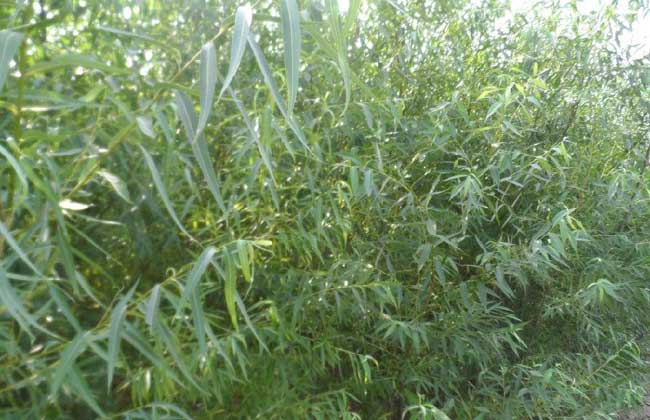
The weeping willow is a type of willow, a deciduous tree of the genus Salix in the family Salicaceae. It is one of the most common tree species and also a commonly used street tree in landscaping, with high ornamental value and low cost, making it very popular in greening projects in various regions. It is mainly distributed in Zhejiang, Hunan, Jiangsu, Anhui and other places, and has been introduced and planted in countries across Asia, Europe and the Americas. Let us take a look below at how much a weeping willow costs!
How much does a weeping willow cost?
Category Specification (trunk diameter) Price (per tree) Category Specification (trunk diameter) Price (per tree) Weeping willow 2 cm 3.5 yuan Weeping willow 3 cm 9 yuan Weeping willow 4 cm 20 yuan Weeping willow 5 cm 30 yuan Weeping willow 6 cm 50 yuan Weeping willow 7 cm 70 yuan Weeping willow 8 cm 110 yuan Weeping willow 9 cm 150 yuan Weeping willow 10 cm 200 yuan Weeping willow 11 cm 260 yuan Weeping willow 12 cm 360 yuan Weeping willow 15 cm 550 yuan Weeping willow 18 cm 800 yuan Weeping willow 20 cm 1000 yuanThe actual market price of weeping willow may fluctuate up or down depending on the time and season, market conditions, the size of the root ball, and the quality grade. The prices provided here on this site are only reference prices for weeping willow; when purchasing, please refer to the actual situation.
Growth habits of the weeping willow
The weeping willow is light-loving, preferring warm, humid climates and moist, deep acidic and neutral soils. It is relatively cold-resistant and especially tolerant of waterlogged conditions, but it can also grow in deep, dry highland areas. It has strong sprouting ability, a well-developed root system, and rapid growth. A 15-year-old tree can reach 13 m in height with a trunk diameter of 24 cm. However, certain insect pests can be quite serious, its lifespan is relatively short, the trunk is prone to aging, and it gradually declines after 30 years. Its root system is well developed, it has a certain resistance to toxic gases, and it can absorb sulfur dioxide.
Planting value of the weeping willow
1. Landscape use: The weeping willow has slender branches and grows rapidly, and has been deeply loved by the Chinese people since ancient times. It is best planted by water, such as at bridgeheads, beside ponds, along rivers, lakes and other water system banks. Planted alternately with peach trees, it can create a scene of pink peach blossoms and green willow leaves, one of the signature planting arrangements of spring scenery in Jiangnan gardens. It can also be used as a shade tree, street tree or highway tree, is also suitable for factory greening, and is an important tree species for stabilizing embankments and protecting banks.
2. Economic value: The wood of the weeping willow can be used to make furniture, the branches can be woven into baskets, the bark contains tannins and can be used to extract tannin extract, and the leaves can be used as sheep feed.