How much does Changhua chicken-blood stone cost? A detailed explanation of the market
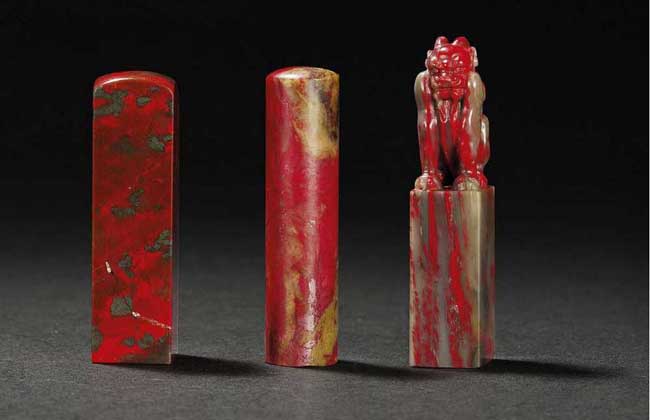
Changhua chicken-blood stone is a precious gem unique to China, possessing a bright red color like chicken blood and the natural beauty of fine jade. It has always been valued as highly as jewelry and jadeite, and is renowned at home and abroad as a "national treasure." It is produced in Yuyan Mountain at the source of the "Zhejiang West Grand Canyon" northwest of Changhua in Lin'an City, Zhejiang Province. Let's take a look below at how much Changhua chicken-blood stone costs!
How much does Changhua chicken-blood stone cost?
Chicken-blood stone has long enjoyed the reputation of "queen of stones" and is a gem and jade variety unique to our country. It is named for the bright red cinnabar (vermilion) that resembles chicken blood. People universally love its brilliant color and its translucent, delicate texture, treasuring it extremely. In recent years, the value of chicken-blood stone has soared dramatically, and the storm of generally skyrocketing gem and jade prices has raged even more fiercely where chicken-blood stone is concerned. It is understood that a piece of chicken-blood stone that had just been mined 10 years ago had an auction price of 30 million yuan, and could be cut and polished into more than 30 standard "Dahongpao" seals of 3 cm in size. Calculated at a price of 3 million to 5 million yuan per "Dahongpao" seal, its value would already be around 100 million yuan.
The development history of Changhua chicken-blood stone
Changhua chicken-blood stone mainly formed from volcanic activity 75 million years ago. Its discovery and mining have a history of more than 1,000 years, and its widespread use flourished during the Ming and Qing dynasties. During the Ming Dynasty, Changhua chicken-blood stone handicrafts had already become treasures collected in the imperial palace and the British Museum. During the Qing Dynasty, emperors and empresses of successive reigns such as Kangxi, Yongzheng, Qianlong, Jiaqing, Xianfeng, Tongzhi, and Xuantong selected Changhua chicken-blood stone as imperial seals. In modern times, Chairman Mao Zedong once used and treasured two large Changhua chicken-blood stone seals, and Premier Zhou Enlai once selected Changhua chicken-blood stone as a national gift to present to former Japanese Prime Minister Tanaka. Many cultural celebrities such as Guo Moruo, Wu Changshuo, Qi Baishi, Xu Beihong, Pan Tianshou, Qian Juntao, and Ye Qianyu also formed indissoluble bonds with Changhua chicken-blood stone.
The legend of the origin of Changhua chicken-blood stone
Changhua chicken-blood stone is produced at the source of the Zhejiang West Grand Canyon, 50 kilometers west of Changhua Town in Lin'an City, Zhejiang Province -- Yuyan Mountain at an altitude of more than 1,300 m, which belongs to the Tianmu Mountain system and is the northern branch of the Xianxia Ridge range. It is surrounded by mountains on all sides, with continuous steep ridges. The high mountains and deep valleys form unique climatic conditions. A local folk rhyme goes: Banqiao straight ridge leads through, wind and rain never cease their trace. In summer one covers oneself with cotton quilts, in October snowflakes drift. In the chicken-blood stone producing area, there are many legends about chicken-blood stone, one of which is that the phoenix destroyed locusts and shed its blood on Yuyan Mountain.
According to legend, in ancient times, when a pair of beautiful phoenixes were soaring in the heavenly court, they from time to time heard sorrowful voices. Looking down, they saw locusts causing disaster, epidemics spreading, crops failing to grow, desolation everywhere, and the common people in sorrow. Seeing this scene, the kind and righteous phoenixes resolved to use their own strength to eliminate the locust plague, dispel the epidemics, and save all living beings. Through their efforts, their beautiful wish was realized. The grateful common people begged the phoenixes to stay and share with them the morning songs and evening melodies.
The phoenixes were moved by the sincerity of the common people and built a Phoenix Pond to dwell in on a mountain peak -- Kangshan Ridge. Before long, all the mountain rocks around Phoenix Pond became white and transparent, like white jade, and Yuyan Mountain got its name from this. On Yuyan Mountain, hundreds of birds sang together, and below Yuyan Mountain, the common people lived and worked in peace and contentment. But just then, a pair of tyrannical bird-lions came to the mountain. When they saw that the phoenixes nested on such a beautiful mountain top and had created such brilliant achievements and received the gratitude of the common people, they became jealous and resolved to drive the phoenixes away and occupy Phoenix Pond.
One day, when the female phoenix was in her incubation period and the male phoenix had gone out to seek food, they launched a surprise attack on the phoenix nest and attacked the female phoenix. The female phoenix bravely fought them. The battle between the phoenix and the lions made Yuyan Mountain tense with alarm, and even the sun and moon lost their light. When the male phoenix returned to the nest, the female phoenix had one leg pecked off by the bird-lions, and her blood spilled over Yuyan Mountain. In the end, the phoenix, filled with grief and indignation, still defeated the bird-lions with their own wisdom and strength. After tearfully burying the innocent trampled phoenix eggs, they soared into the sky and departed.
After the phoenixes left, the common people grieved deeply. They prayed to heaven, asking the deities to protect the righteous phoenixes. The sincerity of the common people and the blood cried by the phoenixes moved heaven and earth. The Jade Emperor sent the crown prince down to the mortal world to inspect the true situation, and ordered Ksitigarbha Bodhisattva to transform the phoenix blood and phoenix eggs into beautiful cinnabar stones, and endowed each cinnabar stone with the power to turn misfortune into good fortune, ward off evil and promote good, punish evil and spread love.
From then on, the phoenix blood and phoenix eggs on Yuyan Mountain, after being buried for tens of millions of years, became today's rare treasure -- chicken-blood stone. Chicken-blood stone should originally have been called phoenix-blood stone. It was only because later generations, when mining the ore, discovered that its color resembled freshly slaughtered chicken blood dripping on jade that they customarily called it "chicken-blood stone."