How much does a Chinese scholar tree cost? A look at the latest market prices
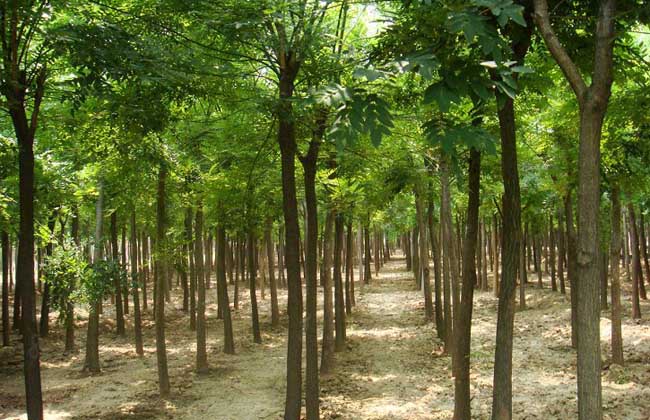
The Chinese scholar tree (Sophora japonica), also known as the pagoda tree, sophora flower bud, bean locust and so on, originated in China and is now widely cultivated across the northern and southern provinces and regions, and is especially common in North China and the Loess Plateau region. Its flowers are an important nectar source plant, its wood is used for construction, and its seed kernels can be used for brewing wine or as paste material and feed. The bark, branches and leaves, flower buds, flowers and seeds can all be used as medicine, giving it high planting value. Let us take a look below at how much a Chinese scholar tree costs!
How much does a Chinese scholar tree cost?
Category Specification (diameter) Price (per tree) Category Specification (diameter) Price (per tree) Chinese scholar tree 3 cm 12 yuan Chinese scholar tree 5 cm 25 yuan Chinese scholar tree 6 cm 40 yuan Chinese scholar tree 8 cm 110 yuan Chinese scholar tree 10 cm 280 yuan Chinese scholar tree 12 cm 400 yuan Chinese scholar tree 15 cm 750 yuan Chinese scholar tree 20 cm 1500 yuan Chinese scholar tree 25 cm 2000 yuan Chinese scholar tree 30 cm 3200 yuanThe price of the Chinese scholar tree is mainly determined by specification and market location. Prices vary greatly with different specifications, and prices also differ depending on the market location.
The growing environment of the Chinese scholar tree
The Chinese scholar tree likes light and is slightly shade-tolerant, and can adapt to relatively cold climates. Its roots are deep and well developed, and it is not strict about soil requirements. It can grow normally in acidic to calcareous and mildly saline-alkali soil, and even under conditions with a salt content of around 0.15%. It is wind-resistant and also tolerant of drought and barren soil, and is especially able to adapt to poor environmental conditions such as compacted urban soil, but it grows poorly in low-lying waterlogged places. It has relatively strong resistance to pollution such as sulfur dioxide and smoke and dust. It grows relatively fast when young, then grows at a medium rate afterward, and has a very long lifespan. Old trees tend to become hollow, but the dormant buds have a long lifespan, which is favorable for crown renewal.
The planting value of the Chinese scholar tree
1. Ornamental value: The Chinese scholar tree is a characteristic tree species commonly used in courtyards. Its branches and leaves are dense, and its green shade is like a canopy, making it suitable as a courtyard shade tree. In northern China it is mostly used as a street tree, and it is also very suitable for planting in parks, around buildings, in neighborhood residential areas and on lawns. In summer and autumn its flowers can be enjoyed, and it is also an excellent nectar source plant. The flower buds can be used as dye, the fruit pulp can be used as medicine, and the seeds can be used as feed, etc. It is also a tree species that combines windbreak and sand fixation with timber and economic forest uses. It is a good shade tree and street tree species in urban and rural areas, and has relatively strong resistance to toxic gases such as sulfur dioxide and chlorine.
2. Economic value: The wood of the Chinese scholar tree is rich in elasticity and resistant to water and moisture, and can be used for construction, ships, railway sleepers, vehicles and carving, etc. The seed kernels contain starch and can be used for brewing wine or as paste material and feed. The seeds are pressed for oil for industrial use, and the outer fruit skin of the sophora pod can be used to extract molasses, etc.
3. Medicinal value
①Sophora leaf: clears the liver and drains fire, cools the blood and removes toxins, dries dampness and kills parasites. Mainly used for infantile convulsions, high fever, intestinal wind, blood in the urine, hemorrhoids, eczema, scabies, and carbuncles and boils.
②Sophora branch: dispels blood stasis and stops bleeding, clears heat and dries dampness, dispels wind and kills parasites. Mainly used for abnormal uterine bleeding, leukorrhea with reddish and whitish discharge, hemorrhoids, damp itching of the scrotum, heart pain, red eyes, and scabies.
③Sophora root: dispels blood stasis and reduces swelling, kills parasites. Mainly used for hemorrhoids, throat obstruction, and ascariasis.
④Sophora pod: cools the blood and stops bleeding, clears the liver and improves eyesight. Mainly used for hemorrhoid bleeding, intestinal wind with blood in the stool, bloody dysentery, abnormal uterine bleeding, bloody strangury, blood-heat vomiting and epistaxis, red eyes due to liver heat, and dizziness.