How much do lamp fish cost? An introduction to the latest market prices
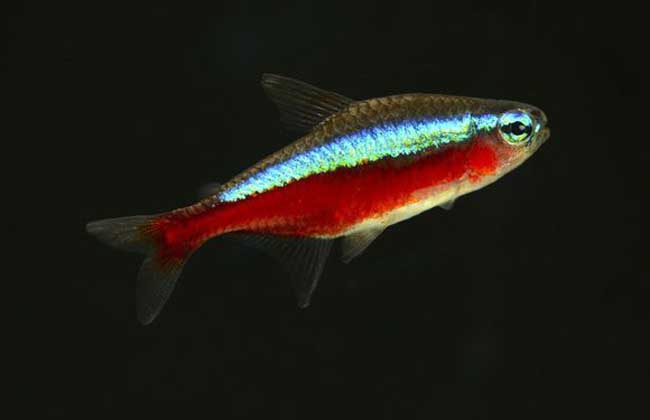
Lamp fish were originally a group of small characin fish native to the Amazon River basin in South America, mainly small tetras. In recent years, because of planted aquascapes simulating the "tropical rainforest", they have become popular from the Netherlands in Western Europe all the way to the mainland. As important stars of planted tanks and paludariums, let us take a look below at how much a lamp fish costs!
How much do lamp fish cost?
Lamp fish cost from 1 to 10 yuan each. Lamp fish are the most numerous type among tropical ornamental fish, and their characteristics are a petite body, rich colors and a gentle temperament. Most have an adipose fin, and only very few species lack it; all have teeth in the mouth, and most like to live in slightly acidic soft water between 22 and 28 degrees. Diffused light is best, and some species need to live in a darker environment.
Tips for choosing lamp fish
1. See whether the fish swims steadily: if it stays near the water surface with its head tilted upward, it has probably not adapted to the water quality, and such a fish should absolutely not be bought.
2. See whether the fish's color is uniform: if the color is dull, the fish may not have adapted to the water quality or may be sick, though this problem can also occur if the fish has been startled.
3. Choose lamp fish with a uniform body: note that the fish's back must not be "sunken"; if it is sunken, it may be an old fish, and lamp fish can also get a disease in which the back first sinks, then the belly becomes thin, and it slowly dies with no cure. Therefore, special attention should be paid to this when buying, so as not to bring fish with poor health home.
Common types of lamp fish
1. Cardinal tetra: The cardinal tetra, scientific name Paracheirodon axelrodi, also known as the neon tetra or new red neon tetra, is native to Brazil in South America. It is petite and slender, with a body length of about 4 to 5 cm, a laterally compressed, spindle-shaped body, a relatively wide head and caudal peduncle, and a rounded, blunt snout. Its most obvious feature is a bright blue-green band on the upper half of the body, with a red patch on the lower rear abdomen; the whole body has a metallic sheen and sparkles, and it is especially beautiful when swimming. It has a gentle temperament and is best kept in groups; its swimming posture is lively and energetic, making it very endearing.
2. Neon tetra: The neon tetra, scientific name Paracheirodon innesi, is a fish of the genus Paracheirodon in the family Characidae. Its whole body is shrouded in a blue-green glow, with a bright blue-green band running from the head to the tail, and below the blue-green band on the rear half of the body there is also a short red band; the belly is silvery white, and the red and blue bands run through the whole body, dazzling to the eye. Under different lighting or in different environments, the color of the bands becomes deeper or lighter from time to time. Because its body color is extremely gorgeous, it has the reputation of the "queen" among tropical fish and is a kind of ornamental fish much loved by people.
3. Black neon tetra: The black neon tetra, scientific name Hyphessobrycon herbertaxelrodi, also known as the black lamp fish, black neon, black lamp tube and so on, is a small ornamental fish of the genus Hyphessobrycon in the family Characidae, order Characiformes. In the wild it is distributed in the tropical primeval forests along the lower reaches of the Amazon River. It is brightly colored, crystal clear and small and exquisite. Kept in the same tank with other lamp fish, this fish appears elegant and outstanding, and is much cherished.
4. Harlequin rasbora: The harlequin rasbora, also known as the neon lamp fish, lemon lamp fish, Australian lemon lamp fish and so on, has a spindle-shaped body that is slightly laterally compressed and a forked caudal fin, with a body length reaching 5 cm. Its dorsal fin, anal fin and caudal fin are all red with white edges, while the pectoral fins and pelvic fins are colorless and transparent. In the middle of the body, from the pelvic fins to the base of the caudal fin, there is a black triangular pattern, which is why it is also called the blue triangle or black triangle fish.
5. Flame tetra: The flame tetra, also known as the fire-spitting lamp, is distributed in the Peruvian Amazon River basin. Its body length is only 2 cm, and its whole body is bright red, which is why it is also called the flame lamp and ruby lamp. If this fish is kept in slightly acidic water, it will show a ruby-like red. It is easy to keep, but care should be taken when keeping it in a community tank, because its small size makes it prone to being swallowed by other fish.