Plantain latest price trends and market movement analysis
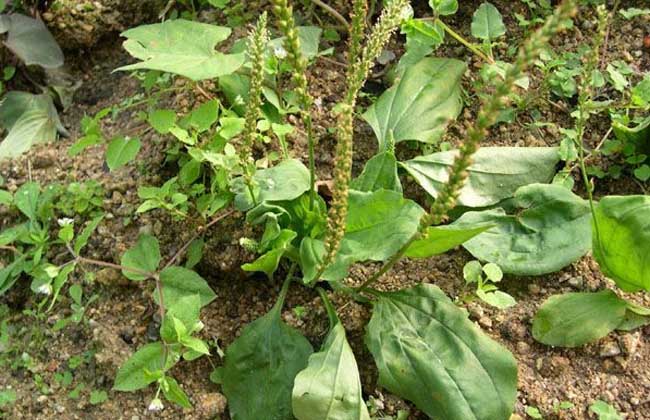
The traditional Chinese medicine plantain is the dried or fresh whole plant of Plantago asiatica or Plantago depressa in the family Plantaginaceae. It grows in grasslands, riverbanks, ditch edges, meadows, fields and roadsides, at altitudes of 5-4500 m, and is distributed in most parts of China. It is sweet in taste and cold in nature, and has the effects of promoting diuresis, clearing heat, improving eyesight and resolving phlegm. Let us take a look at the price trends of plantain below!
Plantain price trends
Product name Specification Market price Plantain whole plant Anguo 5.50 Plantain whole plant Hehuachi 8.00 Plantain whole plant Yulin 5.00 Plantain standard slices Bozhou 6.00The main producing areas of plantain are located in Heilongjiang, Jilin, Liaoning, Inner Mongolia, Hebei, Shanxi, Shaanxi, Ningxia, Gansu, Qinghai, **, Shandong, Jiangsu, Henan, Anhui, Jiangxi, Hubei, Sichuan, Yunnan, Xizang and other places, and it is also distributed in Korea, Russia, Kazakhstan, Afghanistan, Mongolia, Pakistan, Kashmir and India.
Efficacy and effects of plantain
[Nature and taste] Sweet in taste, cold in nature.
[Meridians entered] Liver, kidney and bladder meridians.
[Efficacy] Clearing heat, promoting diuresis, resolving phlegm, cooling blood and detoxifying, used for edema with scanty urine, painful heat strangury, summerheat-dampness diarrhea and dysentery, phlegm-heat cough, hematemesis and epistaxis, carbuncle swelling and sore toxin and other conditions.
1. Plantain has a certain diuretic effect and can treat occult nephritis.
2. Plantain has antitussive, antiasthmatic and expectorant effects, and can treat chronic bronchitis, pertussis and so on.
3. Plantain also has an anti-pathogenic microorganism effect, can inhibit inflammation, and can treat mumps, bacillary dysentery, acute icteric hepatitis, and treat mouth and tongue sores and so on.
4. Plantain also acts on the stomach and intestinal tract, can temporarily increase intestinal juice secretion, and it also makes breathing deeper, larger and slower, promotes secretion of the bronchi and digestive tract, and promotes the movement of the intestinal canal and uterus. It can treat diarrhea in children.
Identification of adulterants of plantain
1. Fried South Lepidium seed or South Lepidium seed: The seeds are oblong and slightly flat, about 1 mm long and about 0.5 mm wide. The surface is brown, reddish brown or blackish brown (fried), one end bluntly rounded, one end of broadleaf plantain nearly truncate, and the two sides are often asymmetrical. Observed under a dissecting microscope: there are fine dense reticulations, and two longitudinal lines can be seen. Slight odor, slightly pungent taste.
2. Fried North Lepidium seed or North Lepidium seed: The seeds are flat ovate, about 1.5 mm long and about 0.5-1 mm wide, one end bluntly rounded, the other end gradually pointed and slightly concave, with a white dot (hilum) appearing at the concave area. The surface has many fine granular protrusions, and two longitudinal rows of shallow grooves are seen.
3. Schizonepeta seed: It is triangular prismatic and elliptical, about 3 mm long and about 1 mm wide, with a surface yellow-brown to brown-black, slightly smooth, with a small yellowish-white fruit stalk scar at one end, brittle in texture, aromatic when chewed, and weak in taste.
4. Codonopsis seed: The seeds are ovate-elliptical, about 1.5-1.8 mm long and 0.6-1.2 mm wide, with a brownish surface and glossy. Under a dissecting microscope, densely covered longitudinal shallow lines can be seen, the top is bluntly rounded, and the base has a circular concave hilum, hard in texture. Slight odor, slightly bitter taste.
5. Celosia seed: The seeds are flat round, a few are round-kidney-shaped, 1-1.5 mm in diameter. The surface is black or red-black, shiny, slightly raised in the middle, with a hilum at the concave area on the side, and the seed coat is thin and brittle. Odorless, tasteless
6. Motherwort seed: The seeds are triangular, about 2-3 mm long and about 1.5 mm wide. The surface is grayish brown to grayish brown, with dark spots. One end is slightly wider and truncate, the other end gradually narrows and is pointed, the pericarp is thin, the cotyledons are off-white and rich in oil. Odorless, bitter taste.
7. Small plantain: It is boat-shaped and elliptical, about 3 mm long and about 1.5 mm wide. The surface of a few seeds is brownish red, slightly glossy and somewhat transparent, and most seeds are covered on the outer side of the center of the dorsal and ventral surfaces by a grayish-brown membranous mucilage layer. The back is raised, and the middle of the ventral surface is obviously sunken, slightly boat-shaped. Slight odor, slightly salty taste.