How much does a red arowana cost? An introduction to market prices
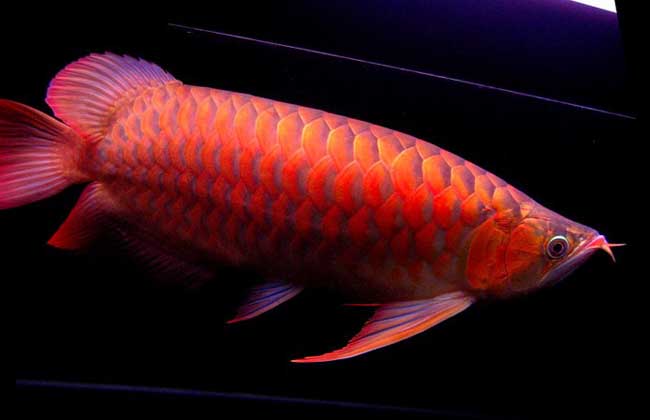
The red arowana is the red subspecies of the Asian arowana (Scleropages formosus). Because of the influence of Chinese dragon culture, it has become a symbol of good fortune, believed to bring luck and wealth, and so it is elegantly called the feng shui fish. At the same time, since it cannot be artificially bred, it is already on the verge of extinction, so being able to keep a red arowana makes it seem extremely precious and adds a great deal of face! Let us take a look below at how much a red arowana costs!
How much does a red arowana cost?
In Hong Kong, China, Macao, China and Taiwan, China, a single red arowana can cost as much as a million yuan. In fact, the price difference of red arowanas mainly depends on the variety. Generally, although they are all red arowanas, different varieties can differ in price by tens of thousands of yuan. By color they can be divided into four types: orange-red, pink, dark red and blood red. The deeper and redder the color, the more expensive the price, and the blood-red arowana is especially the most prized. The price of a red arowana also depends on whether its back glows and whether it is a crossback. Generally speaking, a red arowana that both glows and is a crossback costs more than one that neither glows nor is a crossback, higher by about two to three thousand yuan.
Why is the red arowana so expensive?
1. Unique appearance: The red arowana is the most expensive variety in the arowana lineage, named for the red scales covering its whole body. Due to its growing environment, it generally has a more bullet-shaped head, and mainly hunts by speed, which also makes its body relatively slender and smooth. Its unique appearance and fully red scales are one of the reasons why the red arowana is so expensive.
2. Scarce numbers: Although in recent years, with the continuous advancement of breeding technology, the domestic aquarium market has become more and more prosperous, it is still impossible to overcome the difficulty of artificial breeding of red arowanas. At present, the genuine red arowanas seen on the aquarium market are all imported from abroad. However, since 1980, the Washington Convention has explicitly prohibited the sale and capture of wild arowanas. Under pressure from public opinion, some exporting countries have exported fewer and fewer red arowanas, which has caused the price of red arowanas to keep climbing.
How do you best select a red arowana?
1. The body shape of the red arowana must be well proportioned. Viewed from top to bottom, the fish's spine should not be curved, length and width should be coordinated, the head should be pointed and upturned, and the scales should be large, bright and neat, with no scale erosion and no dark spots.
2. The eyes of the red arowana should be large and agile, and not too bulging.
3. The mouth of the red arowana should close tightly, the color should be darker red, the teeth should be neat, and it is best not to consider one with an underslung jaw.
4. The barbels of the red arowana should be equal in length, intact, and show no signs of having been injured by bumping.
5. The curve of the red arowana's belly should be attractive and not sunken, and the anal area should match the curve of the fish's belly.
6. When swimming, the red arowana must be agile and like to swim in the upper layer of the water. It should be sensitive when it sees food and know how to compete for it. Only this shows that the fish is lively and will be full of dominance in the future.
7. For red arowanas of 25-40 cm, color selection is relatively important. Most people prefer red arowanas that are darker in color and more dazzling, thinking that their coloration will certainly be good later. In fact, this is not so. Such varieties generally become rather ordinary when they grow up and are unlikely to perform well. Those chosen with lighter body color often develop well. Generally, the coloration of a red arowana begins from the gill covers. Only by identifying the key points can you select a good red arowana.