What is the general price of a tourmaline necklace?
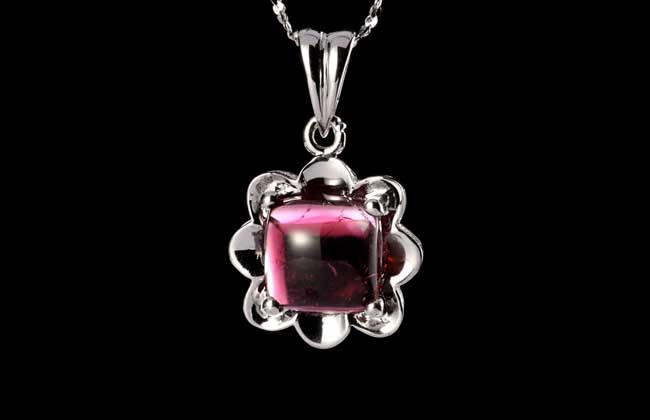
Tourmaline is a jewelry-grade variety of the tourmaline group, a borosilicate crystal that may contain elements such as aluminum, iron, magnesium, sodium, lithium and potassium, giving it a wide range of colors. Its English name is derived from ancient Sinhala and means "mixed gemstone." The tourmaline necklace is one of its common crafted items. Let's take a look below at how much a tourmaline necklace costs!
How much does a tourmaline necklace cost?
Tourmaline necklaces come in every price range, from a few hundred to tens of thousands of yuan. It depends on the color grade, size and clarity. Generally, those with few flaws and vivid color are relatively more expensive. The ones in shopping malls are not necessarily good quality, yet they still sell for 3000 to 5000 yuan. If you want to buy good tourmaline, you still need to bring along a friend who knows the trade. Some people say that anything under 10,000 yuan is not worth buying, since the quality is obvious at a glance. If you are not chasing quality and just want one to wear for fun, buying one for 3000 to 5000 yuan is enough.
What varieties of tourmaline necklaces are there?
1. Blue tourmaline: a general term for light blue to deep blue tourmaline. Because blue tourmaline is relatively rare, it has now become the most valuable color variety of tourmaline. Blue tourmaline is found in the yellow clay of weathered granite in Siberia, Russia, and also in Brazil, Madagascar and the United States.
2. Red tourmaline: a general term for pink to red tourmaline. Among red tourmaline, the purple-red and rose-red ones are the best, and it is known as red tourmaline; in China it is called "children's face." However, in nature, brownish, brownish-red and deep red ones are more commonly produced, and the tone varies greatly. At the same time, the specific gravity of tourmaline changes with color; deep red has a greater specific gravity than pink.
3. Brown tourmaline: darker in color and rich in the chemical element magnesium. Brown tourmaline is mostly produced in Sri Lanka, the three countries of North America, Brazil and Australia.
4. Colorless tourmaline: colorless tourmaline is very rare, with only small amounts produced in Madagascar and California in the United States. It should be noted that some colorless tourmaline on the market is made by heating and fading pink tourmaline.
5. Green tourmaline: green and yellow tourmaline are the most common of all tourmaline color varieties, so their value is also inferior to blue and red tourmaline. Green tourmaline is mostly produced in Brazil, Tanzania and Namibia, while yellow tourmaline is distributed in Sri Lanka.
6. Multicolored tourmaline: because tourmaline color zoning is very well developed, two-color or three-color bands of red and green often appear on a single crystal. The common ones are gems with alternating red and green, generally called "watermelon tourmaline," which are deeply loved by collectors and consumers.
How to identify a tourmaline necklace
1. Look at the color grade: observe the overall clarity of the tourmaline and the extent of its inclusions. Good tourmaline has a particularly bright color grade and is very transparent, while artificially dyed tourmaline has a duller color and lacks the natural "gem luster" of natural tourmaline. In addition, the cross-section of tourmaline is an arc-faced triangle, and the body contains visible tubular inclusions.
2. Look at the color: tourmaline comes in many colors, among which red, rose red, pink, blue, green, yellow, brown, black and colorless are the main ones. The most expensive are vivid blue and vivid red, and red-green bicolor, rose red and emerald green tourmaline are also very expensive.
3. Refractive index: tourmaline has a very large refractive index. Looking from top to bottom, you can see an obvious double image at the bottom edge. Moreover, under transmitted light, when observing tourmaline from different angles, you will find that the brightness and tone of the color change differently. Fake tourmaline does not have this. You can also use a magnifying glass to observe tourmaline, and the facet edges and inclusions on its back will show a double-image effect.
4. Weigh it: the density of tourmaline is greater than that of glass and crystal. When buying, you can use your hand or a scale to measure the difference in their weight.
5. Transparency: good tourmaline is crystal clear, and those with obvious haze or opacity are generally defective.
6. It has electrical properties: when tourmaline is heated, its surface releases electric charges, and these charges can attract dust and paper scraps in the air. When buying, you can rub it with your hands or heat it under sunlight to observe its electrical properties.