How much is pecan per jin? A look at market prices
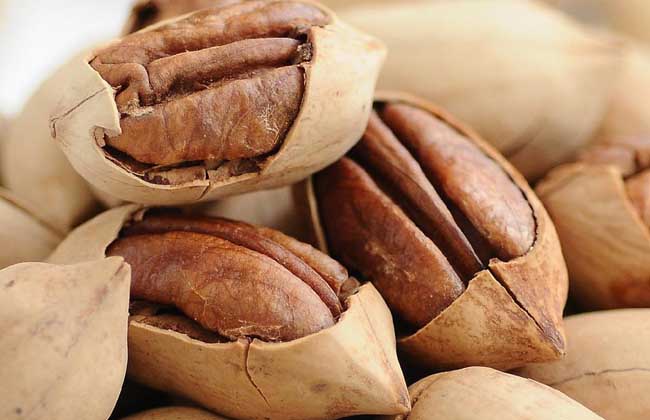
Pecan is native to North America and was later grown on a large commercial scale in the southern United States. It is a purely wild nut, a natural green food free of any pollution or public hazard, with excellent dietary and health-care nutritional value, and it is also convenient and easy to shell. It is sought after and loved by people, and is also a fine gift, giving deliciousness and even more so health. Now let us take a look together at how much pecan costs per jin!
How much is pecan per jin
The price of pecan is actually tied to its nutritional value. In recent years, among dried nuts, it has become the sales champion with a relatively strong advantage. As the saying goes, once one's worth rises, the price naturally follows upward. At the same time, pecan is divided into many types, and product quality varies, so prices differ too. Generally, pecan on the market costs anywhere from 30 to 50 yuan per jin, and quality cannot be guaranteed, as many are old stock. Usually large nuts are a bit more expensive, while small nuts are relatively cheaper, but small nuts do not taste worse.
How to select pecan
1. Look at the shell: check whether the pecan is plump, whether the color of the pecan is even, and whether the shell of the whole pecan is very thin; a thin shell is better.
2. Look at the kernel: the kernel color of pecan is best when yellow-white, next when dark yellow, and even less when brown-yellow.
3. Look at size: pecan has large pointed, medium pointed, small pointed, and large round, medium round, small round types. Large ones are a bit more expensive, but bigger is not necessarily better; it depends on personal preference, and small ones have a more delicate taste.
4. Dryness: look at the degree of dryness of the kernel; the drier the kernel, the better.
5. Taste the flavor: pecan is best when sweet and fragrant. If the kernels are entirely oily, sticky to the hand, black-brown, and have a rancid taste, they have seriously deteriorated and must not be eaten.
6. Oil content: pecan is better when its oil content is high. Usually, the best ones are those with large, round and whole walnuts, thin and clean white shells, a high kernel yield, dryness, large kernel pieces, clean white color, and high oil content. The selection method should mainly be to take out the kernel and observe it; a plump kernel is superior, and a shriveled one is inferior.
The effects and functions of pecan
1. Antioxidant: The American Dietetic Association suggests that people, especially middle-aged and elderly people and menopausal women, had best eat pecan two or three times a week, because the arginine, oleic acid, antioxidant substances, and so on contained in pecan are quite beneficial for protecting the cardiovascular system and preventing coronary heart disease, stroke, senile dementia, and so on. Do not eat too many at one time, otherwise it will affect digestion.
2. Nourishing the brain: The trace elements zinc and manganese contained in pecan are important components of the pituitary gland. Regularly eating pecan is beneficial for nutritional supplementation of the brain and has the effect of strengthening the brain and improving intelligence.
3. Beauty: Pecan can nourish the skin and make people fair and tender. It is especially suitable for older people with aging skin to eat often. It can also resist aging, is an auxiliary agent for treating neurasthenia, and can delay memory decline. The vitamin E it contains can protect cells from oxidative damage by free radicals and is a substance widely recognized in the medical field as anti-aging, so pecan is known as the “king of longevity” and the “longevity nut”.
4. Treating gallstones: The pyruvic acid contained in pecan kernels can prevent the binding of mucin with calcium ions and unconjugated bilirubin, and can make it dissolve, recede, and be excreted. Therefore, patients with gallstones might as well persist in eating pecan kernels every day, and it is possible to avoid the hardship of surgery. Likewise, pecan kernels can also be used to treat urinary stones.
5. Preventing and treating neurasthenia: Pecan can serve as a therapeutic agent for neurasthenia. For people who often have dizziness, insomnia, palpitations, forgetfulness, and general weakness, eating 1 to 2 pecan kernels each morning and evening can have a certain preventive and therapeutic effect.
6. Anti-inflammatory and sterilizing: Oil pressed from pecan kernels used externally has astringent, anti-inflammatory, exudation-inhibiting, and anti-itching effects, and can be used to treat dermatitis and eczema with good efficacy.
7. Benefits for the heart: Pecan has a variety of polyunsaturated and monounsaturated fatty acids and can lower cholesterol levels. Therefore, eating pecan is somewhat beneficial to the human heart.
8. Preventing white hair: Because pecan kernels have a high fat content, they can help thin people gain weight, and can make rough, dry skin become moist, delicate, smooth, and elastic. For people whose hair turns white early, it also has the effect of darkening and nourishing the hair. At the same time, it also has the effect of tonifying the kidneys, regulating the intestines, and strengthening the legs and lower back, and it supports postpartum women's physical strength, so it is also a very good “brain-health food”.