What is the market price of the five-paced snake per jin?
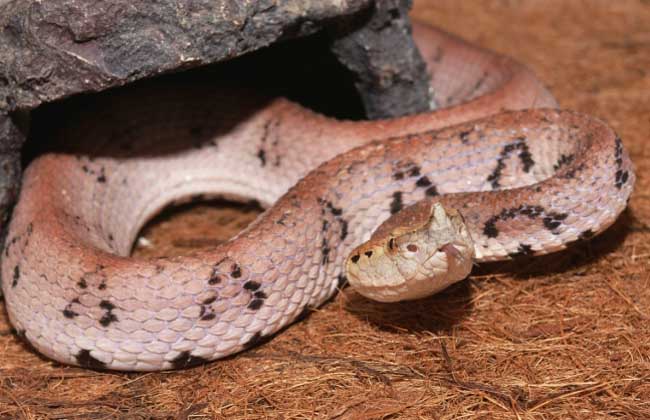
The five-paced snake is a valuable medicinal material, and its distribution around the world is relatively narrow. It seems that the five-paced snake is found only in southern China and parts of Vietnam bordering China, and no other countries have been heard to have it. Its market price also remains high. Now let us take a look at the market price of the five-paced snake!
The market price of the five-paced snake
The market price of the five-paced snake is generally around 300 yuan, with 350 yuan per jin being fairly common. Preparing snake wine from the five-paced snake is quite popular and is currently one of the more commonly used methods, second only to using dried five-paced snake as medicine. Of course, various delicious recipes can also be made by cooking the five-paced snake, but many people are afraid of venomous snakes and do not dare to eat it. Those who eat the five-paced snake the most are southerners. Moreover, ordinary working-class people are reluctant to eat it either; restaurants charge at least more than 400 yuan per jin, making it a high-end consumption dish.
The effects and functions of the five-paced snake
[Nature and flavor] Sweet and salty in flavor, warm in nature, toxic.
[Meridian entry] Liver meridian.
[Effects] Dispels wind, unblocks collaterals, and stops spasms. It is used for stubborn wind-damp impediment, numbness and contracture, deviated mouth and eyes from stroke, hemiplegia, twitching and spasms, tetanus, leprosy, scabies, and other conditions.
[Usage] 3 to 9 grams, ground into powder and swallowed, 1 to 1.5 grams each time, 2 to 3 times a day.
1. Stroke worsened by alcohol, hemiplegia, deviated mouth and eyes, limb numbness, leprosy, stubborn tinea, skin itching: 1 five-paced snake, 60 grams of Notopterygium root, 60 grams of Angelica sinensis, 60 grams of Gastrodia elata, 60 grams of Gentiana macrophylla, 60 grams of Acanthopanax bark, 30 grams of Saposhnikovia root, 30 grams of Angelica pubescens, 30 grams of Angelica dahurica, 20 grams of Cimicifuga rhizome, 20 grams of red peony root, and 2000 grams of white liquor. Soak for 2 weeks, take 2 times a day, 10 milliliters each time.
2. Tetanus, acute and chronic infantile convulsions: 3 grams each of five-paced snake and black-tailed snake, and 1 centipede. Grind together into a fine powder, and take 0.9 grams each time.
3. Mouth sores: Grind dried five-paced snake into powder, take 1 to 2 times a day, 5 to 10 grams each time, mixed with breast milk.
4. Recovery period of poliomyelitis: Grind dried five-paced snake into powder and take it with clear wine, 2 times a day, 5 grams each time.
The effects and functions of five-paced snake wine
1. Treating stubborn wind disorders: The Chinese medicine Agkistrodon is sweet and can relax tension, and being salty and warm it enters the blood collaterals. It has the effects of dispelling wind and unblocking collaterals, stopping spasms, and "penetrating the bones to search out wind," making it an important medicine for treating stubborn wind disorders.
2. Treating wind-damp paralysis: When used as medicine, the five-paced snake can mainly treat wind-damp paralysis, tension and contracture of the sinews and vessels, deviated mouth and eyes, hemiplegia, as well as leprosy, scabies, and other conditions.
3. Treating tetanus: The Chinese medicine Agkistrodon can dispel wind, calm fright, and stop spasms. For treating tetanus and acute and chronic infantile convulsions, the five-paced snake is often combined with black-tailed snake, centipede, and others, such as in Dingming San.
4. Lowering blood lipids: The venom of the five-paced snake has the effects of resisting coagulation and thrombosis, removing fibrinogen, lowering blood viscosity, dilating blood vessels, improving microcirculation, and lowering blood lipids.
5. Treating cervical spondylosis: Five-paced snake wine can relieve symptoms such as sciatica, bone hyperplasia, cervical spondylosis, frozen shoulder, rheumatic and rheumatoid arthritis, and traumatic injuries.