How much does a pink cockatoo cost per bird?
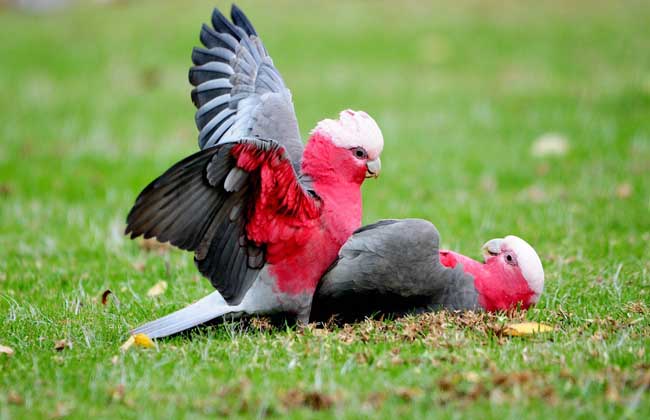
The pink cockatoo is one of the most widely distributed parrots in Australia, and its beautiful pink plumage is very charming. It likes to inhabit forest areas, grasslands and semi-arid regions, including pastoral areas and parks. It feeds on grass seeds, grassland plants, grains, fruits, grass roots, insects and their larvae. Now let us take a look at the market price of the pink cockatoo!
Pink cockatoo market price
The pink cockatoo is regarded as an agricultural pest bird in many areas, but in countries outside Australia the price of legally imported pink cockatoos has always been high. Hand-raised birds are very intelligent and playful, and even wild birds become friendly and tame after being captured and kept. Keeping them requires giving them more attention and care and providing a variety of toys to avoid feather-plucking caused by boredom. In addition, its call is very unpleasant and it likes to screech randomly in the morning and evening. For this reason, very few people in China keep pink cockatoos, so there is no market reference price.
Pink cockatoo living habits
Pink cockatoos usually gather in very loose flocks to move about together, and sometimes nearly a thousand of them gather in a large flock in certain pastures. Their calls are sharp and hoarse, and they often move together with the sulphur-crested cockatoo. They are omnivores and consume various plant seeds, such as oats, wheat or many kinds of grasses. In addition, they also take insects and their larvae, berries, tender shoots, flowers and eucalyptus seeds. They have many ways of drinking water: either standing at the muddy soil of a pond and swallowing a big mouthful, or swallowing water in flight in the manner of a swallow, or choosing to land in the middle of a pond and dipping their beak into the water. They like to forage on the ground. They are especially fond of foraging in cereal crops cultivated by farmers and in sunflower fields, and therefore often cause enormous damage to crops.
Pink cockatoo breeding habits
The breeding season of the pink cockatoo is from July to December in southern Australia, from February to June in the north, and in central Australia it depends on rainfall. If food is abundant and the climate is moderate, it can breed twice a year. The nest is generally built in a tree hollow of a eucalyptus tree 2 to 20 meters or more above the ground, and the area around the nest entrance is concealed with bark. It can lay 2 to 6 eggs at a time, the incubation period is about 25 days, and the chicks can grow their feathers in 7 or 8 weeks. In the wild there have been records of hybridization with Major Mitchell's cockatoo and the long-billed corella.
Pink cockatoo keeping methods
When pink cockatoos are kept in captivity using nest boxes nailed together from wooden boards, they breed from April to August each year. The nest box is best replaced by hollowing out a hole 20 cm in diameter in a large tree trunk, and the size of the nest is 40 cm long, 25 cm wide and 25 cm high. Iron sheeting must be nailed to the corners of the nest and the edge of the nest hole to prevent them from gnawing the nest box to pieces. Provide no less than 3 cm of wood shavings or coarse sawdust inside the nest. During the breeding and incubation period of the breeding birds, attention should be paid to the stability of the environment, external disturbance should be minimized, and frightening should be avoided, so as not to alarm the parent birds into abandoning the nest and affect incubation and brooding. During the breeding period, oyster shell powder or bone meal and other mineral salts should be added to the feed, and a small amount of biscuits (or toast slices) should be provided every day. During the brooding period, cooked eggs should be added to the feed every day. During the winter breeding period, the indoor temperature should be kept above 20°C, and the relative humidity is best at 45%-50%, and the indoor air should be kept circulating. The drinking water should be changed frequently to keep it clean.