How much does a budgerigar cost? A look at the market prices
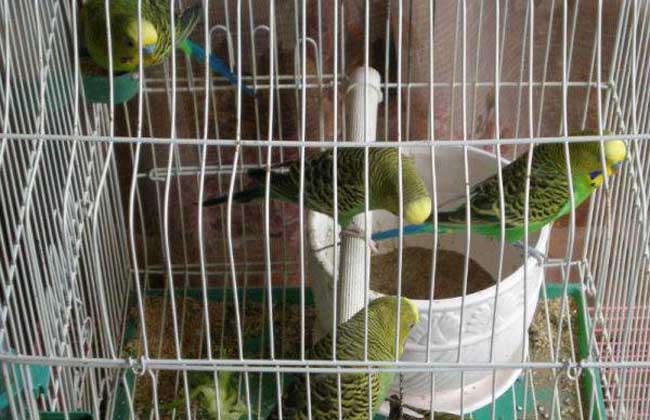
The budgerigar is a bird of the order Psittaciformes, family Psittaculidae, native to the inland regions of Australia. Wild budgerigars inhabit woodlands, grasslands and similar places. They live in flocks, feed on plant seeds and other food, and are lively in temperament and easy to tame. In China they are one of the most common and popular pet birds. Let's take a look below at how much a budgerigar costs!
How much does a budgerigar cost?
In Shenzhen, clouded (pied) budgerigars cost about 35-80 yuan per pair, large-headed (English) budgerigars about 120 yuan each, and adult budgerigars about 40 yuan each (78 yuan per pair); in Beijing, budgerigars cost about 25-60 yuan each; in Nanjing, about 25 yuan each; in Xuzhou, blue opaline gene budgerigars about 38.00 yuan each, and budgerigars about 28-35 yuan each; in Shanghai, baby budgerigars about 59-128 yuan each, yellow clouded (pied) budgerigars about 48-109 yuan each, large-headed (English) budgerigars about 160 yuan each, yellow red-eyed baby budgerigars about 108 yuan each, and Japanese white clouded (pied) budgerigars about 109 yuan each; in Guilin, clouded (pied) budgerigars about 47-50 yuan each; in Shenyang, clouded (pied) budgerigar chicks about 25-35 yuan each; in Linyi, budgerigar chicks about 25 yuan each.
Tips for choosing young budgerigars
1. It should feel firm and plump in the hand, and its body temperature should be warm. A normal bird's body temperature is higher than a human's, so it should feel warm when held. If it feels cold to the touch, it may be sick, and it is best not to buy it.
2. If it opens its mouth to beg for food when it sees people, or runs around energetically, it is a sign that this is a good bird with plenty of vitality.
3. The area around the vent should be clean and free of droppings. If the area around the vent is very dirty, it usually means the bird has diarrhea, possibly some kind of gastrointestinal disease, which is a great threat to birds, and it is best not to buy it. However, sometimes the area around the vent of a young bird is dirty because it brushed against its own or other birds' droppings in the nest box, rather than actually having diarrhea, so it is not easy to tell the difference.
4. It is best if you can see the bird pass fresh droppings. Shaped droppings that are not green are best. Also pay attention to whether there is a foul or fishy smell; a normal bird's droppings do not smell bad.
5. Pay attention to whether it has eye disease. Young budgerigars are especially prone to this in summer. The symptoms are tearing, inability to open the eyes, and swollen tear glands. With careful care for a while it will recover, but care should be taken not to let it come into contact with other birds at home, as it is easily contagious.
6. Before buying, it is best to ask the seller to feed it once in front of you (if the young bird is on an empty stomach). If its appetite is good and it eats a lot, that is best. If its appetite is poor, you should be careful; it may be difficult to care for in the future and its resistance may be weaker.
7. The most important point: among all the birds, it is the one you like most.
Tips for choosing adult budgerigars
1. Young birds are highly active, will go around pestering other birds, and are very alert to people approaching, while old birds move slowly and are reluctant to move about.
2. The scales on the feet are smooth and glossy, while those of old birds become raised and coarse.
3. Old birds have long, curved nails.
4. The skin around the eyes has no fat, and the eyes are wide open and bright.
5. Young birds have a slender body shape, while old birds are more obese.
6. The feathers are glossy, bright and smooth, while old birds' feathers are rather messy, and some may even be raised.
7. Characteristics of sick birds
① The whole body's feathers are puffed up, the head is drawn back into the shoulder feathers for warmth, and it sleeps most of the time. Most illnesses show this sign.
② There is dirty green excrement around the vent, possibly some kind of gastroenteritis, which is usually difficult to cure.
③ Open the inside of the wing and check whether there are clustered small black spots. If there are, it has parasites, mostly feather lice, but they could also be blood-sucking mites.
④ Check whether there are scabs on the beak, around the eyes, on the nose, and on the beak and feet. If there are, it is scabies, which often appears on budgerigars.
⑤ Inability to open the eyes and tearing, that is, the eye disease mentioned when selecting young birds. Adult birds can also be infected, especially budgerigars or lovebirds.