What is the general market price of cockscomb?
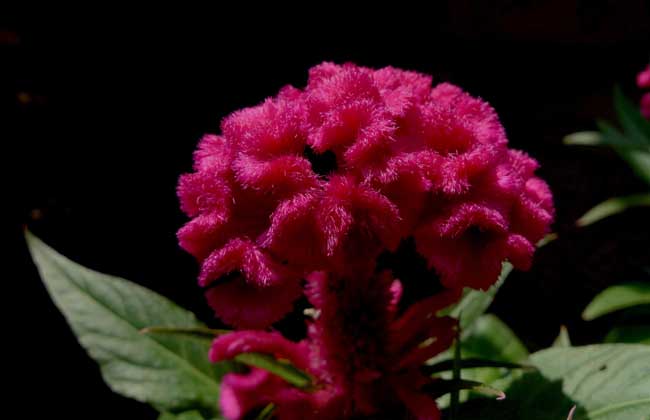
Cockscomb grows in autumn. When the enthusiasm of summer is replaced by the bleak autumn wind and people's moods grow increasingly melancholy, cockscomb blooms like a blazing fire, its fiery red color and dense clusters of flowers exceedingly beautiful. It can also be eaten and used medicinally, with effects of cooling the blood, stopping bleeding, stopping leukorrhea, and stopping dysentery. Now let us take a look together at the market price of cockscomb.
The market price of cockscomb
Before 2000, the price of cockscomb fluctuated little; after 2000, price fluctuations increased somewhat. In 2005 the market price reached 17-18 yuan. In 2009 and 2010, the market price of red cockscomb remained at 11-17 yuan (due to quality differences, the price gap was relatively large). In 2011, the price of the new crop fell in one step to a low of 4 yuan, and in 2012 the price rose from 4 yuan to the current 7-8 yuan.
Variety classification of cockscomb
1. Phoenix-tail cockscomb: Phoenix-tail cockscomb is an annual herbaceous plant. The plant height is 80-120 cm, and the spike inflorescences gather into a triangular terminal cluster, with colors including red, yellow, and purple-red. The natural flowering period is from July until frost appears. The flower spikes are plump and shaped like torches, making them a seasonal floral material for summer and autumn. They can withstand relatively long dry storage, but after opening the box they must be placed in water as quickly as possible; commercially available preservative solutions can also be used to extend vase life.
2. Multi-head cockscomb: Multi-head cockscomb is a plant of the genus Celosia in the Amaranthaceae family. Its inflorescences are twisted and folded, closely resembling a cockscomb, commonly known as head-shaped cockscomb. The slender spikes of the spike inflorescence are reed-flower-shaped and resemble torches, and are called feathery cockscomb. Because cockscomb has a long flowering period, rich and vivid flower colors, and is easy to cultivate, it is the most common potted flower in gardens.
3. Yingluo cockscomb: Yingluo cockscomb grows five or six chi tall. Its leaves are narrow and long with pointed tips, alternate, and have small stipules. In autumn a flower crown emerges at the end of the stem, with spikes all hanging down, just like a yingluo necklace, and its colors include red, yellow, white, and so on. The stem is long, strip-shaped, and soft, and withers as soon as cold arrives. The flower spikes differ from those of ordinary cockscomb: the terminal inflorescence has one larger, crown-shaped piece, while the rest are similar to small cone-shaped cockscomb. In the past it was propagated by sowing. After the main piece of the terminal inflorescence grows strong, it is very prone to lodging. The flower type is smaller than that of ordinary head-shaped cockscomb, and the cone-shaped inflorescences grow laterally.
Efficacy and effects of cockscomb
[Nature and flavor] Sweet in flavor, cool in nature, non-toxic.
[Meridian entry] Liver and kidney meridians.
[Efficacy] Cools the blood and stops bleeding. Mainly used for bleeding from hemorrhoids and fistulas, red and white dysentery, vomiting blood, coughing blood, bloody strangury, uterine bleeding in women, and red and white leukorrhea. Used for conditions such as vomiting blood, uterine bleeding, blood in the stool, hemorrhoidal bleeding, red and white leukorrhea, and chronic unremitting dysentery.
[Usage] Internal use: decoct in water, 1.5-3 qian, or make into pills or powders. External use: decoct in water for fumigation and washing.
1. "Diannan Bencao": Stops bleeding from intestinal wind, uterine bleeding and leukorrhea in women, and red dysentery.
2. "Gangmu": Treats bleeding from hemorrhoids and fistulas, white dysentery, uterine bleeding, and also white leukorrhea, used separately for red and white cases.
3. "Yuqiu Yaojie": Clears wind and reduces fever, stops nosebleeds, and astringes the nutritive qi. Treats vomiting blood, uterine bleeding, bloody strangury, and various blood-loss syndromes.