How much does a chameleon cost
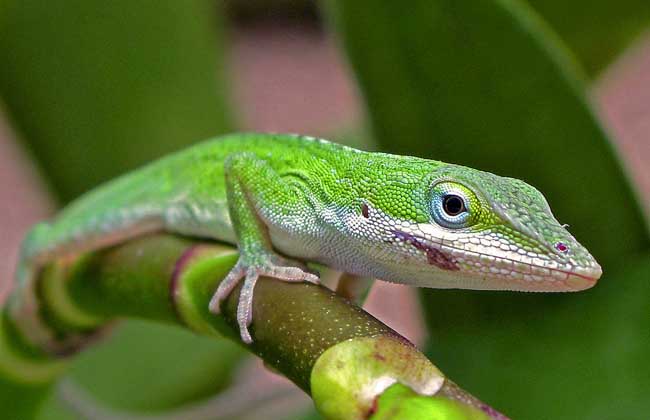
The scientific name of the chameleon is Chamaeleo, a reptile of the genus Chamaeleo in the family Chamaeleonidae of the suborder Lacertilia. It is skilled at changing the color of its body at any time according to changes in the environment. It is mostly found from rainforests to tropical savannas, some in mountainous areas, and is very rare in cold prairies. It is now the favorite pet of many reptile enthusiasts. Let's take a look below at how much a chameleon costs!
How much is a chameleon
The prices of different chameleon species are also different. A veiled chameleon (Chamaeleo calyptratus) at 2 inches is about 350 to 550 yuan each, a juvenile is about 600 to 950 yuan each, and an adult male is about 1500 to 2000 yuan; Jackson's chameleon (Trioceros jacksonii) 1200 to 1600 yuan; Meller's chameleon (Trioceros melleri) 900 to 3800 yuan; Senegal chameleon (Chamaeleo senegalensis) 250 to 400 yuan; four-horned chameleon (Chamaeleo quadricornis) 1200 to 1400 yuan; panther chameleon (Furcifer pardalis) 2500 to 3800 yuan; carpet chameleon (Furcifer lateralis) 700 to 900 yuan; helmeted leaf chameleon 1100 to 1300 yuan; leaf chameleon 400 to 500 yuan; Fischer's dwarf chameleon 700 to 800 yuan; Cape dwarf chameleon no more than 1000 yuan; bearded dwarf chameleon 350 to 400 yuan.
How to choose a good chameleon
1. During the day, the chameleon's eyes are open, bright and spirited, and the eyeballs will keep moving to stay alert and look for food!
2. Before choosing, you can feed it on the spot and take a look. If the chameleon sees food and immediately shoots out its tongue to hunt, the longer the tongue extends and the faster the tongue shoots out, the better its health condition. After it hunts, while the chameleon is eating, observe the inside of its mouth for any abnormalities.
3. Guide the chameleon to climb onto your own hand, and feel for yourself the gripping strength of the chameleon's four limbs. The stronger the grip, the better its health condition.
4. When the chameleon sleeps at night, its tail will curl up with strength or curl around a branch. If it hangs down loosely and vertically, it indicates poor health condition!
5. Do not put more than 2 chameleons together at the same time to compare them, as this will scare the chameleon to death.
How to best keep a chameleon
1. The staple food of a chameleon can be crickets, cockroaches and grasshoppers, etc. Other types such as superworms, corn worms, silkworms and pinky mice can only serve as supplementary food. Pinky mice are only suitable for feeding adults, and no more than one should be fed each month. But finding food for a chameleon is still difficult for some friends. Many friends cannot even find crickets and can only find superworms. If superworms are used as the main food for a chameleon, it is equal to letting it slowly wait for death! Superworms have low nutritional value, are hard to digest, have too high fat and low water content, and are not suitable as a staple food. Problems that may appear from long-term feeding of superworms include indigestion, various nutritional diseases, refusal to eat, etc.
2. Adults can be fed once a day, each time about equivalent to the portion of 8 to 10 adult crickets (in winter it can be reduced to 5 to 7), with feeding stopped for 1 to 2 days each week (in winter it can be fed once every other day). Juveniles can be fed 2 to 3 times a day, each time limited to 15 minutes, and feeding should also be stopped once a week or the portion reduced on 1 or 2 of those days. The actual portion can be adjusted according to the individual. It is best to feed until 70 to 80 percent full, as this can greatly reduce the chance of indigestion or aversion to a single type of food. In addition, calcium and vitamins need to be supplemented regularly. For adults, 2 to 3 times a week is enough, while juveniles need to be fed every day.
3. The best feeding time is at noon. A normal chameleon defecates within 1 hour after absorbing heat each day, and after defecating its appetite will naturally increase. Avoid feeding in the evening, because the temperature is lower at night and it is very easy to cause indigestion. Observing the chameleon's feces can help you understand their digestive condition. If you find that a lot of food in the chameleon's feces has not been digested, you should immediately reduce or stop feeding. If the feces passed are watery, it indicates that the intestines and stomach can no longer work normally, and all feeding must be stopped immediately and water supplemented for it.
4. Chameleons need a fairly large amount of water. In the wild, chameleons generally drink dew on leaves in the morning, or directly drink rainwater when it rains, so when we provide a water source we should also consider these two aspects. The best method is spraying water. Generally, a spraying system or spray bottle can be used. It should be sprayed at least twice a day, at least 3 minutes each time, and it is best to use warm water. When spraying, try to avoid spraying directly at the chameleon (especially the eyes). Once in the morning just as the sun comes out and once in the evening. Spraying in the morning is the most important, as chameleons all like to drink water in the morning. Spraying in the evening is intended to replenish the water lost while basking in the sun at noon, and it can also increase the humidity at night and lower the temperature. In hot weather and when it is dry in winter, spray once or twice more.