How much does a ficus bonsai cost per pot? Market price reference
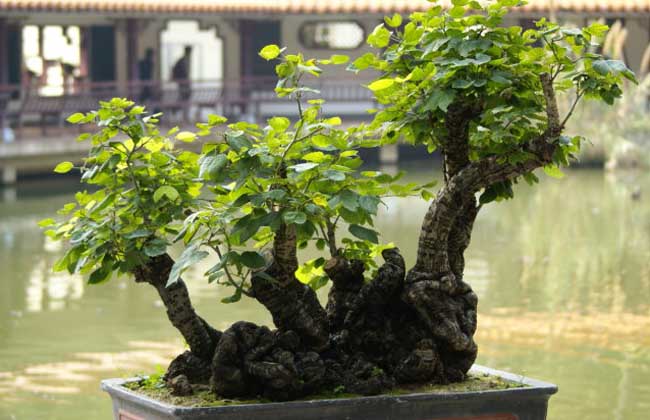
The ficus is a large tree in the Moraceae family, genus Ficus, growing in tropical and subtropical regions. Bonsai made from ficus trees have unique features such as beautiful aerial roots, beautiful root spread, beautiful branches, beautiful bark color, beautiful leaves and beautiful tuberous roots. They are famous for "a single tree forming a forest" and have high ornamental value, deeply loved by everyone. Let us take a look at the market prices of ficus bonsai!
Ficus bonsai prices
Ficus bonsai usually come in two types: aerial-root ficus bonsai and ginseng ficus bonsai. Flower markets generally sell them in large quantities. Market prices are around 200 to 300 yuan, determined by the size of the bonsai, the degree of unusualness, aesthetic value and so on. Better ones cost more, but within a thousand yuan.
Aerial-root ficus bonsai
1. Small pot: about 50 to 100 cm in height and width. Because the bonsai is small and compact, easy to move and takes up little space, it can be placed in courtyards, halls, on terraces and along corridors for viewing at any time, and can be moved at any time. It is the most sought-after collectible for ficus bonsai enthusiasts, collectors and various high-end hotels and museums.
2. Medium pot: about 100 to 150 cm in height and width. Because the bonsai is not large and is relatively easy to move, it can be placed at the main entrance of a workplace, in courtyards, halls, on terraces and along corridors for viewing at any time. It can also be placed in residential communities, squares, parks and various open areas and public activity venues to beautify the environment.
3. Large pot: over 150 cm in height and width. It can be placed at the main entrance of a workplace, in courtyards and gardens as the main feature, and can be placed in residential communities, squares, parks and various open areas and public activity venues to beautify the environment, replacing a ground-planted ficus landscape.
Ginseng ficus bonsai
1. Small pot: 20 to 30 cm in height, 15 to 20 cm in width, suitable for windowsills and tabletop display.
2. Medium pot: 30 to 50 cm in height, 20 to 40 cm in width, suitable for balconies, courtyards, halls, terraces and corridors.
3. Large pot: over 50 cm in height, over 40 cm in width, suitable for balconies, courtyards, halls, terraces and corridors.
Ficus bonsai care
1. Humidity: Improper watering does great harm to ficus bonsai. Feel the condition of the potting soil by hand, and follow the principle of "water when dry, and water thoroughly when you do." Do not water frequently; when you water, water thoroughly. Too much watering will cause root rot and make the leaves drop. In the north it is more difficult to care for, and households should spray the leaves with water more often to increase the humidity in the surrounding air.
2. Temperature: For ficus bonsai, the suitable growing temperature should not vary too much between day and night (a difference of 10 degrees) as this easily causes leaf drop and death. Usually pay attention to placing it in a place with good light transmission, and in summer pay attention to appropriate shading.
3. Potting soil: Use loose, well-draining leaf mold soil, usually in the ratio of garden soil : humus soil : sand (2:2:1). It is best to place moss on top of the bonsai in a size matching the pot; this is both attractive and plays a very good role in drainage and aeration.
4. Fertilizing: Ficus bonsai likes fertilizer for growth, but fertilizing too many times will harm the growth of the ficus bonsai. The amount of fertilizer applied should also vary according to the season.
5. Pruning: During the peak growing season, pinch the growing tips and remove buds from the plant, and carry out a major pruning once in autumn, after which no pruning is done, because the plant grows slowly in winter and should not be pruned in winter. Pruning the branches of a ficus bonsai should be done by a specialist, cutting off leggy branches, twin branches, diseased and weak branches, crossing branches and so on to give the whole plant a layered beauty.