How much does a banyan bonsai with aerial roots cost per pot?
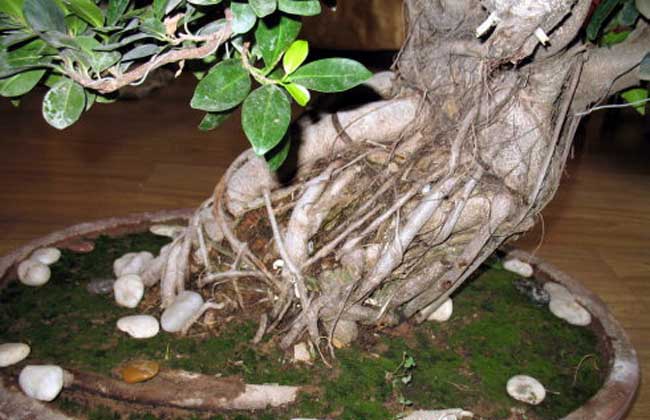
The banyan bonsai with aerial roots is also known as aerial-root banyan, fibrous-root banyan, root-carved banyan bonsai, etc. It has advantages such as being green, ecological, natural, eco-friendly, hygienic, healthy, and air-purifying. It can green, beautify, and purify the environment, and is regarded as a symbol of longevity and good fortune, implying prosperity and wealth. It is the best gift for birthday celebrations. Now let us take a look at the price of banyan bonsai with aerial roots!
Price of banyan bonsai with aerial roots
The price of a banyan bonsai with aerial roots generally ranges from 120 to 1600 yuan, mainly determined by factors such as the size of the plant, aesthetic value, degree of rarity, and artistic conception of the specimen, though different regions also have some influence. Appreciating a bonsai is somewhat similar to appreciating a cultural relic; it depends on personal affinity and viewing perspective.
Types of banyan bonsai with aerial roots
1. Small pot: about 50 to 100 cm in height and width. Because the bonsai is compact, easy to move, and takes up little space, it can be placed in courtyards, halls, balconies, and corridors for viewing at any time, and can be moved at any time. It is the most sought-after collectible for banyan bonsai enthusiasts, collectors, and various high-end hotels and museums.
2. Medium pot: about 100 to 150 cm in height and width. Because the bonsai is not large and relatively easy to move, it can be placed at the main entrance of a workplace, in courtyards, halls, balconies, and corridors for viewing at any time. It can also be placed in residential communities, plazas, parks, and various open areas and public activity venues to beautify the environment, and is highly favored by the horticultural community.
3. Large pot: over 150 cm in height and width. It can be placed at the main entrance of a workplace, in courtyards, or in gardens as a main feature, and can be placed in residential communities, plazas, parks, and various open areas and public activity venues to beautify the environment, replacing in-ground banyan landscapes.
Care of banyan bonsai with aerial roots
1. Growing medium: The banyan is robust by nature and not strict about soil selection. If conditions permit, sandy soil mixed with coal cinders can be used. If not, ordinary flower-growing soil will also do. For finished products, coconut coir can also be used as the growing medium.
2. Watering at the roots: When the root medium (coconut coir or soil) is nearly dry, water thoroughly in one go. Then wait until it dries again before watering. Generally, watering once every three to five days is sufficient. In summer, the frequency of watering can be increased, depending on the situation.
3. Watering the leaves: The leaves can be sprayed frequently with a small amount of water (in mist form).
4. Fertilization management: The banyan does not like heavy fertilization; a small amount of compound fertilizer (slow-release fertilizer) can be applied once each season. The main components of the fertilizer are nitrogen, phosphorus, and potassium.