What is the market price of a money tree per pot?
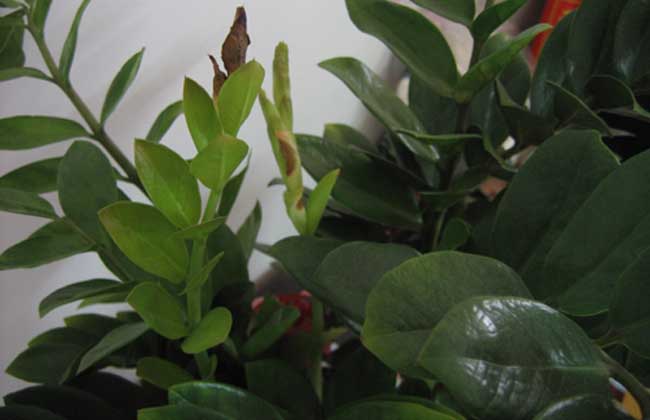
The money tree (Zamioculcas zamiifolia) is a perennial evergreen herbaceous plant native to tropical Africa. Since it was introduced to the market, its artistic ornamental shape and auspicious name have made people fall in love with it, and it quickly became popular in the green plant potted market. Now let's take a look at the market price of the money tree!
The market price of the money tree
The market price of the money tree is determined by its height. Generally, a money tree about 18 cm tall costs about 25 yuan, one about 20 cm tall costs about 30 yuan, and one about 40 cm tall costs about 200 yuan.
The growth habits of the money tree
The money tree prefers a warm, slightly dry, semi-shaded environment with little annual temperature variation. It is relatively drought-tolerant, but fears cold, cannot tolerate strong direct sunlight, and dislikes heavy, sticky soil and water accumulation in the pot. If the pot soil has poor permeability, it can easily cause its tubers to rot. It requires loose, fertile soil that drains well, is rich in organic matter, and is acidic to slightly acidic.
How to grow the money tree
1. Temperature management: The optimal growth temperature for the money tree is 20-32°C. Whether grown in pots or in the ground, it requires little annual temperature variation. For commercial cultivation, it is best to grow it in a temperature-controlled greenhouse. Every summer, when the temperature reaches above 35°C, the plant grows poorly. Measures such as adding black shade netting and spraying water around the surrounding environment should be taken to cool it down, creating a suitable environment with a comfortable ambient temperature that is also relatively dry. In winter, it is best to maintain a greenhouse temperature above 10°C. If the room temperature drops below 5°C, the plant is prone to cold damage, which can severely threaten its survival. In late autumn and early winter, when the temperature drops below 8°C, it should be moved promptly to a well-lit indoor location. Throughout the overwintering period, the temperature should be kept between 8°C and 10°C, which is relatively safe and reliable.
2. Light control: The money tree likes light and also has strong shade tolerance. It should be provided with an environment that has good sunlight but also a certain degree of shade. It cannot tolerate strong direct light, and especially should avoid the scorching sun after long rain and sudden clearing in late spring and early summer, as well as the 5-6 hours of unblocked strong light baking around noon in summer. Otherwise, the newly emerging tender leaves are very easily sunburned. During commercial cultivation, from late spring to mid-autumn, it should be placed under a shade shed with 50-70% shading, but it must not be too dark, otherwise the newly emerging tender leaves will become slender, the leaf color will turn yellow and dull, and the leaflets will be sparsely spaced, affecting the plant's compact and beautiful form. For potted plants moved indoors in winter, supplemental lighting should be provided. Keeping the pot soil on the dry side allows the plant to remain disease-free year-round. In addition, the newly emerging pinnate compound leaves do not show obvious phototropism, and the plant form remains good.
3. Water management: During commercial cultivation of the money tree, for plants kept in a greenhouse, when the room temperature reaches above 33°C, the plant should be sprayed with water once a day. Because this plant has strong drought tolerance, it is best to keep the pot soil slightly moist and on the dry side, but occasional overwatering or over-fertilizing will not necessarily cause root rot. In winter, pay attention to spraying water on the leaf surfaces and the surrounding environment so that the relative air humidity reaches above 50%. After mid-autumn, reduce watering, or replace watering with spraying, to help the newly emerging tender leaves survive the winter safely. In addition, in winter, special attention should be paid to ensuring the pot soil is not too wet; it is better to keep it on the dry side, otherwise under low temperature conditions, overly wet pot soil is more likely to cause root rot, or even the death of the whole plant.
4. Soil selection: The special climatic conditions of the money tree's place of origin have given it strong drought resistance, so the basic requirement for the growing medium is good permeability. The basic requirement for the growing medium is good permeability. The growing medium is often a mix of peat, coarse sand or washed coal cinders, and a small amount of garden soil, with its pH adjusted to between 6 and 6.5, in a slightly acidic state. Because its tubers are large, its root system is well developed, and its pinnate compound leaves are relatively long, during the growing season its growth should be observed promptly to decide whether to repot and change the soil. Always keep the growing medium well aerated to help create a root environment with good air and water permeability. During the plum rain season, check frequently. If water accumulation is found in the pot, repot and change the soil promptly.
5. Fertilizer management: The money tree is relatively fond of fertilizer. In addition to adding an appropriate amount of decomposed cake fertilizer or multi-element slow-release compound fertilizer to the growing medium, during the growing season a mixed solution of 0.2% urea plus 0.1% monopotassium phosphate can be applied 2-3 times a month, or a balanced fertilizer 20-10-20 can be applied at a concentration of 200-250 ppm in combination with calcium nitrate. After mid-autumn, to help it survive the winter safely, nitrogen fertilizer should be stopped, and 0.3% monopotassium phosphate solution should be applied 2-3 times consecutively to promote the hardening and filling out of the young leaf rachises and newly emerging leaves. After the temperature drops below 15°C, all forms of topdressing should be stopped to avoid fertilizer damage to the roots under low temperature conditions.