How much does a red-eared slider cost? Market price reference
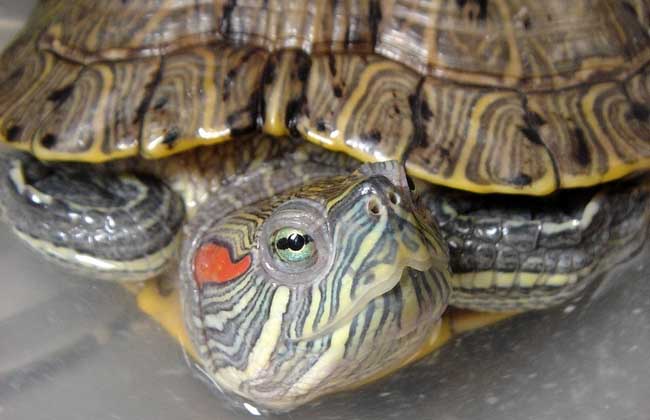
The red-eared slider's scientific name is Trachemys scripta elegans, also known as the red-eared terrapin, cute turtle, graceful painted turtle, red-eared painted turtle, mahjong turtle, seven-color turtle and so on. Its place of origin is not Brazil, but the Mississippi River and Rio Grande basins of North America. It is now kept by many families as a pet or ornamental pet. Let's take a look below at how much a red-eared slider costs!
How much does a red-eared slider cost?
The red-eared slider is the most common and easiest turtle to keep. A turtle of about 6.7 cm generally costs no more than 10 yuan anywhere, but because it is so common, many are artificially growth-boosted, so their quality is not very good. An adult commercial turtle costs about 20 yuan per jin, and an adult pet turtle costs 15 to 50 yuan each.
How to choose a red-eared slider
1. See whether it is lively: hold the red-eared slider in your hand and see whether it stretches out its head and limbs. An active turtle is generally very bold, and a bold turtle starts eating quickly and adapts to the environment well. Then see whether its limbs are strong. If it has no strength, needless to say, if a person has no strength there must be a problem too.
2. Look at the turtle's eyes, nails and tail: bright, spirited eyes, complete nails with no broken nails, and no broken tail. If all of these are met, then of course it is a perfect red-eared slider. Be very careful not to choose one with white or red eyes, unless you have full confidence that you can treat it. Some broken nails will grow back, so there is no need to worry too much about this.
3. Look at the nose and the carapace: whether the nose is clear, whether there is nasal discharge, whether the carapace is hard. A soft, floppy one is definitely a turtle with problems.
4. Look at its state after entering the water: see whether it can sink to the bottom. Being able to sink to the bottom means it is a healthy red-eared slider. See whether it floats on its side or floats. If this happens, it is a sick turtle, with diseases such as pneumonia.
How to tell male and female red-eared sliders apart
1. Juvenile red-eared sliders: for common turtles, whether aquatic turtles or tortoises, for their juveniles, sex can usually be identified from body shape by the following sex characteristics.
① Female turtle: the carapace is shorter and wider, the plastron is flat with no depression in the center, the tail is thin and short, the tail base is thin, the cloacal opening is closer to the rear edge of the plastron, and the notch formed by the two anal scutes of the plastron is shallower, with a larger notch angle.
② Male turtle: the carapace is longer and narrower, the center of the plastron is slightly sunken inward, the tail is thick and long, the tail base is thick, the cloacal opening is farther from the rear edge of the plastron, and the notch formed by the two anal scutes of the plastron is deeper, with a smaller notch angle.
2. Adult red-eared slider: turn the turtle's plastron upward, use the thumb, index finger and middle finger of the left hand to press the turtle's forelimbs and head so they retract into the shell, and use the right hand to straighten the turtle's tail. If a black penis protrudes from the cloacal opening, it is male. If bubbles or thin mucus are discharged from the cloacal opening, it is female.
① The male turtle's opening is near the end of the tail, and the opening shape is long. The female turtle's opening is near the plastron, and the opening shape is round.
② In terms of tail thickness and size, the male turtle's tail is thicker and larger, while the female turtle's is thinner and shorter.
③ Whether the shell is concave: the male turtle has an obvious depression, while the female turtle is flat.
④ Note that after male turtles mature, their whole body turns black, while female turtles still retain their original brown body color.
⑤ The markings on the male turtle's abdomen are sparse, while the markings on the female turtle's abdomen are dense.
⑥ Male individuals weigh no more than 500 grams and have longer claws on their limbs, while female individuals can weigh up to 1000-2000 grams, but their nails are shorter than those of males.