What is the market price of ginseng per jin?
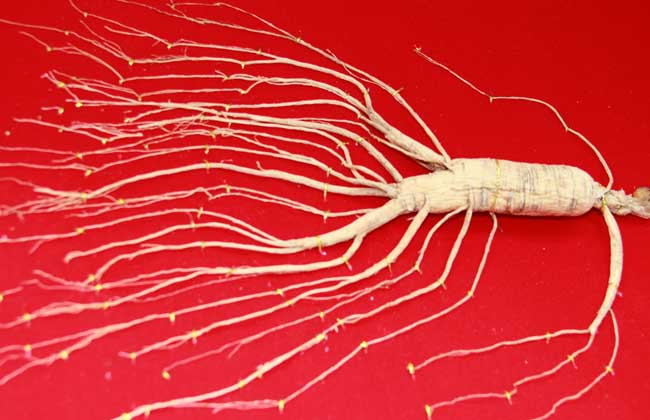
Ginseng is known as the “king of a hundred herbs” and has been used as a traditional Chinese medicine for thousands of years. It is a famous tonic and restorative, suitable for regulating blood pressure, restoring heart function, neurasthenia, and physical weakness, and it also has effects such as expelling phlegm, strengthening the stomach, promoting urination, and stimulating. Its market price has always remained high. Let us take a look below at the price of ginseng and how to identify it!
The market price of ginseng
The lowest-grade ginseng is about 0.5 yuan per gram, which is 250 yuan per jin. Ordinary ginseng is about 2 yuan per gram, which is 1,000 yuan per jin. Good ginseng is 8 yuan per gram or more, which is 4,000 yuan per jin or more. The best ginseng usually cannot be measured in money; 100,000 or 1,000,000 are both possible.
Grade classification of ginseng
1. First-grade mountain ginseng: dried goods, the root of pure mountain ginseng, the main root is thick and short, with a transverse spiritual body, the branch roots are separated in a splayed shape, and all five forms are complete (rhizome, adventitious root, texture, body, and fibrous roots complement one another), with a round rhizome, the middle of the adventitious root is plump and shaped like a jujube pit, the skin is tight and fine, the upper part of the main root has tight and deep transverse wrinkles, the fibrous roots are clear, sparse, and long, the texture is tough, with obvious pearl-like nodules, the surface is tooth-white or yellowish-white, the cross-section is white, the taste is sweet and slightly bitter, each root weighs more than 100 g, the rhizome cap does not exceed 25% of the weight of the main root, and there are no scars, impurities, insect damage, or mildew.
2. Second-grade mountain ginseng: dried goods, the root of pure mountain ginseng, the main root is thick and short, with a transverse spiritual body, the branch roots are separated in a splayed shape, and all five forms are complete (rhizome, adventitious root, texture, body, and fibrous roots complement one another), with a round rhizome, the middle of the adventitious root is plump and shaped like a jujube pit, the skin is tight and fine, the upper part of the main root has tight and deep transverse wrinkles, the fibrous roots are clear, sparse, and long, the texture is tough, with obvious pearl-like nodules, the surface is tooth-white or yellowish-white, the cross-section is white, the taste is sweet and slightly bitter, each root weighs more than 55 g, the rhizome cap does not exceed 25% of the weight of the main root, and there are no scars, impurities, insect damage, or mildew.
3. Third-grade mountain ginseng: dried goods, the root of pure mountain ginseng, the main root is thick and short, with a transverse spiritual body, the branch roots are separated in a splayed shape, and all five forms are complete (rhizome, adventitious root, texture, body, and fibrous roots complement one another), with a round rhizome, the middle of the adventitious root is plump and shaped like a jujube pit, the skin is tight and fine, the upper part of the main root has tight and deep transverse wrinkles, the fibrous roots are clear, sparse, and long, the texture is tough, with obvious pearl-like nodules, the surface is tooth-white or yellowish-white, the cross-section is white, the taste is sweet and slightly bitter, each root weighs more than 32.5 g, the rhizome cap does not exceed 25% of the weight of the main root, and there are no scars, impurities, insect damage, or mildew.
Identification of true and false ginseng
1. Mountain ginseng: the main root of mountain ginseng is equal in length to or shorter than the rhizome, with a length of 3-10 cm, and its shape is human-shaped, cylindrical, or diamond-shaped. The surface color is grayish-yellow, with longitudinal striations, and the upper end has tight and deeply sunken ring-like transverse wrinkles. The fibrous roots are slender and clear, not tangled, and the lower part usually has 2 branch roots. Obvious wart-like protrusions can be seen, commonly called “pearl nodules”. The slender and long rhizome has dense stem scars on its upper part, and its adventitious roots are relatively thick and large, shaped like jujube pits.
2. Garden ginseng: the main root of garden ginseng is cylindrical or spindle-shaped, with a diameter of 1-2 cm and a length of 3-15 cm. Its surface is yellowish, and the upper part or the whole body shows obvious longitudinal wrinkles and sparse, shallow, intermittent coarse transverse wrinkles. The lower part has 2-3 branch roots, on which many slender fibrous roots grow. Unobvious small wart-like protrusions are commonly seen on the fibrous roots. The rhizome (rhizome head) has a diameter of 0.3-1.5 cm and a length of 1-4 cm, is often constricted and curved, and has adventitious roots and sparse concave stem scars. The bark has yellow-brown dotted resin canals and radial fissures. The texture is relatively hard. When cut open, the cross-section is pale yellowish-white, powdery, and the ring of the cambium is brownish-yellow. The aroma is distinctive, and the taste is slightly bitter and sweet.
3. Burdock root: the shape of burdock root is oblong-conical or spindle-shaped, the surface is visible as brownish-brown, the root has few branches, with obvious longitudinal wrinkles and longitudinal grooves, and the bark is yellow-brown. The texture is tough. After cutting, the cross-section appears translucent, the cambium ring is relatively obvious, the xylem is yellowish-white, and radial textures can be seen. The odor is slight and the taste is slightly bitter.
4. Dipsacus root: the shape of dipsacus root is long cylindrical, branched, with a grayish-yellow surface, fine longitudinal striations and transversely elongated lenticels, as well as fibrous roots and fibrous root scars. The texture is hard, the cross-section is yellowish-white, fibrous, and often has relatively large fissures. The xylem has radial textures, sometimes hollow. The odor is slightly fragrant, and the taste is bitter and astringent.
5. Scorzonera albicaulis root: the shape of Scorzonera albicaulis root is long cylindrical, its surface is yellow-brown, and it has 1-2 branches or is unbranched. The length is 30-40 cm. Near the root head there are transverse ring wrinkles, and the middle and lower parts have obvious longitudinal wrinkles and longitudinal grooves, with a twisted shape. The texture is tough and horn-like. After cutting, the bark of the cross-section is relatively narrow and yellow-brown, the cambium ring appears brown, the xylem is broad and yellowish-white, with radial textures. The odor is slight, and the taste is sweet.
6. Counterfeit garden ginseng water seed: the main root of counterfeit garden ginseng water seed is relatively straight and long, upright, with a grayish-yellow surface, and its length is about equal to the rhizome, at 4 cm. Its upper end shows many intermittent ring wrinkles, and the lower end shows obvious longitudinal wrinkles. The fibrous roots are few, short, and brittle, and there are 3 branch roots. The wart-like protrusions on the branch roots are not obvious, and the rhizome head has sparse rhizome bowls arranged alternately, and also has 3 straight bodies. If examined closely, it can be seen that the main root, rhizome head, branch roots, and fibrous roots are made by processing and gluing, and they fall apart when soaked in water.