How much does Ophiopogon japonicus cost per gram? Latest market price overview
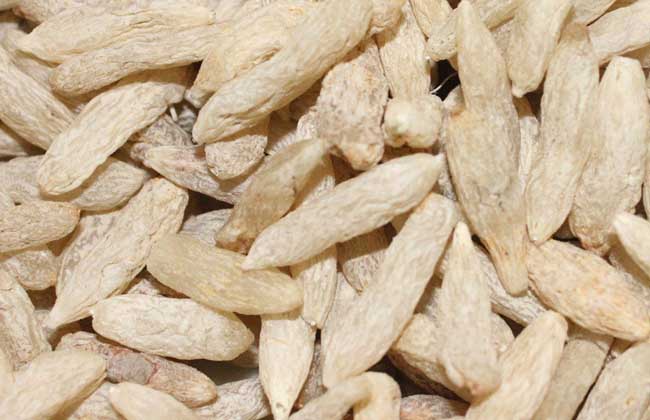
Ophiopogon japonicus, also known as dwarf lilyturf, ribbon grass, and maidong, is the dried tuberous root of the lily family plant Ophiopogon japonicus. It is sweet with a slight bitterness and slightly cold in nature, and has the effects of nourishing yin and promoting fluid production, moistening the lungs and clearing the heart. It is one of the common traditional Chinese medicinal herbs, and its price on the market is not too expensive. Let us take a look below at how much Ophiopogon japonicus costs per gram!
Market price of Ophiopogon japonicus
The price of Ophiopogon japonicus is not too expensive; the price for general-grade goods is 52-58 yuan per kilogram, and the retail market price is generally no higher than 0.1 yuan per gram.
How to identify Ophiopogon japonicus
1. Hangmaidong: The tuberous roots of Hangmaidong are spindle-shaped, slightly flat and slightly twisted, 1-3 cm long, 3-6 mm in diameter, with a yellowish-white or pale yellow surface, semi-transparent, with irregular longitudinal wrinkles. When not fully dried, it is relatively flexible; after drying, it is hard. The cross-section is yellowish-white, horny, with a small central stele that can be pulled out after moistening. It has a slight fragrance, a sweet and slightly bitter taste, and becomes sticky when chewed.
2. Chuanmaidong: The tuberous roots of Chuanmaidong are relatively slender and long, not very plump in the middle, and mostly grayish-white on the surface. Newly produced ones are relatively soft, and after drying they are not very hard. The aroma is relatively weak, the taste is sweet and slightly bitter but rather bland, and it does not become sticky when chewed. Its sugar content is lower than that of Hangmaidong.
Commercial grades of Ophiopogon japonicus
1. Zhemaidong: Zhemaidong is spindle-shaped, semi-transparent, with a yellowish-white surface, flexible texture, and an ivory-white cross-section with a woody core. It tastes slightly sweet and is sticky when chewed.
① Grade I: no more than 150 grains per 50 grams, no fibrous roots.
② Grade II: no more than 280 grains per 50 grams, the rest the same as Grade I.
③ Grade III: more than 280 grains per 50 grams, with the smallest not smaller than a wheat grain, no fibrous roots, and oily grains and rotten heads not exceeding 10%.
2. Chuanmaidong: Chuanmaidong is spindle-shaped, semi-transparent, with a pale white surface and an ivory-white cross-section, with a fine, soft woody core. It tastes slightly sweet and has little stickiness when chewed.
① Grade I: no more than 190 grains per 50 grams, no fibrous roots.
② Grade II: no more than 300 grains per 50 grams, the rest the same as Grade I.
③ Grade III: more than 300 grains per 50 grams, with the smallest not smaller than a wheat grain, occasionally with blackened flowers, oily grains not exceeding 10%, the rest the same as Grade I.
3. Export commodities: Export commodities of Ophiopogon japonicus are divided into four grades according to the standards of Zhejiang Province.
① Grade I: bright yellow color, uniform grains, plump, more than 2.54 cm long.
② Grade II: smaller grains, about 2.54 cm long.
③ Grade III: darker color, uneven grain size and thin, less than 2.54 cm long.
④ Grade IV: poor color, thin grains, uneven length, mostly less than 2.54 cm.