How much does cassia seed cost per jin on the market?
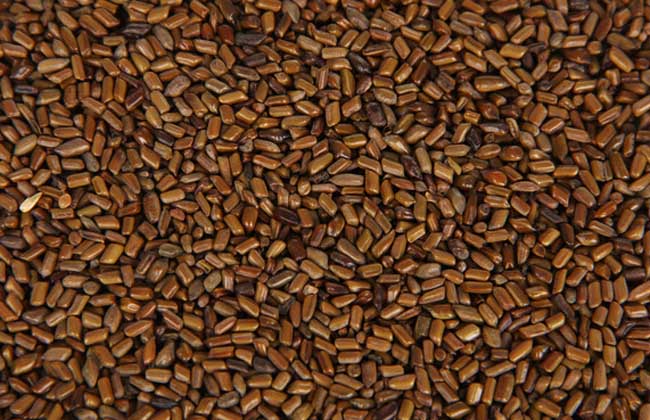
Cassia seed, also known as grass cassia and horse-hoof seed, is the mature seed of the legume plant cassia. It is collected in autumn each year after the fruit ripens: the whole plant is cut down or the seed pods are picked, sun-dried, the seeds are threshed out, the pods and impurities are winnowed away, and the seeds are sun-dried again before they can be used as medicine. It is a common Chinese medicinal herb. Let us take a look at the market price of cassia seed below!
The market price of cassia seed
The general market price of cassia seed is about 8-11 yuan/kg, cassia seed seeds cost about 30 yuan per kilogram, usually 3-4 kg of seed is used per mu, and the yield per mu is about 300 kg.
The producing areas of cassia seed
Cassia seed grows on hillsides, roadsides and open fields and likes a hot, humid climate. It is planted throughout the areas south of the Yangtze River in China, and is mainly produced in Anhui, Guangxi, Sichuan, Zhejiang, Guangdong and other places.
Identification of true and false cassia seed
1. Genuine: Genuine cassia seed looks rhombic-square, shaped like a horse hoof, slightly pointed at one end and truncate at the other, hence it is also called horse-hoof cassia. It is 5-8 mm long and 2.5-3 mm wide, with a yellowish-brown or greenish-brown surface that is smooth and glossy, and each of the two faces has 1 raised brown ridge line, with a light-colored, slightly sunken line pattern on each side of the ridge line. It is hard and not easily broken; the cross section has a thin coat, showing grayish-white to pale yellow endosperm, and yellow or dark brown cotyledons that are strongly folded and wrinkled. After genuine cassia seed is soaked in water, it splits open from the slightly sunken line patterns on both sides of the seed. It has a faint odor, and when tasted it is slightly bitter with a somewhat mucilaginous quality.
2. Fake: Fake cassia seed is usually the seed of Sesbania aculeata, which is short cylindrical, 2-4 mm long and 1-2 mm wide, overall smaller than the genuine product. Its exterior is yellow-brown to dark greenish-brown, and the surface is also smooth, but both ends are bluntly rounded and the middle is slightly constricted. After breaking it open, the hilum is located in the middle of the ventral side, is white and round, and there is no splitting phenomenon when soaked in water. It also has a faint odor, but when tasted it has an obvious beany, raw taste.