How much is Hami melon per jin? Latest market price trends
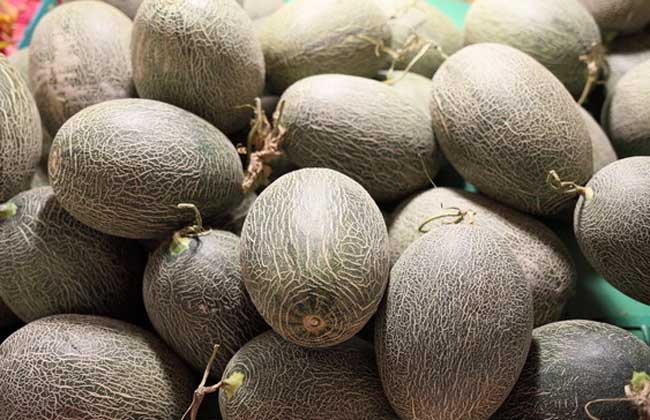
Hami melon, also known as snow melon, tribute melon, etc., is a variation of melon, produced in **, with the one produced in Hami being the most famous, and has the reputation of "king of melons". It can be purchased in supermarkets all over the country, and the price is more expensive than watermelon. Let's take a look below at how much Hami melon costs per jin!
How much is Hami melon per jin
The market price of Hami melon is about 3 yuan to 5 yuan per jin, and prices vary depending on the variety and market.
How to choose Hami melon
1. First, decide whether to buy a large one or a small one. If there are many people in the family, choose a large one, because many people can finish it quickly. If there are few people in the family, choose to buy a smaller one. Although there is a refrigerator at home, if the Hami melon is cut open and left for too long, it will still breed bacteria.
2. First look at the color of the root of the Hami melon (that is, the part that was picked from the vine), because Hami melons are all brought over from **, and the journey takes several days, so Hami melons with green roots are very few; they are generally withered, and some even have mold. We should try to choose green ones rather than moldy ones.
3. Look at the color of the Hami melon. The grayish-green type of Hami melon is better. It is said that the purchase price of that kind of Hami melon is also relatively high. Grayish-green Hami melons taste very authentic, clear and sweet, and the feeling in the mouth is like eating honey, sweet, with a fresh fragrance. The taste of Hami melons with yellow skin cannot compare with grayish-green ones.
4. Look at the veins on the Hami melon. If the Hami melon has many veins and they are deep, that also indicates that this Hami melon is a very delicious one, because Hami melons grow in dry places and are often exposed to wind and sun, so the skin naturally looks very rough. If there is no rough skin, then it is a fake or inferior product.
5. Also hold the Hami melon in your hand and carefully weigh it. If the weight of the Hami melon feels consistent with its size, it means the moisture in the Hami melon has not been lost and it is a good Hami melon. If it feels very light in your hand and has no weight, then the moisture inside this Hami melon must have been lost after such a long journey. If you peel off the skin of the Hami melon, you will see that the layer closest to the skin is greenish-white and honeycomb-like. Because the Hami melon has lost moisture, it no longer tastes so clear and sweet in the mouth.
6. Finally, consider all aspects comprehensively. The main things to look at are whether the veins are sparse or dense and whether they are deep or shallow, and also how much moisture content there is. In addition, look at its degree of freshness. The more veins and the deeper they are, the greater the moisture content, and the fresher it is, the better the Hami melon.
How is Hami melon best cut
1. First way to cut Hami melon
①Cut the Hami melon lengthwise into halves, then cut it into appropriately sized chunks.
②Use a flat knife to remove the seeds.
③Use a small knife to carve a "V" shape at one end of the Hami melon, cut once along the middle of the Hami melon body, do not cut through the skin, remove the flesh on one side, and cut evenly spaced marks on the skin on the left and right as shown in the picture.
④To cut it beautifully, the key is that the distances must be equal, and the cuts should be made deeper, but they must not cut through.
2. Second way to cut Hami melon
①Cut once in the middle of the Hami melon, do not cut through the skin.
②Use a flat knife to cut horizontally, separating the flesh from the skin (slice halfway on each side, leaving part not separated).
③On the skin exposed in the middle, cut evenly spaced marks on the left and right as shown in the picture.
3. Third way to cut Hami melon
①Use a flat knife to separate the flesh from the skin, going as far as three-quarters.
②Cut off the pointed corner from the end that is not separated, carve a pattern on the skin, and arrange it into a shape.