What is the market price of American ginseng per jin?
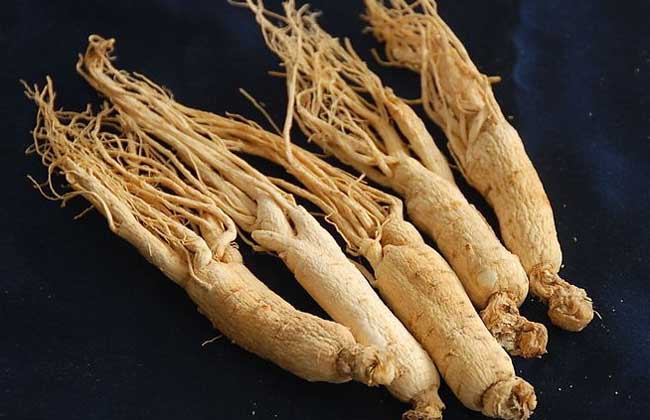
American ginseng is a perennial herbaceous plant in the Araliaceae family, genus Panax. It is also known as huaginseng, yangshen, and American ginseng. The kind produced in Canada is called American ginseng, while the kind produced in the United States is called huaginseng. Methods of taking it include boiling, stewing, steaming, slicing and holding in the mouth, and grinding into fine powder to take with water. Now let us take a look at the market price of American ginseng.
The market price of American ginseng
The market price of American ginseng is 950 yuan to 1,100 yuan per kilogram, with prices varying according to quality and market.
Commercial grades of American ginseng
Commercial American ginseng is divided into several specifications such as long branches, short branches, and unified goods. Those with short, thick root shapes and a body length of 2—5 cm are short branches. Those with roots longer than 5 cm are long branches. Those with roots of varying length and thickness are called unified goods. Long branches and short branches can also be further divided into different specifications according to root body size.
Regardless of the type of American ginseng product, the best ones are those with fine, dense longitudinal wrinkles, a yellowish-white cut surface, flat with visible resin canal spots, a distinct cambium ring, a rich aroma, no green branches, no red branches, no disease scars, no insect damage, and no mildew.
Methods for identifying American ginseng
1. Wild American ginseng: Wild American ginseng is cylindrical or long spindle-shaped, 2-6 cm long and 0.5-1.1 cm in diameter, with no rhizome head, fibrous roots, or branch roots. If not peeled, the surface is earth-yellow or off-white; if peeled, it is white and powdery.
2. Imported American ginseng: The main root of imported American ginseng is round or spindle-shaped. The rhizome head remains or has been removed; if remaining, it leans slightly to one side. The surface is light yellow or yellowish-white, with fine skin texture and protruding transversely elongated lenticels. The texture is full and firm, and the broken surface is slightly horny. There are often small fissures between the bark and the wood or center. The cut surface is powdery white. A brown cambium ring is visible in the bark, with reddish-brown dots scattered inside and outside the ring. It is bitterly dry with a strong flavor that penetrates the throat.
3. Domestic American ginseng: Domestic American ginseng is long cylindrical, with relatively thick branches and a larger rhizome head. The surface is relatively smooth, darker in color, with obvious longitudinal lines. The texture is light, like freshly fired red brick, with poor powdery quality and few cracked fissures. It is only bitter, with little or no sweetness, and has a cotton-like feel after prolonged chewing.
4. Sun-dried ginseng: Sun-dried ginseng is the dried root of ginseng, a plant in the same family, processed to pass as American ginseng. It is cylindrical or spindle-shaped, with a rhizome head and fibrous roots. The upper part of the main root or the whole root has intermittent ring-shaped transverse lines. The chrysanthemum heart on the cut surface is not obvious. It is light brownish-yellow to light grayish-brown, 5-15 cm long and 1-2 cm in diameter, with a light, spongy texture and a mild odor. The taste is initially mild and then slightly bitter.
5. Inferior American ginseng: Inferior American ginseng belongs to the same family and genus, but its active ingredients have already been artificially extracted, and after drying it is passed off as genuine American ginseng. Its appearance is the same as American ginseng. The broken surface is grayish-white, and the cambium ring spreads into a dark brownish-red color. Reddish-brown dots are still visible in the phloem. It is dry and withered without an oily appearance, stiff in texture, and mild in odor. When chewed, it is bitter at first and then sweet, but after several swallows it becomes bland and tasteless.