How much is Cornus officinalis flesh per jin? Teaching you how to identify it
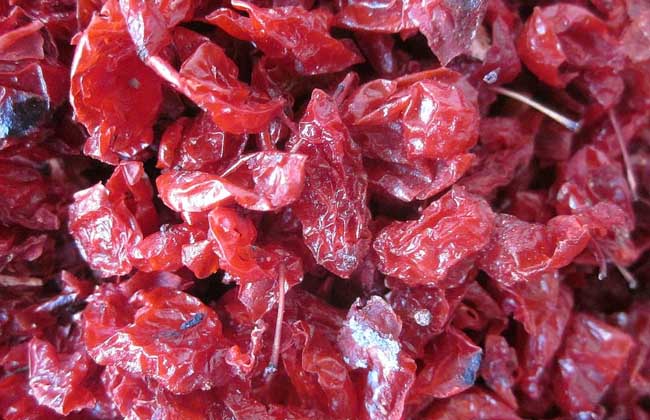
Cornus officinalis, also known as Shu jujube or jujube skin, is the fruit flesh of the Cornaceae plant Cornus officinalis. It is slightly warm in nature and sour in taste, and has the effects of tonifying the liver and kidneys, astringing essence and qi, and securing collapse from deficiency. It is used to treat dizziness and tinnitus, soreness and pain of the waist and knees, impotence and seminal emission, enuresis and frequent urination, abnormal uterine bleeding and leukorrhea, profuse sweating and collapse from deficiency, internal heat and wasting-thirst, and other conditions. It is a commonly used traditional Chinese medicine for tonifying the kidneys and benefiting the liver. Now let us take a look at the price of Cornus officinalis flesh!
The price of Cornus officinalis flesh
The price of Cornus officinalis flesh is generally between 20 yuan and 25 yuan per kilogram, and the price varies according to product quality and market differences.
Authentic Cornus officinalis
The dried mature fruit flesh is in irregular slices or sac-like forms, with the pericarp cracked and shrunken, about 1.5 cm long and about 0.5 cm wide. The surface of new goods is purplish red, while older goods are mostly purplish black, glossy, sometimes with a fruit stalk scar visible at the base, and with a round persistent calyx scar at the tip. It is soft and moist in texture and not easily broken. It has a slight odor when smelled, and tastes sour and astringent with a slight bitterness when chewed.
Commercial Cornus officinalis is not graded and is all sold as unified goods. Dry goods are required, and the fruit flesh is in irregular slices or sac-like forms. The surface is bright red, purplish red to dark red, shrunken, and glossy. The taste is sour and astringent. The fruit stones shall not exceed 3%, with no impurities, no insect damage, and no mildew.
Counterfeit Cornus officinalis
1. Taishan Cornus flesh: The complete fruit is elliptical, with thin fruit flesh, reddish brown, and extremely sour in taste. It contains 2 seeds, opposite each other, slightly spindle-shaped, flat on one side and raised on the other, with a brown or brownish yellow surface, slightly smooth, and relatively hard in texture. After breaking open, the seed kernel is off-white, oily, and mild in taste.
2. Wild hawthorn: The appearance is nearly spherical, often flattened into a cake shape, with a brownish red surface, fine lines and shrinkage, thin fruit flesh, a round sunken persistent calyx scar at the tip, and a fruit stalk scar at the base. It is lusterless, hard in texture, and not smooth on the surface. Inside are several reddish brown seeds about the size of sesame seeds. It has a slight odor when smelled, and tastes extremely sour when chewed.
3. Cherry skin: It is in irregular slices or flat tube-like forms, with a shrunken surface, purplish red or purple, glossy, and the inner surface is not smooth, with small grayish white spots. It has a slight fresh fragrance when smelled, and tastes sour with a slight sweet astringency when chewed.
These counterfeit products are neither plants of the same family as Cornus officinalis, nor do they possess the various effects of Cornus officinalis. After taking them, they simply cannot produce the effects of tonifying the kidneys and benefiting the liver, and may even delay treatment and cause adverse reactions. Therefore, when using it, one must clearly distinguish the genuine from the fake to ensure safe and effective medication. In addition, it should be noted that medicinal Cornus officinalis is clean Cornus flesh, and the contained fruit stones must not exceed 3%-5%. If the Cornus officinalis contains too many fruit stones, it is also an unqualified inferior product.