Analysis of the Latest Market Price Trends of Balloon Flower (Platycodon grandiflorus)
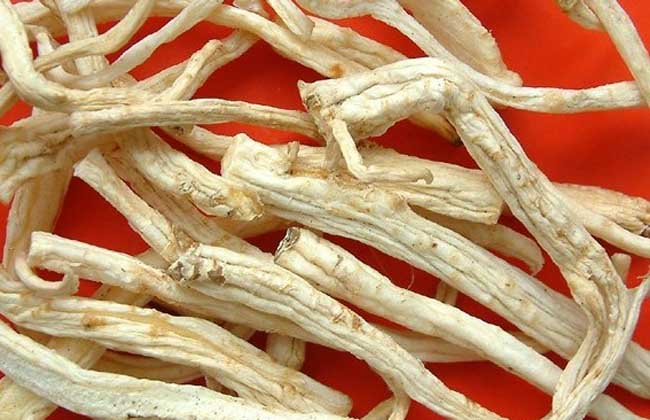
Balloon flower, also known as Jini or Luru, is the root of the Campanulaceae plant Platycodon grandiflorus. It is used both as food and medicine, harvested in spring and autumn each year, with the autumn-harvested roots being heavy and solid and of better quality. It is neutral in nature, bitter and pungent in taste, enters the Lung and Stomach meridians, and has the effects of dispersing lung qi, soothing the throat, eliminating phlegm, and discharging pus. It is a common Chinese medicinal herb. Let us now take a look at the market prices of balloon flower!
Market Prices of Balloon Flower
Prices of balloon flower vary depending on the market and quality. Peeled uniform slices cost 25 to 30 yuan per kilogram, and peeled uniform whole roots cost 22 to 26 yuan per kilogram.
Geographic Distribution of Balloon Flower
Balloon flower is mainly distributed across the provinces of Northeast China, North China, East China, and Central China, as well as Guangdong, northern Guangxi, Guizhou, southeastern Yunnan (Mengzi, Yanshan, Wenshan), Sichuan (east of Pingwu and Liangshan), and Shaanxi. It is also found in Korea, Japan, and the southern parts of the Russian Far East and East Siberia.
In June 2012, Taihe County in Anhui Province was named "Hometown of Chinese Balloon Flower" by the Flower Food Professional Committee of the China Food Industry Association.
Identification of True and False Balloon Flower
1. Authentic balloon flower: The appearance is long spindle-shaped or long cylindrical, with a rhizome (root crown) at the top, with a total length of 15-30 cm and a diameter of about 0.5-2 cm. There are many crescent-shaped stem scars on the surface, commonly known as root crown bowls. The lower part gradually tapers and is sometimes branched and slightly curved. The surface is white or pale yellowish-white, with shriveled longitudinal grooves throughout, especially numerous on the lower part, and there are whitish lenticel-like root scars that are slightly extended transversely. The texture is hard and brittle, easily broken, and the cross-section is slightly granular with radial fissures. The bark is relatively narrow, the cambium is prominent and light brown, the xylem is whitish, with relatively obvious brown ring markings, and there is no pith in the center. It has a faint odor, and when tasted it is slightly sweet and then somewhat bitter.
2. Fake balloon flower: Fake balloon flower is usually the dried root of Gypsophila oldhamiana. Its appearance is mostly conical or long conical, 10-15 cm long and 2-5 cm in diameter. The surface is brownish-yellow or grayish-brownish-yellow, with twisted longitudinal groove lines. It is light in weight and firm in texture. When cut open, the cross-section does not have the characteristics of the authentic product. It has alternating brown and white textures, no brown ring markings, and the cambium is not prominent. Medical | Education Network collected and organized that 2-3 rings of anomalous vascular bundles can be seen. It also has a faint odor, but when tasted it is bitter, astringent, and pungent.