What is the market price of abalone per jin?
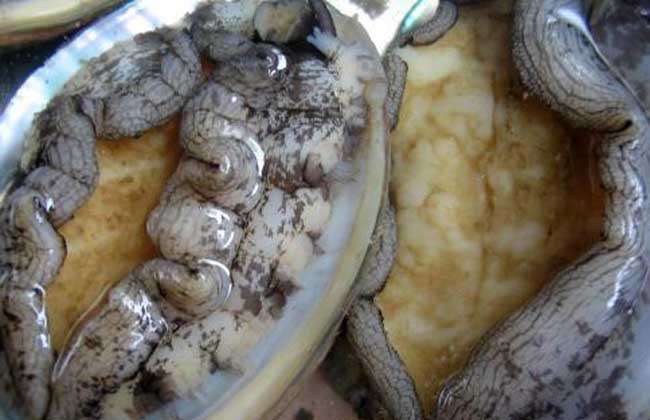
Abalone is one of the precious seafood delicacies, with tender flesh that is fresh without being greasy. It is a traditional precious ingredient in China, ranking first among the four great seafood delicacies. Even today, at many state banquets and large banquets held in the Great Hall of the People, abalone is often on the menu, making it one of China's classic state banquet dishes. Now let us take a look at how much abalone costs per jin on the market!
How much does abalone cost per jin?
Abalone is a precious seafood, also known as nine-eyed fish. It belongs to the shellfish category and is found on rocks in the ocean. The deeper the seawater, the larger the abalone produced. Generally speaking, the larger the size, the more precious it is. Japan, South Africa, Vietnam, Australia and other coastal countries are all good places for producing abalone, among which the "net abalone" produced in Aomori Prefecture, Japan, is the most precious. Australian fresh abalone is 300 yuan each. Japanese Yoshihama abalone and net abalone, these two kinds of abalone can only be eaten in Hong Kong, China and Japan, at 300,000 yuan each. Dalian abalone is 128 per jin (about 25 pieces). South African dried abalone, five-head size, is about 400 yuan.
As for ordinary fresh abalone on the market, 6-head to 8-head sizes are basically 120 yuan per jin, though the market price sometimes changes. The price of abalone also depends on whether it is dried or fresh, and varies with size and place of origin, so the market price will always differ a little. A reminder to everyone to buy abalone according to the current price.
How are abalone grades classified?
Abalone grades are counted by "head" number. Each catty (commonly known as the Hong Kong scale, about 605 grams) has "2-head", "3-head", "5-head", "10-head", "20-head" and so on. The fewer the "heads", the more expensive the price, hence the saying "even with money, it is hard to buy two-head abalone". At present, net abalone has the fewest heads, Yoshihama abalone ranks second, and Hema abalone is the smallest in size and has the most heads, already like an antique treasure.
Nutritional value of abalone
1. Abalone is rich in copper. Copper is an indispensable micronutrient for human health and has an important effect on blood, the central nervous system and the immune system, as well as the development and function of hair, skin and bone tissue, and internal organs such as the brain, liver and heart.
2. Abalone is rich in calcium. Calcium is the basic raw material for bone development, directly affecting height, regulating enzyme activity, participating in nerve and muscle activity and the release of neurotransmitters, regulating hormone secretion, regulating heart rhythm, reducing cardiovascular permeability, controlling inflammation and edema, maintaining acid-base balance, and more.
3. Abalone is rich in cholesterol, maintaining cell stability and increasing the flexibility of blood vessel walls. It maintains normal sexual function and increases immunity.
4. Abalone is rich in protein and helps maintain potassium and sodium balance and eliminate edema. It improves immunity, lowers blood pressure, buffers anemia, and is beneficial to growth and development.
Who is suitable to eat abalone?
1. Suitable for people who experience dizziness, fatigue, easy tiredness, tinnitus, blurred vision, pale color of skin, mucous membranes and nails, and who feel short of breath, have osteoporosis, or palpitations after physical activity.
2. Suitable for children and adolescents with anorexia, picky eating, difficulty falling asleep, easy waking, susceptibility to colds, sparse hair, delayed intellectual development, late walking or teething or uneven teeth, paroxysmal abdominal pain and diarrhea, X-shaped or O-shaped legs, or pigeon chest.
3. Suitable for pregnant and breastfeeding women with cramps and fatigue, joint pain, dizziness, anemia and prenatal hypertension syndrome, edema and insufficient milk secretion.
4. Suitable for older people with bone pain, loose or falling teeth, hunched back, reduced appetite, digestive tract ulcers, frequent dreams, insomnia, irritability and easy anger.
5. Suitable for people with symptoms such as being underweight, low immunity, memory decline, anemia and edema.
6. Suitable for children with stunted growth and development.