Old Tan the pear farmer has grown pears his whole life, and this year business is bleak, laying bare all its bitterness
Old Tan is from out of town, and he is also a major local grower. According to him, his family has about 40-plus mu of land, most of it pear trees, plus some persimmons and grapes, but their main source of livelihood is still pears. They have spent their whole lives busy for pears; this is the industry passed down from generation to generation by the locals.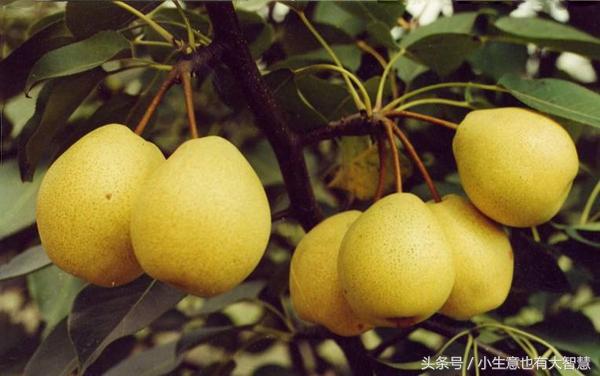
Old Tan and his wife are both amiable people, and they usually chat and laugh with us. I asked his wife: "With so much land in your family, can the two of you keep up with it all?" She said: "It looks like a lot, but it's actually easy to look after. We're not like the planting bases that need so many complicated steps (building sheds, spraying, fertilizing...). Usually it's just spraying when there are bugs and shooing away the birds. The busiest time is when every pear has to be bagged and then unbagged, and when climbing up the trees to pick the pears. Besides, the two of us have nothing else to do all year round, so we just keep our eyes on this." (She makes it sound easy because they're used to it; they wouldn't have the time or patience to get us to do it)
"Do other families also have this many pear trees? Why don't your children come to help?"
"Actually our family only has a bit over 8 mu of fields; the rest were given to us to plant by relatives and neighbors who don't farm anymore. The children aren't willing to endure this hardship, and they don't have the patience either. They've all gone out to work."
So we chatted for a long time, and only then did I learn that their pear sales this year were only a little more than half of last year's. Because I also wholesale pears, pears this year are indeed much cheaper than last year. Pears shipped in from elsewhere look better, taste better, and are cheaper. Because of this, they can only sell at low prices and go for volume; for whatever can be sold, they'll sell it for whatever money is offered (because once picked, pears spoil quickly if left too long). And so, because the market is bad and competition is too fierce, growing pears is no longer as profitable as before. Although the government has subsidies (very little), many farmers have still left their land idle, sold it to others for development, or asked others to look after it (even renting it out draws no takers; afraid the pear trees will die, they can only let people plant it for free). They can't be bothered to put in the effort, and working jobs earns a bit more money, so they've all gone out to work.
At first I thought that with so much land, the harvest should bring in a big sum, but I never expected the situation now to be so bad. Actually, this industry's resources are very good; it just lacks good people to integrate and utilize them (this is my view). For example, Dangshan is a case in point; their pears there are famous nationwide.
I can only say that this era no longer values distinctive local features or industry; what it values is only tall buildings, science, high technology, the internet... This makes us young people yearn for higher-level development, unable to set aside our pride and do some lower-level work with our feet on the ground, and the land that gave us life and raised us is slowly being forgotten.