Farmer-Writer: He Is First a Farmer, and Only Then a Writer
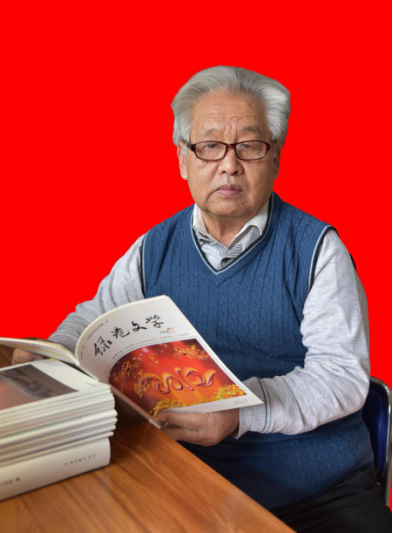
???? Local writer Wang Kechen at Xunfeng Bookstore
In 1956, Wang Kechen was admitted from the countryside to Beijing No. 48 Middle School. After graduating from junior high school, he was recommended for admission to the school's senior high school without examination. He once vowed solemnly: "From the moment I stepped through the middle school gate, I set my sights on the Chinese Department of Peking University, to become a writer in the future!" However, fate played a big joke on him: in the 1962 college entrance examination, this top student who had been famous throughout the school failed to make the grade. The mystery has never been revealed to this day, and Wang Kechen smiles faintly: it does not matter if it is never revealed!
Wang Kechen resolutely returned to the countryside and learned to say the catchphrase that Zhu Laozhong kept on his lips in "The Red Flag Spectre": "Only when you come out of the water do you see the mud on both feet!"
After returning to his hometown, he refused to rest for even a single day. From following the cart to spread soil and pull the roller, to building walls, making mud bricks, pulling wheat, and cutting sorghum, he braved wind and rain, feared no fatigue, hurried about, busied himself, left early and returned late, pushed the millstone and pulled the grindstone. Decades of rural life tempered Wang Kechen into a sturdy, solid farming man. He shared the same heart and breath as the farmers. He was attached to the countryside and loved the farmers. He was determined to follow the path of Zhao Shuli and Liu Qing, to sink his roots deeply into the countryside, to write about the people and things around the farmers, to write what was in the farmers' hearts, and to be the voice of the farmers.
On the long road of literature, Wang Kechen never aimed too high, but was steadfast and solid, like a farmer cultivating the land, leaving a deep footprint with every step.
In reading, he began with short historical stories, then moved on to modern writers with established reputations in China, and only lastly to famous works of ancient and modern times, Chinese and foreign. In writing, he was even more step by step, beginning with writing news items, reports, and features for newspapers, then writing essays, informal pieces, short literary reviews, and reportage for newspaper supplements, and only finally entering fiction writing. After publishing 144 novellas and short stories in succession, in the 9 years from 2005 to 2014, he created the companion volumes of the novels "Old Garden in Wind and Rain" and "Cold Condensed Earth".
Wang Kechen was like a hardworking farmer. He firmly believed that if people are diligent, the land is not lazy, that you reap what you sow, and that every bit of cultivation brings a bit of harvest. Therefore, he never took shortcuts or sought to please others. He won awards for his reports and won awards for his reportage; even when writing "readers' letters," he weighed every word carefully. One "reader's letter" sent to the People's Daily was actually published on the front page, and after being broadcast in the "News and Newspaper Digest" program of China National Radio, it reached the lands between the white mountains and black waters and spread throughout the south of the Yangtze and Yellow Rivers. His short story collection "Heart Songs," published in 1990, was the first literary collection in Shunyi and laid the first cornerstone of Chaobai River local literature. That same year, it was exhibited at the Third Beijing International Book Expo and the Shanghai Book Fair. The two novels he created after passing the age of 70, "Old Garden in Wind and Rain" won the "Novel Gold Award" of the 8th National Cultural Grand Gathering, the first Beijing "Cangsheng Cup Special Prize," and the first Shunyi District "Chaobai River Cup First Prize"; "Cold Condensed Earth" won the novel gold award for "Commemorating the Chinese People's War of Resistance Against Japanese Aggression and the World Anti-Fascist War" and the "First Haoran Literature Prize." Wang Kechen also received honorary titles such as "National Golden Word-of-Mouth for the Common People," "National Artist of Both Virtue and Art," and "People's Writer" of Renhe Town, Shunyi District. He joined the Beijing Writers Association in 1992 and the Chinese Writers Association in 2007, fulfilling his dream of being a writer.
Yet in the face of these awards and honors, whenever he had a heart-to-heart talk with someone, he would chuckle: "I am first a farmer, and only then a writer. Those empty, superficial things are of little significance. A writer must ultimately speak through his works. When readers read a work, they do not care at all whether you have won the Mao Dun Prize or the Nobel Prize. Tolstoy and Lu Xun never won the Nobel Prize; Hao Ran and Liu Shaotang never won the Mao Dun Prize either. Yet their works still circulate among the people. How strange! In fact, even street-stall literature or grassroots literature, as long as it is well written, readers will still like it."
Because Wang Kechen had long taken root in the countryside and merged himself with the farmers, rather than making a show of keeping up with the situation, putting on a dazzling display, or speaking vaguely to carry out a spirit, skimming the surface in "experiencing life," and still less stalling superiors by reading their expressions and going through the motions perfunctorily, his works flowed from his heart, carrying the warmth of his body and the heartbeat of his hometown accent, with subtle words conveying profound meaning, sincere and plain; they grew out of the yellow earth, carrying the fragrance of crops and green grass, vivid and fresh, clear and natural, and were welcomed by rural readers. The short story collection "Heart Songs," the reportage collection "Sons and Daughters of the Chaobai River," and the first editions of the novels "Old Garden in Wind and Rain" and "Cold Condensed Earth" quickly sold out and had to be reprinted and reissued, which is the best proof.
Wang Kechen often said: "I have been dull all my life, I do not know how to shout and promote, and I have even less ability to hype. My few little books are destined neither to become bestsellers nor to earn money. As long as uncles, aunts, brothers, and sisters like them, even if I give them away for free, I am happy!"
Against the surging backdrop of the market, Wang Kechen never wavered. He endured loneliness, feared no hardship, and climbed with difficulty on the cliff of literature. Why is this so? He answered solemnly: "Literature was indeed a personal hobby at first, but after being steeped in literature day after day and year after year, a sense of responsibility, a spirit of service, and a childlike devotion gradually emerged, and I came to regard literary creation as a serious cause. Inheriting the classics above and connecting with the grassroots below, writing good stories that the people love to see and hear, shaping good characters worthy of emulation, carrying forward the spirit of patriotism, and elevating people's souls."
Wang Kechen possessed the fine qualities of a Chinese farmer, like an ox plowing the field, not needing the whip to urge itself forward. Diligent and conscientious, steady and solid, tough and enduring, quietly toiling away. From the story collection "Heart Songs" to the novels "Old Garden in Wind and Rain" and "Cold Condensed Earth," across 9 books, he always set his readership as the farmers. Therefore, he always made his writing adapt to the farmers' level of education and habits of appreciation, striving for popular, easy-to-understand, plain, and rewarding writing, with concise language and fresh charm. This was both his simple pursuit and his lofty goal.