E-commerce Youth Return to the Countryside: A Rural Home You Can Go Back To
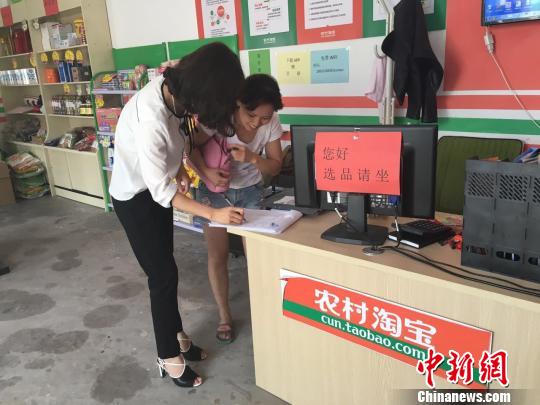
Villagers come to pick up the goods they bought online. Photo by Ju Ningbo
Villagers come to pick up the goods they bought online. Photo by Ju Ningbo
Half a year ago, Zhang Jingjing, a girl born after 1985 in Cheng Lang Village, Shijiazhuang City, briefly became a topic of discussion among the villagers. At the time, she suddenly resigned from her "white-collar" job in the city with a monthly salary of nearly 10,000 yuan and returned to the countryside to open a "small shop." "Back then, no one understood, including my parents, and there were so many people gossiping behind my back. But now I have become someone my parents are proud of." Today, half a year after starting her rural e-commerce business, Zhang Jingjing increasingly believes her choice was right.
In November 2015, the General Office of the State Council issued the "Guiding Opinions on Promoting the Accelerated Development of Rural E-commerce," comprehensively deploying guidance for the healthy and rapid development of rural e-commerce, and proposing policy measures in seven areas including vigorously cultivating rural e-commerce talent and strengthening policy support.
Zhang Jingjing's location, Luancheng District (formerly "Luancheng County") of Shijiazhuang City, Hebei Province, signed a "Rural Taobao" project cooperation agreement with Alibaba Group in November 2015, becoming the first "Rural Taobao" project pilot district in Shijiazhuang City. It invested more than 4 million yuan to build the Luancheng District Rural E-commerce Service Center, the "Rural Taobao" Operations Center, and the Warehousing and Logistics Center. From more than 600 rural youths who signed up, 34 "partners" were selected, and through training they were helped to quickly become familiar with knowledge related to "what e-commerce is" and "how to do e-commerce well."
The rural e-commerce model like that in Luancheng, Shijiazhuang, can achieve the two-way circulation function of "online goods going to the countryside" and "agricultural products entering the city." The project creates a strong atmosphere for returning home to start businesses, builds a stage for entrepreneurship, and provides entrepreneurial support, enabling more young people to return and take root in rural areas, thereby solving rural livelihood issues such as left-behind children and empty-nest elderly. Ultimately, by introducing leading e-commerce enterprises, it promotes the clustering of small and medium-sized e-commerce businesses and drives the rapid development of local e-commerce.
Zhang Jingjing previously worked in human resources training for the North China region at a well-known domestic enterprise, with a monthly salary reaching up to 15,000 yuan (same below). But after working in a provincial capital city for more than three years, she still did not have a house of her own. When she, like other young people who enjoy online shopping, saw that her hometown was vigorously developing rural e-commerce, she resigned and returned to her rural hometown to start a business.
Her parents strongly opposed this, and people in the same village were also gossiping about "why give up a glamorous job and return to the countryside to open a 'small convenience store.'" During the spring plowing season, the first necessity for villagers is chemical fertilizer. Zhang Jingjing and the other 33 "partners" seized the opportunity together. On April 23, 2016 alone, the 34 partners ordered 800 tons of chemical fertilizer online, with a transaction volume of 2.03 million yuan. "We helped villagers buy high-quality and low-priced fertilizer. When villagers saw my parents, they all expressed their thanks, and my parents began to understand me." Zhang Jingjing said with a smile. Zhang Jingjing had studied and worked away from home for nearly twenty years, and previously many people in the village did not know her. Now, even the elderly in the village and newly married young wives know her. She has more topics to talk about with her parents, and they communicate more than before.
"Partner" Liu Peipei's physical store displays some products from e-commerce platforms for villagers to choose and buy directly. "At first I only displayed some fast-moving consumer goods, so even if they couldn't be sold, I could consume them myself. Now, as villagers' shopping concepts have changed, the number of large home appliances such as refrigerators and televisions bought online has clearly risen." Nowadays, Liu Peipei's store even has fitness equipment that "city people" like, such as treadmills and unicycles. "Seeing my fellow villagers keep up with trends in both appearance and mindset, I am happy from the bottom of my heart. Rural people are also making progress." As Liu Peipei's sales volume gradually increased, she hired a young person from the same village to help manage the small shop.