Snakehead Market Price Analysis: 2017 Is the Right Time to Make Money Farming Snakehead
It is understood that the current pond-side price of snakehead is still hovering around 6 yuan/jin, on the edge of losses, and there is a considerable amount of old fish still held in ponds, so the snakehead market cannot be expected to improve in the short term. Since snakehead rose to an unprecedented high price of 12 yuan/jin in the first half of 2014, it triggered a frenzied wave of farming, leading to severe overproduction; even now, a fair amount of old fish from 2014 is still being held. Snakehead has now been stuck in a low trough of 6 yuan to 7 yuan/jin for two consecutive years. Most farmers raising 2 to 3 ponds are losing hundreds of thousands of yuan, and quite a few are even losing over a million yuan, causing many snakehead farmers to gradually exit the market. At the same time, distributors have also fallen into operating difficulties; most distributors find it hard to collect accounts receivable and have been transforming their businesses or even being eliminated.
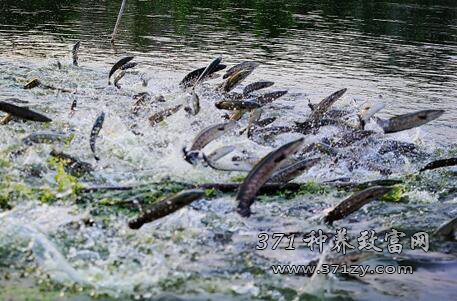
The main reason snakehead development has fallen into such a passive situation is still the disorderly farming state of smallholder farmers, and demand on the production side seriously fails to keep up with demand on the consumption side. In particular, as people's living standards rise ever higher, consumers are constantly pursuing higher-quality, safer and healthier food. Against this backdrop, the production side is still stuck in the primitive business model of pursuing output, controlling costs and ignoring product quality, so transformation and reform are unavoidable. In other words, the consumption side is forcing the production side to transform. On the surface it is severe overcapacity in aquatic products, but in reality it is severe homogenization of product quality, a lack of product differentiation, poor quality, lack of competitiveness and unsafe products. Especially against the backdrop of oversupply, the problems erupting in the industry are becoming ever more obvious.
However, during a period of industry reform, some people can still keep making profits, some can lower costs, some can transform their farming approach, and some can raise output. For example,Liang Shangzhuang, a farmer in Xingtan, Shunde, Guangdong province, achieved a profit of more than 23,000 yuan per mu from farming snakehead and won the title of "2016 Snakehead King"; Pan Yongbo of Jiujiang, Nanhai, reached an output of 34,000 jin per mu and won the title of "2016 Output Master",and He Jinquan of Xingtan, Shunde, earned the "Farming Master" title for raising premium snakehead... This means a process of survival of the fittest: on one hand, farmers without technology or capital will gradually exit the market, while on the other, excellent farmers will gradually grow stronger, thereby guiding the transformation and reform of the farming structure and ultimately feeding back into changes across the entire industry chain.
At the forum, the participating representatives each put forward their opinions and suggestions.
Chen Kunci, director of the Germplasm Monitoring Center of the Pearl River Fisheries Research Institute, said that national snakehead farming output reaches more than 600,000 tons, while Guangdong's snakehead farming area is 68,000 mu with an output of 220,000 tons, making it China's eighth-largest aquaculture species.
The key to farming snakehead is, first of all, to improve the quality of fry, strengthen parent stock selection, pay attention to broodstock breeding, and be cautious about excessive drug use during the fry stage, so as to raise truly safe aquatic products.
Xiao Qunhui, a veteran distributor, said that in the early history of snakehead distribution (before 2002), the country's largest snakehead logistics transshipment base was Wuhan, Hubei, from which snakehead was distributed to markets across the country. In the middle period (200 to 2008), it was the most prosperous development period of the Wuhan distribution market, and 50% of the snakehead from several major snakehead production areas nationwide (Guangdong, the Dongting Lake area of Hunan, Luqiao in Shandong, Anhui, and the Poyang Lake area of Jiangxi) was shipped there for transshipment. In the later period (after 2008), two major snakehead distribution centers formed nationwide.
At present, with the rapid development of Guangdong's snakehead farming industry, Guangdong has become the country's largest main production area and has gradually formed a large distribution center. The radiation range of the two distribution markets in Wuhan, Hubei and Tengzhou, Shandong has gradually shrunk, and they can only distribute to nearby local markets.
With the development of the snakehead farming industry and changes in farming regions, the distribution model that previously relied mainly on transshipment through distribution centers has also gradually changed. At present, relatively large-scale snakehead distributors have channels throughout the country and have begun to operate in a "point-to-point" distribution manner, directly connecting production areas with markets across the country. They set up their own stores in first-tier wholesale markets across the country, buy fish from main production areas and send them to their various outlets, and then sell through these outlets to local second- and third-tier markets.
"Point-to-point" is a model that many snakehead distributors are considering and implementing. This model has advantages such as stable prices, planning, durability and wide coverage.
The demand for different sizes of snakehead in markets across the country, apart from the two major snakehead transshipment markets of Wuhan, Hubei and Tengzhou, Shandong, the demand for different sizes of snakehead in other first-tier markets across the country.