How much is the corn price in 2017? Latest market trend analysis
Currently the national corn price is being lowered overall. According to monitoring, corn prices in Northeast China are generally stable, among which the spot price of corn in Heilongjiang is 1180-1320 yuan/ton, corn price in Jilin is 1260-1360 yuan/ton, corn price in Liaoning is 1350-1410 yuan/ton, and corn price in Inner Mongolia is 1370-1440 yuan/ton; corn prices in North China are being lowered overall by 10-20 yuan/ton, among which corn price in Shandong is 1540-1620 yuan/ton, corn price in Hebei is 1520-1560 yuan/ton, and corn price in Henan is 1540-1580 yuan/ton; corn price at Guangdong ports is stable at 1560-1630 yuan/ton. Now there are less than 10 days left before the Spring Festival. On the production area side, market news says that Sinograin already stopped opening accounts to purchase corn on the 22nd day of the twelfth lunar month (January 19), and will resume normal purchases after the Spring Festival. At present, railway freight in Northeast China is basically suspended, feed enterprises in the south have basically finished stocking up, and purchasing demand is sluggish. How will corn prices in various regions move around the Chinese New Year? The specific analysis is as follows.
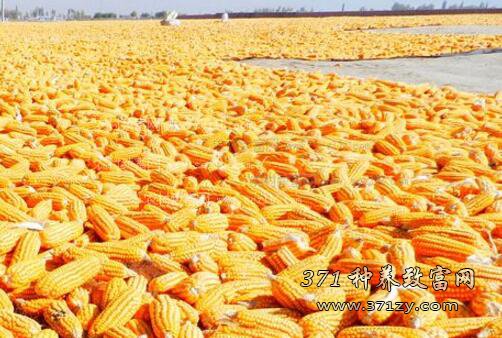
Corn trend in Northeast China
Data from the Grain Bureau show that as of January 15, the three northeastern provinces and one region had cumulatively purchased 52.5 million tons of corn, among which Inner Mongolia purchased 7.19 million tons, Liaoning 11.26 million tons, Jilin 13.26 million tons, and Heilongjiang 20.79 million tons. According to Bric's forecast, the current grain selling progress in Heilongjiang is 47%, in Liaoning 63.4%, in Jilin 43%, and in Inner Mongolia 26.35%. Overall, Liaoning has the fastest grain selling progress, while Inner Mongolia is relatively slow.
According to a previous report on corn mildew investigation in Northeast China published by the National Corn Industry Technology System, as of December 14, 2016, the weighted average moisture content of corn kernels in survey samples from the three northeastern provinces and one region was 27.9%; the weighted average moisture content of kernels with simple storage facilities was 29.2%, and that without simple storage facilities was 27.1%. Heilongjiang had the highest kernel moisture content at 30.0%, followed by Jilin at 25.9%, Liaoning at 23.3%, and Inner Mongolia at 19.5%. Inner Mongolia has strong winds and little rain in autumn and winter, which helps reduce the moisture content of corn kernels. In terms of corn kernel mildew rate, Jilin had a relatively high mildew rate of 1.86%, Heilongjiang had a kernel mildew rate of 0.5%, Liaoning had a kernel mildew rate of 0.74%, and Inner Mongolia had the lowest kernel mildew rate at 0.059%.
From the kernel moisture content, mildew rate and sales situation in Northeast China, we can see that Jilin has a relatively high mildew risk and a slower grain selling progress, but Jilin is a major province for corn deep processing and has strong corn digestion capacity, while the deep processing digestion capacity in Heilongjiang and Inner Mongolia is relatively weak. In particular, Heilongjiang's corn kernels have relatively high moisture content, increasing the mildew risk after the New Year. Considering that some ground-piled grain was sold in time before the New Year, we believe that corn prices in Northeast China will mainly remain stable before the New Year. After the New Year, the corn purchase progress will slow overall, but February-March is still the peak period for corn volume in Northeast China, and corn prices will mainly run weakly. It is reported that corn purchases will end at the end of April, but the implementation period of the corn deep processing subsidy lasts until June. We believe that after April, deep processing enterprises' willingness to purchase and stock up will increase, and corn will mainly run strongly.
Corn trend in North China
In 2016, Northeast China implemented a new mechanism of market-based purchasing plus subsidies. North China no longer had a corn price advantage, and pricing power gradually shifted to Northeast China. At present, corn starch inventory in North China is high, deep processing demand is gradually sluggish, and corn prices before the New Year will mainly run weakly. After the New Year, the off-season for starch arrives in February-March. Coupled with the disadvantage of raw material costs in North China, deep processing demand will also find it hard to improve, and corn prices will continue the weak trend. Considering that after April the corn supply in Northeast China will gradually decrease, affected by the transmission of corn prices from Northeast China, while breeding restocking demand gradually strengthens, and May is the peak consumption season for starch, it is expected that corn prices in North China will recover somewhat after April. The mildew survey on the Huang-Huai-Hai region by the Corn Industry Technology System shows that kernel mildew in the Huang-Huai-Hai region was relatively light this year, and later market demand for high-quality corn will provide some support for corn prices in North China.
Corn trend in southern sales areas
At present, corn inventory at southern ports is sufficient, and southern feed enterprises have basically finished stocking up. According to Bric monitoring, the current corn price at Guangdong ports is basically flat with the duty-paid import price of US corn. The import advantage of US corn has been lost, and the final ruling on anti-dumping and countervailing duties on DDGS will also greatly reduce imports of corn substitutes. Corn supply in southern sales areas mainly relies on Northeast China. It is expected that corn prices in southern sales areas will mainly remain stable before the New Year. After the New Year, breeding restocking demand will increase in February-March, but it also coincides with the peak corn volume from Northeast China. It is expected that corn prices will mainly fluctuate within a narrow range at that time. In April-May, as corn purchases in Northeast China are completed, corn supply in southern sales areas will gradually tighten. It is expected that corn prices may rebound, and periodic increases cannot be ruled out.