The chicken farming industry has been hit hard again, and this year's outlook is not optimistic.
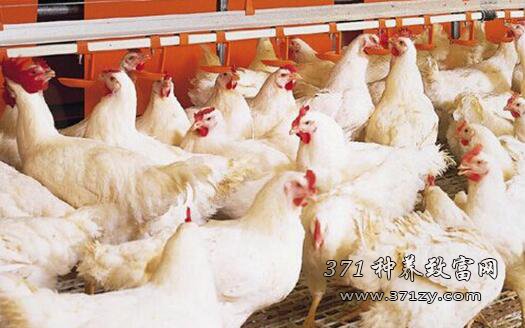
Among the farming subsidies introduced by the state in 2016,cattle farming, pig farming and sheep farming all have corresponding subsidy policies, but chicken farming has been neglected. Coincidentally, this year's market is not particularly good either, so this year's chicken farming market is not optimistic.
The severe smog in winter has taught farmers a heavy lesson. Especially in the Shandong area, air sacculitis has become increasingly serious. Many farmers have said that diseases that should not have occurred are coming back in waves, causing heavy losses for farmers. Even now, smoggy days are still very severe. All signs indicate that the chicken farming industry will face a very serious disadvantage this year.
Of course, we farmers cannot retreat. In the face of these difficulties, what farmers should do is the most critical thing. Based on materials provided by several technical teachers from our Dongdong Network Group, the author has compiled a relatively complete set of handling methods for everyone's reference.
First, the cancellation of subsidies has dealt a heavy blow to many farmers, especially those large-scale farming bases. However, although the national policy has been cancelled, the government will still have certain subsidy policies. Government and local subsidy policies still depend on changes in local policies, and some places have no subsidies at all, forcing many farmers to change careers. Therefore, whether there are subsidies and how much they are must be confirmed with the local animal husbandry bureau and agriculture bureau. Some farmers do not even know that subsidies exist.
If there is a subsidy policy locally, be sure to apply in time, prepare all required materials thoroughly, and report them promptly. Based on past subsidy policies, subsidies are only available when the farming scale, especially the inventory, is above 10,000 birds. The specific subsidy standard depends on local policies.
Smoggy days are a very troublesome problem for chicken coops. First of all, one does not dare to ventilate. Particulate matter contained in smog can easily be inhaled directly by the flock, causing various respiratory diseases. Smog particles can provide an attachment point for pathogenic microorganisms in the coop and act as a warm bed, helping pathogenic microorganisms reproduce and spread, drifting with the air to coops and flocks in other locations. In addition, under smoggy conditions, chicken coops are more likely to produce harmful gases such as ammonia and odors, and the gases gather together and do not disperse easily, further aggravating the problem of making the internal environment of the coop difficult to manage.
The above are all rather thorny problems, but ventilation is essential, which requires certain knowledge. The timing of ventilation must be clearly understood. The best time to ventilate during the day is at twelve noon, when the smog is at its lightest. At other times, ventilation should not last too long; ventilate multiple times for short periods. The inside of the coop should be disinfected in time, and chicken manure should be handled earlier. Disinfection is even more important at this time. On smoggy days, the air humidity inside the coop is very high, so drying treatment should be done in time, and dust removal should also be carried out when necessary.
Pay more attention to coop management. Patrol the coop regularly every day, and promptly treat and prevent problems when something seems wrong with the flock.
The Chinese New Year is approaching, and many people hope to sell at a good price at this time. However, experienced farmers all know that it is best either to sell early or to wait until after this holiday to sell, because during the holiday a large number of farmers sell, the price will drop, and not much money can be made. Selling early still brings a relatively reasonable price. The time to sell chickens should be controlled to the second half of the month and Fridays of each week; these two times are the best.