Is it profitable to grow chili peppers in 2017? Dried chili prices are running high, farmers should not follow the trend in planting
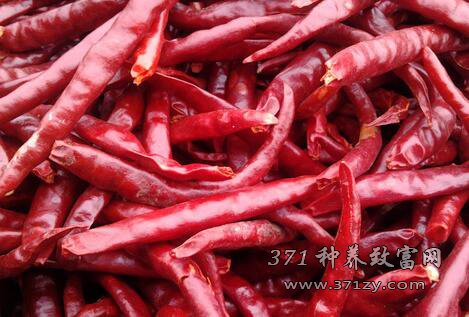
Original title:Dried chili prices are running high. Analyst: Do not follow the trend in planting
According to a report by China National Radio's "Sannong China," last month, after garlic went on an unstoppable surge, dried chili prices also kept "turning red," with purchase prices even breaking through the historical extreme of 7 yuan per jin. The tempting prices also attracted a large amount of capital, with buyers busy purchasing in bulk and storing in warehouses, hoping for even bigger surprises.
However, entering December, the "chili craze" that had been running hot began to cool down, and dried chili prices also fell from the high of 7 yuan per jin. So why did dried chili prices rise first and then fall, and how much longer can this year's high prices hold up?
In Linying County, Luohe City, Henan Province, chili grower Wu Zhong has been growing red chilies for seven or eight years. This year he planted sixteen or seventeen mu of red chilies, with a yield of 700 jin per mu. Originally Wu Zhong was not optimistic about this year's dried chili market, but unexpectedly the highest price of dried chilies this year broke through the historical extreme of 7 yuan.
Wu Zhong: I had expected it to be cheaper. This year we encountered a natural disaster, mainly rain, and the chilies went bad. Prices were highest in late November. Now the highest is 6.4 yuan per jin, and this price has fallen compared with earlier.
Wu Zhong told reporters that a month ago the purchase price of dried chilies broke through 7 yuan per jin, which he had not anticipated. Although prices have now fallen somewhat, profits are still substantial:
Wu Zhong: Selling at this price of six yuan forty or fifty is fine, because at this time the chilies are not too dry yet, and the price is acceptable.
Although the purchase price of dried chilies has fallen somewhat, the retail price of dried chilies in the market remains firm. At a vegetable retail outlet in Fengtai District, Beijing, the reporter found that the price of dried chilies here is still above 20 yuan per jin:
Vendor: 3 yuan per liang, this cheaper one is 5 yuan for 2 liang, it has always been this price.
Vendor: 3 yuan per liang. If you buy more I can give you a discount. If you buy one jin, I'll give it to you at 28 yuan, 25 yuan at the lowest.
Zhao Gongying, an analyst at Zhuochuang Information, said this year's dried chili prices can be described as full of twists and turns:
Zhao Gongying: In the early stage of the market, dried chili prices rose all the way. Taking the price of Sanvying chilies in the Jinxiang area of Shandong as an example, in early October the price of good-quality Sanvying chilies was 4.80 yuan/jin, and by mid-November the price had risen to 7.30 yuan/jin, an increase of 52.0%. The unit price reached its highest value in nearly four years. After entering December, the price of dried chilies at the production areas fell back rationally, and the rush to buy goods brought about by the earlier "fever" also weakened accordingly.
According to Zhao Gongying, an analyst at Zhuochuang Information, the main reason for the earlier rise in chili prices was an imbalance between supply and demand. In August 2016, the Shandong area experienced 35 degrees Celsius high temperatures for several consecutive days, affecting chili fruit setting, and combined with continuous rainy weather later, chili output fell sharply. It is understood that the yield of Sanvying chilies in the Jinxiang area of Shandong was 550-600 jin per mu, a decrease of 23.33% from last year. In the Hebei area, the yield was around 400 jin per mu, a decrease of 35% from last year, with some areas reaching 40.00%. The reduction in output attracted a large amount of external capital into the chili market. In the early stage of the dried chili market, the volume of goods at the production areas was small, and stockists purchased in large quantities, causing dried chili prices to rise significantly. But when dried chili prices broke through 7 yuan per jin, the situation changed:
Zhao Gongying: After the price of Sanvying chilies in the Jinxiang area of Shandong broke through 7.0 yuan/jin, the storage cost for stockists was higher than their psychological expectations. Exports and domestic wholesale markets consumed dried chilies relatively slowly, and stockists gradually reduced their purchases. The volume of dried chilies arriving at production areas continued to increase while stockists' purchases decreased. Under a situation of supply exceeding demand, dried chili prices fell rationally.
Zhao Gongying, an analyst at Zhuochuang Information, said there was a certain bubble in the dried chili market earlier. Many people had not figured out the chili market clearly, and following-the-trend buying was widespread. At present, dried chili prices have fallen back to a relatively rational 6-6.5 yuan per jin. She expects the future market for dried chilies to remain weak, and advises buyers to stay rational when investing in chilies and not to rashly follow the trend and suffer losses.
Zhao Gongying: At present, the supply of dried chilies at production areas is still large. Sanvying chilies in Jizhou, Baoding, and Cangzhou in Hebei, and in the Baodi and Ninghe areas of Tianjin, have initially come onto the market, while chilies in Linying, Xuchang, and other areas of Henan have been half consumed. In addition, as the dryness of chilies has gradually increased recently, farmers' willingness to sell is also strong. Under a situation of supply exceeding demand, the dried chili market still lacks favorable factors, and short-term dried chili prices are expected to remain weak.
As for the many red chili growers, Zhao Gongying, an analyst at Zhuochuang Information, also offered advice:
Zhao Gongying: Because dried chili prices this year are relatively high, farmers in various regions still have relatively strong planting intentions. With the profits of crops such as corn and cotton being unsatisfactory, the profit from growing chilies still appears substantial. It is estimated that the chili planting area in 2017 will expand again on the basis of 2016. By then, the contradiction of supply exceeding demand will become prominent, and dried chili prices may hit a new low. It is advised that farmers arrange their planting plans reasonably, and must not blindly expand the planting area or follow the trend in planting.