How much is a jin of potatoes now? Analysis of future market trends
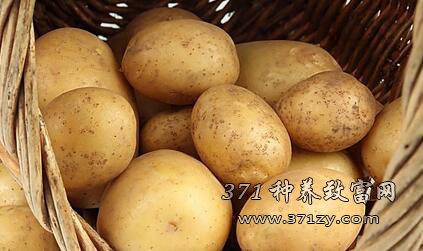
Original title:Potato prices double; analyst: the rally will not last long, sell as soon as possible
According to a report by China Rural Voice's "San Nong China," since potatoes hit the market this year, prices have been lower than in previous years, at about 8 or 9 mao per kg, and sales have been lukewarm. But as the end of the year approaches, potato prices have begun to climb steadily, with prices in some production areas jumping from a few mao to two yuan per kg, giving some growers who had stockpiled their crop the joy of finally seeing the clouds part and the moon appear!
Since potatoes hit the market this year, sales had remained “quiet and cold.” But after mid-November, potato prices soared continuously. Ma Qingliang, a large-scale potato grower in Dingxi, Gansu, told reporters that because this summer's potatoes suffered drought, although their appearance was not affected, yields dropped noticeably and small potatoes increased markedly, so they could only be sold as raw potatoes for starch processing.
Ma Qingliang: This year's output is clearly not as good as last year's, down by about 40%, but the price is still decent. When they first hit the market it was about the same as last year, and in the past month or two the price has come up, 3 or 4 mao per jin higher than last year. Growers' income should be fairly good.
In sharp contrast to the reduced potato output in Dingxi, Gansu, this year's potato harvest in **Jimsar County was still good. At the potato fresh-keeping warehouse in Xindi Township, Jimsar County, reporters saw that because prices rose continuously, from 8 or 9 mao per kg when they first matured to more than two yuan, potato growers were again sorting and packing their stored potatoes, preparing to ship them to vegetable wholesale markets such as Beiyuanchun in Urumqi. Qu Han, head of the Huinong Agricultural Industrialization Cooperative in Jimsar County:
Qu Han: Our Huinong Cooperative planted about more than 5,000 mu of potatoes in spring. When we purchased them at the end of September, potato prices were very low, around 8 or 9 mao, about one yuan. We now have more than 1,000 tons in storage, and the price has already risen to between two yuan and 2.2 yuan, so the returns are very considerable.
Jimsar County is a **major potato-producing area and also the country's ”home of high-starch potatoes.” Because of the unique inverted-temperature-zone climate on the northern slope of the Tianshan Mountains, the potatoes produced here are large and tasty, with high starch content, and are much loved by people inside and outside the region. This year Jimsar County planted a total of 33,900 mu of potatoes, with an average yield of about 2,500 kg per mu, and the whole county produced about 84,500 tons of potatoes. Qu Hancheng told reporters that the cooperative takes large-scale potato planting as its main industry, and this year the cooperative's potatoes had a bumper harvest, and every cooperative member was beaming with joy.
Qu Han: We plan to plant another 5,000 to 6,000 mu of potatoes next year. The reasons for this year's potato price rise are very unusual. At first we did not expect them to rise so fast. At the time we thought they would definitely rise, but we did not expect them to rise so quickly. The main reason is that potatoes in the area inside the Shanhaiguan Pass were hit by disaster, and this year's output there was relatively low, failing to reach the expected amount, so the supply of potatoes was insufficient, which led to the rise in potato prices.
Although potato output fell in some areas this year, the firm market conditions made up to a certain extent for farmers' drought-related losses. Zhang Hongrui, market analyst at Zhuochuang Information, said that recently potato prices have mainly been supported by strong market demand.
Zhang Hongrui: Entering October, a large amount of supply entered cellars, and combined with the effects of freezing damage in North China, the supply of goods outside cellars shrank sharply; cellar-stored goods were held back from sale at high prices, and in addition the volume of potatoes coming to market in the northwest shrank noticeably, with the main supply entering cellars and very little flowing to the market. Most traders shifted to North China to purchase goods, causing trader purchasing enthusiasm to remain continuously high. The market situation of supply falling short of demand became prominent, and potato prices continued to be raised. As market prices kept rising, sellers' reluctance to sell continued to spread, supply showed signs of weakness, and prices continued their upward trend.
Regarding the future trend of potato prices, Zhang Hongrui analyzed that recently, as prices gradually approach a high level, further increases are difficult, and coupled with weakening purchasing strength in sales areas, prices have begun to stop rising and stabilize.
Zhang Hongrui: Entering December, the divergence between potato quality and price became obvious, large amounts of low-priced vegetables entered the market, and potato trading entered a sluggish channel. Entering the traditional loan-repayment month, influenced by funds and mentality, sellers' willingness to sell gradually increased, but sales-area trading was weak and purchasing strength was slow to pick up, so market prices began to loosen gradually.
According to reporters' understanding, distributors in Gansu and **production areas generally believe that local potatoes are currently priced higher than in other areas and estimate that prices will rise further later. Based on their optimism about market conditions, distributors have rushed to buy and stockpile goods. But analysts remind growers that the current good market conditions will not last very long, and suggest that growers sell early to prevent inventory pressure next year.
Zhang Hongrui: This year, overall cellar stocks in production areas across the country increased noticeably compared with last year, and affected by the earlier reluctance to sell, the pace of digesting cellar-stored supply in production areas has been noticeably slower than last year. If the pace of inventory digestion remains weak before the New Year, causing supply to be concentrated for shipment after the New Year, the market may not be optimistic. Zhuochuang suggests that sellers reasonably choose their timing for releasing goods from storage based on their psychological price levels and moderately digest their own inventory, so as to ease inventory pressure next year.