Price of white-feathered broiler breeding stock chicks surges 10-fold, experts predict: high prices will last at least until 2017
Original title:Chick prices surge 10-fold, expert: high prices will last at least until next year
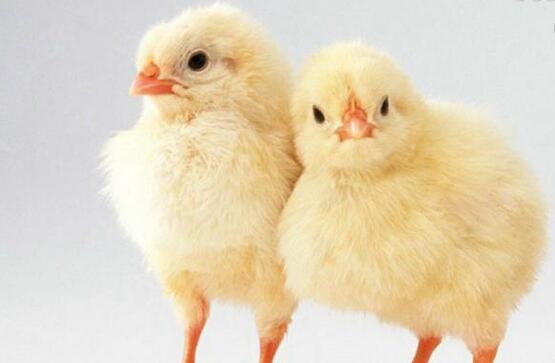
According to a report by China National Radio's "Sannong China," white-feathered chicken consumption currently accounts for about 50% of the entire broiler market in China. This kind of chicken is a commonly used ingredient in fast-food restaurants, so there are a great many enterprises raising white-feathered chickens.
Over the past year, the prices of white-feathered chickens and chicks have been rising continuously. Recently, the price of white-feathered broiler chicks has seen an especially sharp increase, with very obvious fluctuations, leaving industry practitioners quite shocked. What has happened in the white-feathered broiler chick market? How long can this elevated situation be sustained?
Market conditions for white-feathered broiler breeding stock chicks, currently mainly present two major characteristics:First, breeding stock chick prices have surged;Second, domestically produced chicks are in short supply. Yu Dezhang, manager of a breeding stock farm in Yantai, Shandong, said that in November he brought in 8,000 chicks, and the extent of the price increase shocked him deeply.
Yu Dezhang: At the time it was 80 yuan per set of chicks, and last year it was 8 yuan per set, a 10-fold increase compared with last year.
From 8 yuan per set to 80 yuan per set, in the course of one year, the price of one set of white-feathered broiler breeding stock chicks rose 10-fold, becoming a "helicopter chicken." At present, the price of one set of parent-stock breeding chicks on the market has even reached a high of 100 yuan, the highest level since 2013. Yu Dezhang said that based on past experience, the possibility cannot be ruled out that this trend will be passed on to downstream end products.
Yu Dezhang: Our chick costs will certainly increase, by about five mao per chick. As the market changes, last year a chick generally sold for two yuan and two mao, and this year it has to be three yuan and five mao.
Chick prices have risen sharply, and enterprises producing chicks are also selling their goods very quickly. Ren Ruijie, manager of a grandparent-stock breeding farm in Yantai, Shandong, said that recently they have been extremely busy.
Ren Ruijie: We are in a state of supply falling short of demand; basically, however many we produce, we can sell them all.
Why has this phenomenon appeared? Data statistics show that from January to August 2016, the nationwide cumulative introduction of breeding stock was only about 220,000 sets, and the full-year introduction is expected to be less than 350,000 sets, less than half the balanced introduction volume. Starting in October, the parent-stock chick output of some grandparent chicken enterprises has been continuously plummeting, with month-on-month declines exceeding 20%. Cui Xiaona, analyst at Sublime China Information:
Cui Xiaona: China's breeding stock chicks basically rely on foreign imports, with the main countries being the United States, France, Spain, New Zealand, and others, but the United States, France and other countries successively broke out with avian influenza, causing China's imports to be cut off. In 2015, China's grandparent chicken introduction volume was only 60% of 2014, and in 2016 it fell to the lowest level in nearly ten years.
The reduction in foreign import sources has pushed up the price of breeding stock. In order to break free from the bottleneck of foreign imports, in the past two years some domestic enterprises have carried out a certain amount of independent research and development, but chick breeding, as the top of the industry pyramid, has its research breakthroughs constrained by a number of conditions, so the prospects for domestic white-feathered broiler breeding are not clear. Cui Xiaona, analyst at Sublime China Information:
Cui Xiaona: The supply of grandparent chickens is currently in the hands of upstream companies worldwide, and is relatively monopolistic to a certain degree. Chick breeding carries high risks, requires large investment, and demands highly qualified talent. Funding input for breeding stock breeding in China is still on the low side at present, and there is still a certain gap compared with advanced foreign technology. From the current look of things, in terms of domestic breeding stock breeding, not a single company has yet achieved notable success, because the prospects are still not clear.
According to the requirements of the Ministry of Agriculture's National Broiler Genetic Improvement Plan, by 2025 China is to breed 2 to 3 new white-feathered broiler varieties reaching the internationally advanced level of the same period, with the annual slaughter volume of commercial chickens reaching 20% of the total annual slaughter volume of white-feathered broilers. According to this plan, China's breeding stock breeding work may achieve relatively major development. If this is a long-term vision, then what about the near term? Will the recently elevated breeding stock prices continue to stay high, or will they reverse and fall? Analyst Cui Xiaona believes that continuing to stay high is a high-probability event.
Cui Xiaona: Looking at it now, a very likely scenario is that chick prices will remain high and move upward, lasting at least until next year. On the import front, although the Netherlands resumed market access on October 19, a low-pathogenic avian influenza incident occurred again recently, and the specific timing of introduction may continue to be postponed. In addition, New Zealand breeding stock enterprises are also experiencing delays. Against the backdrop of a sharp decline in grandparent chicken introduction, the high chick prices should persist for a relatively long time.